


Bjerkandera adusta
Smoky bracket
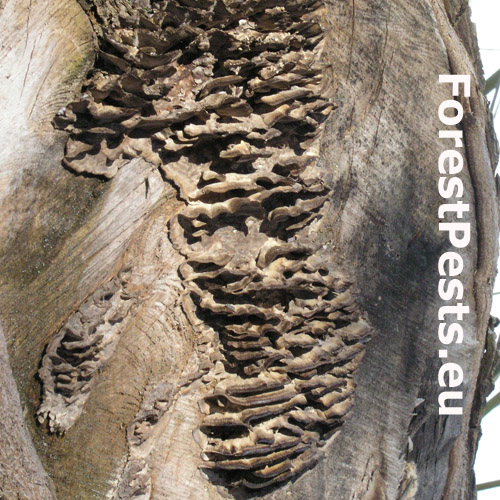
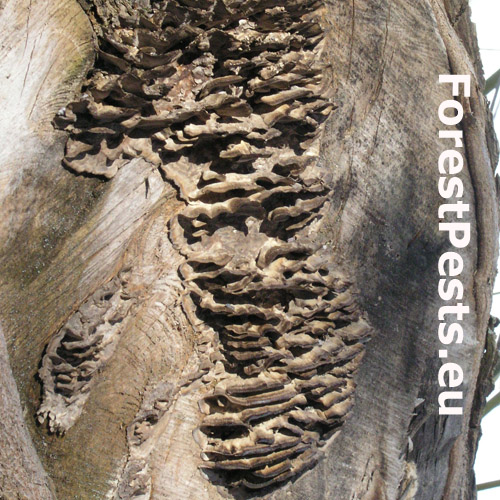
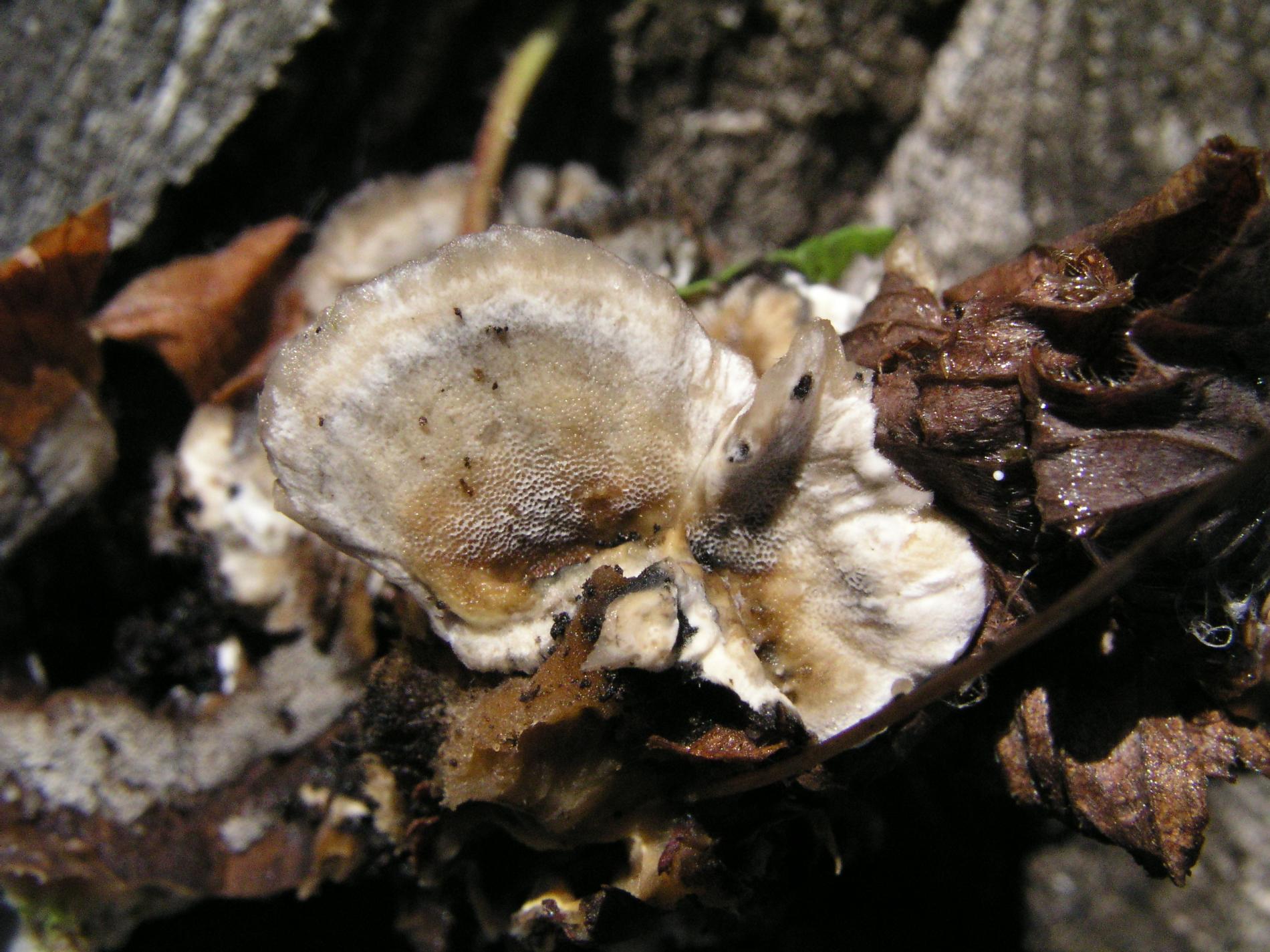
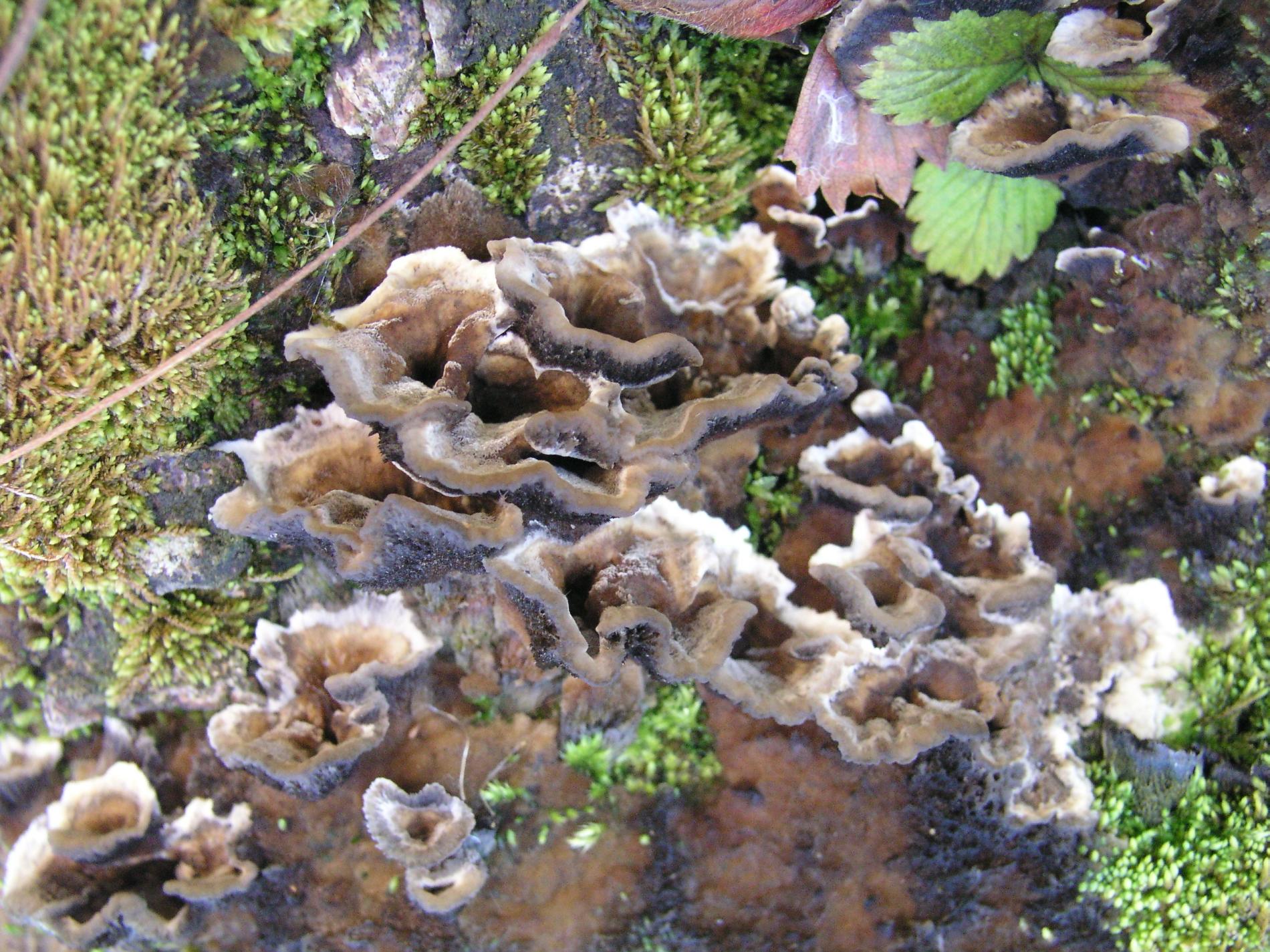
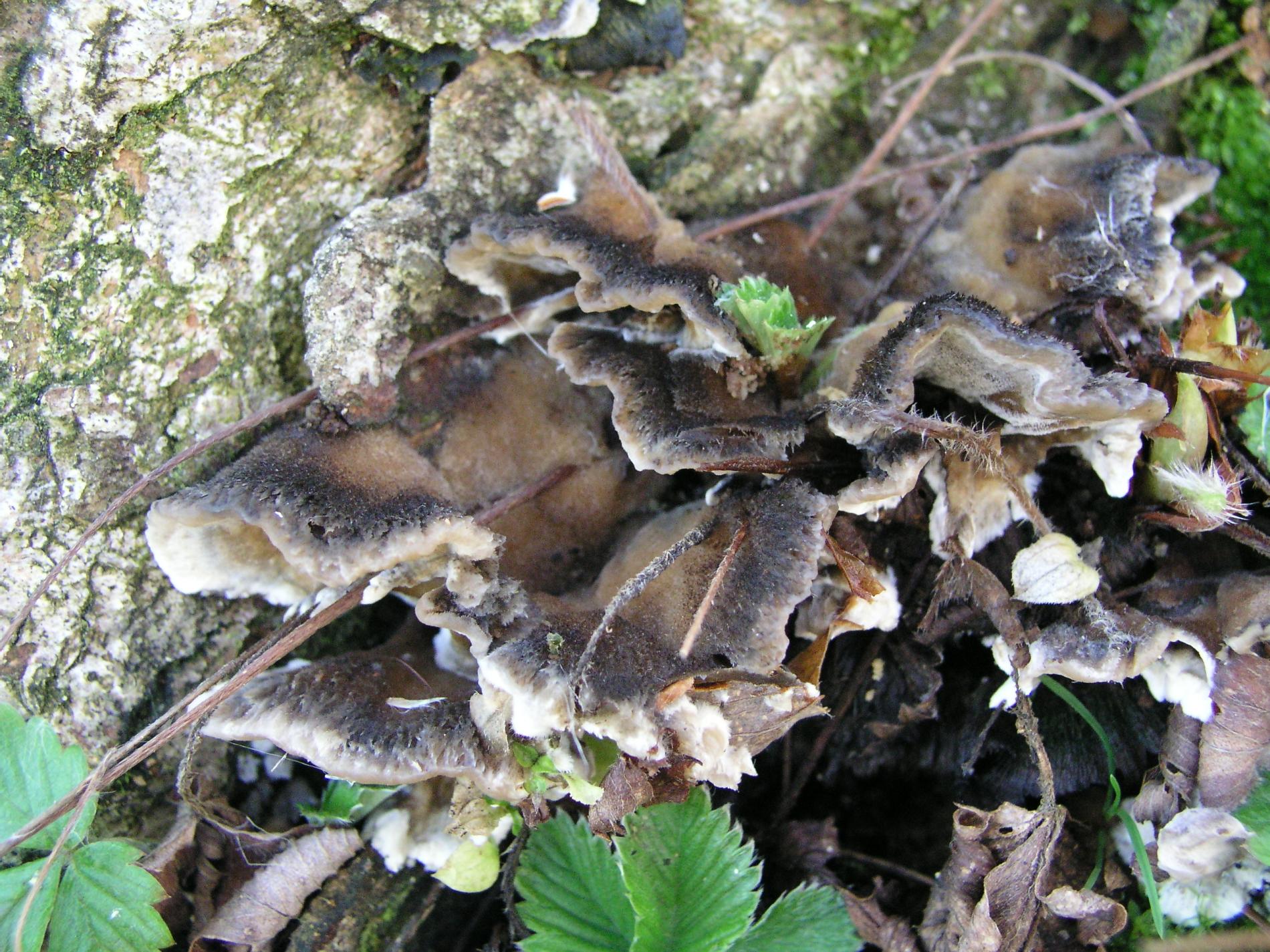
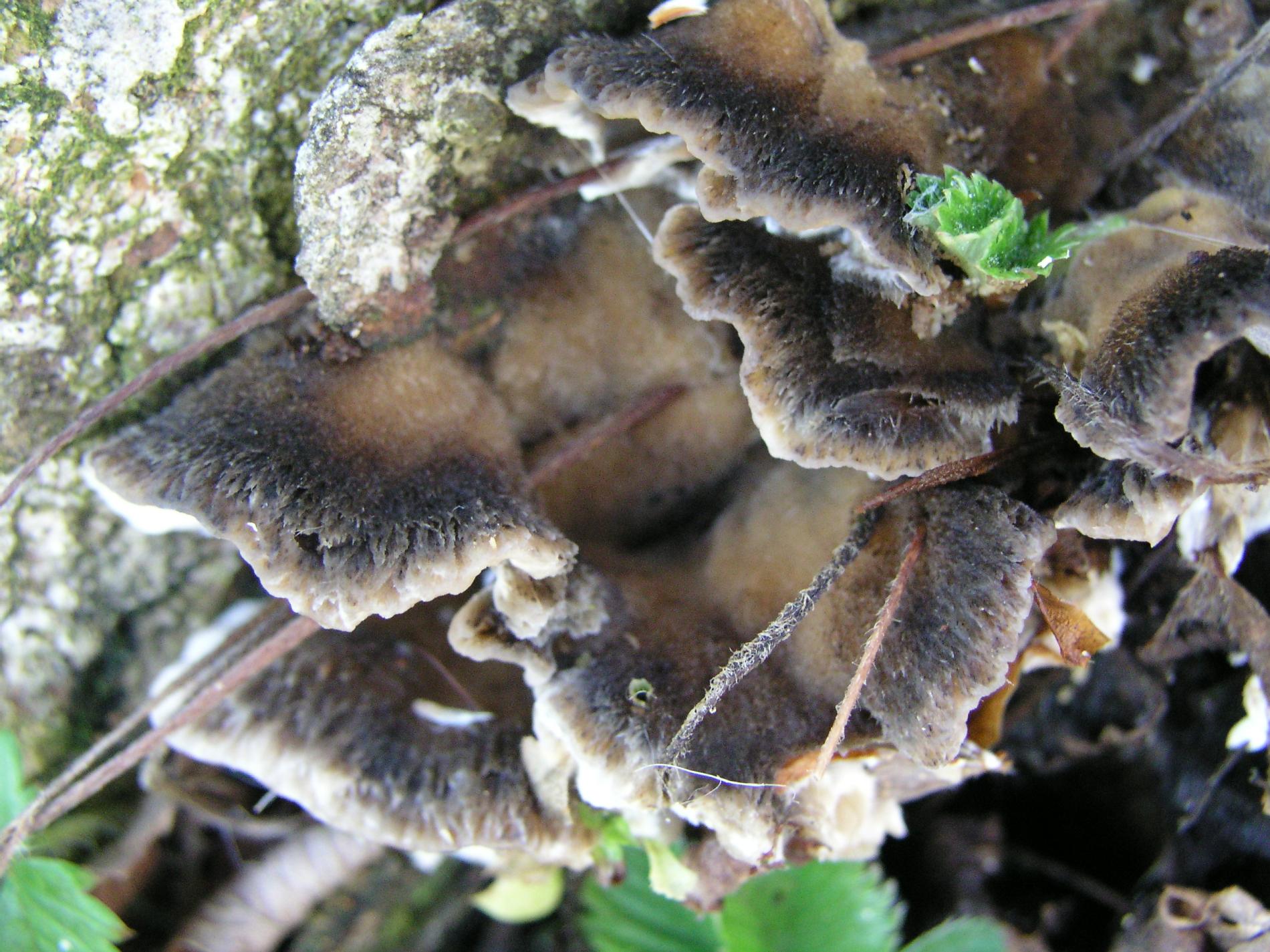
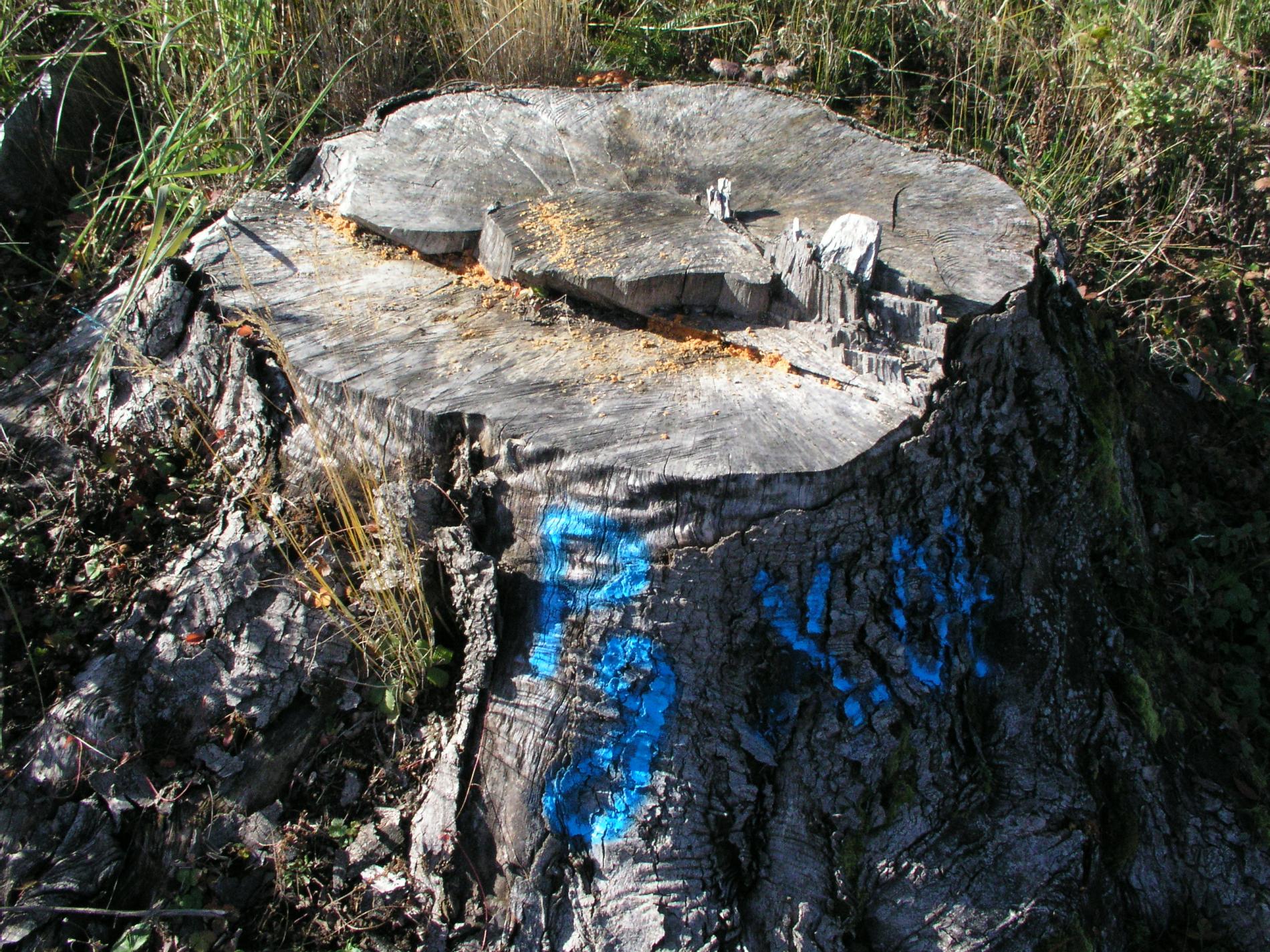
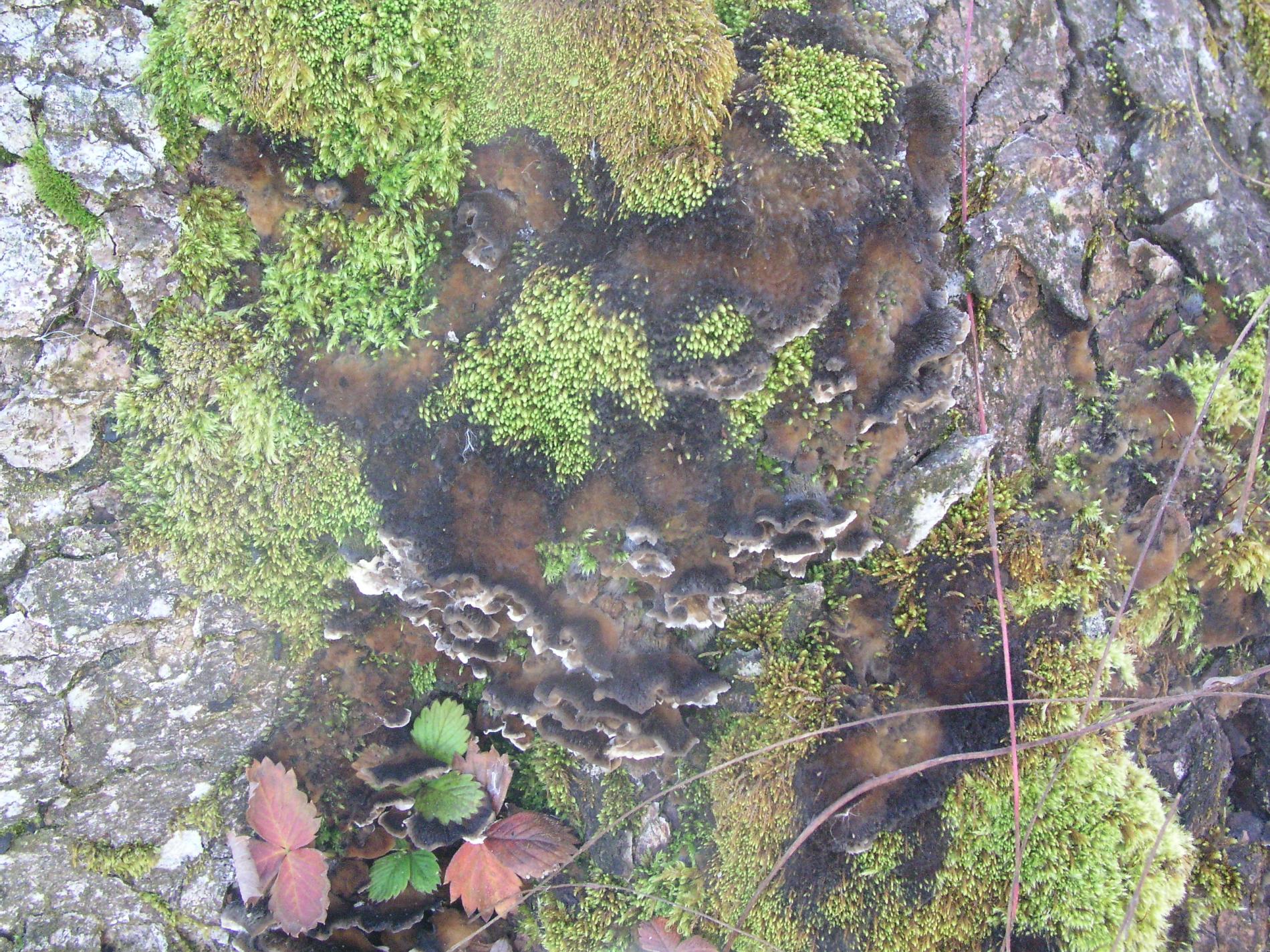
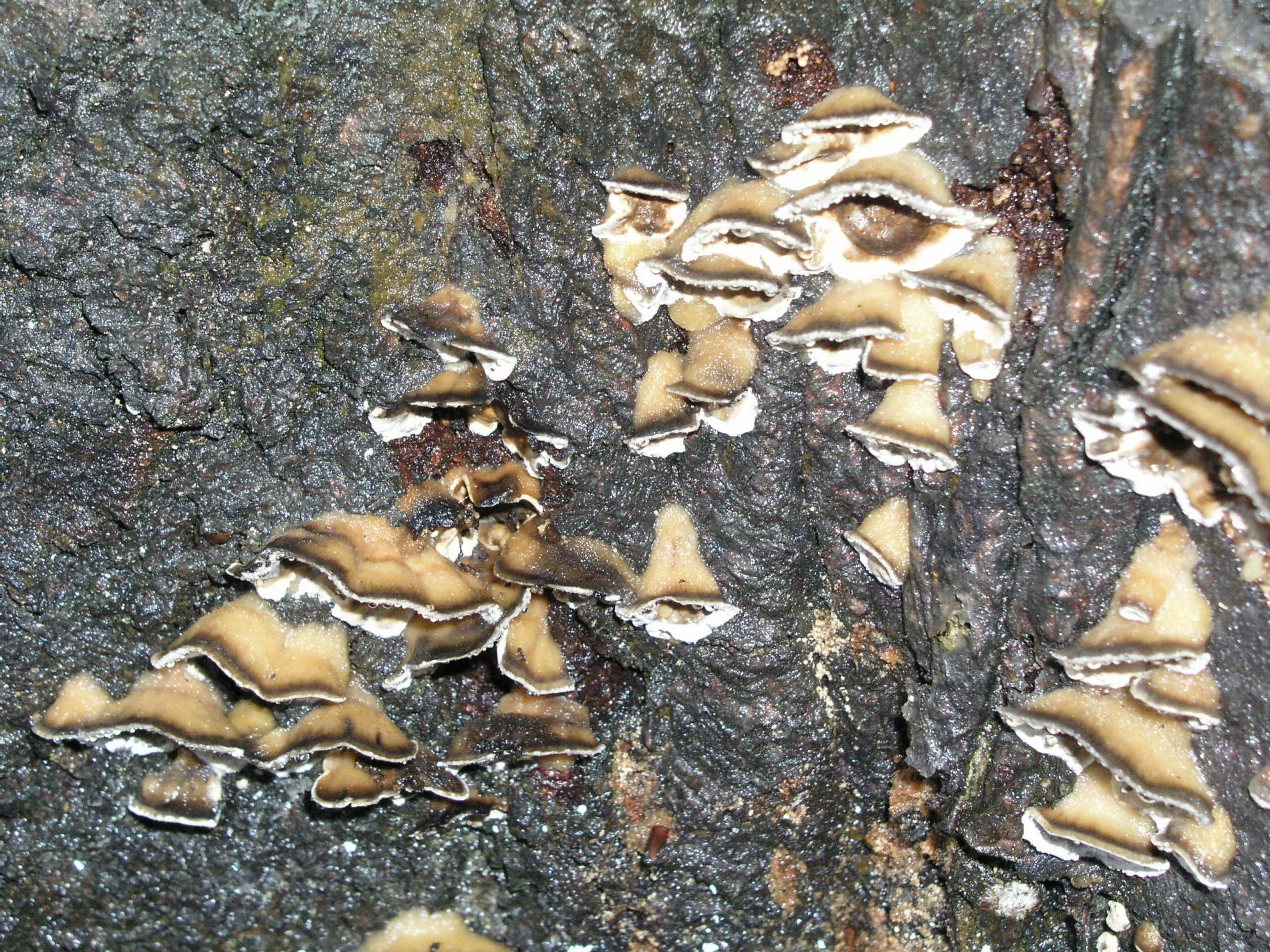
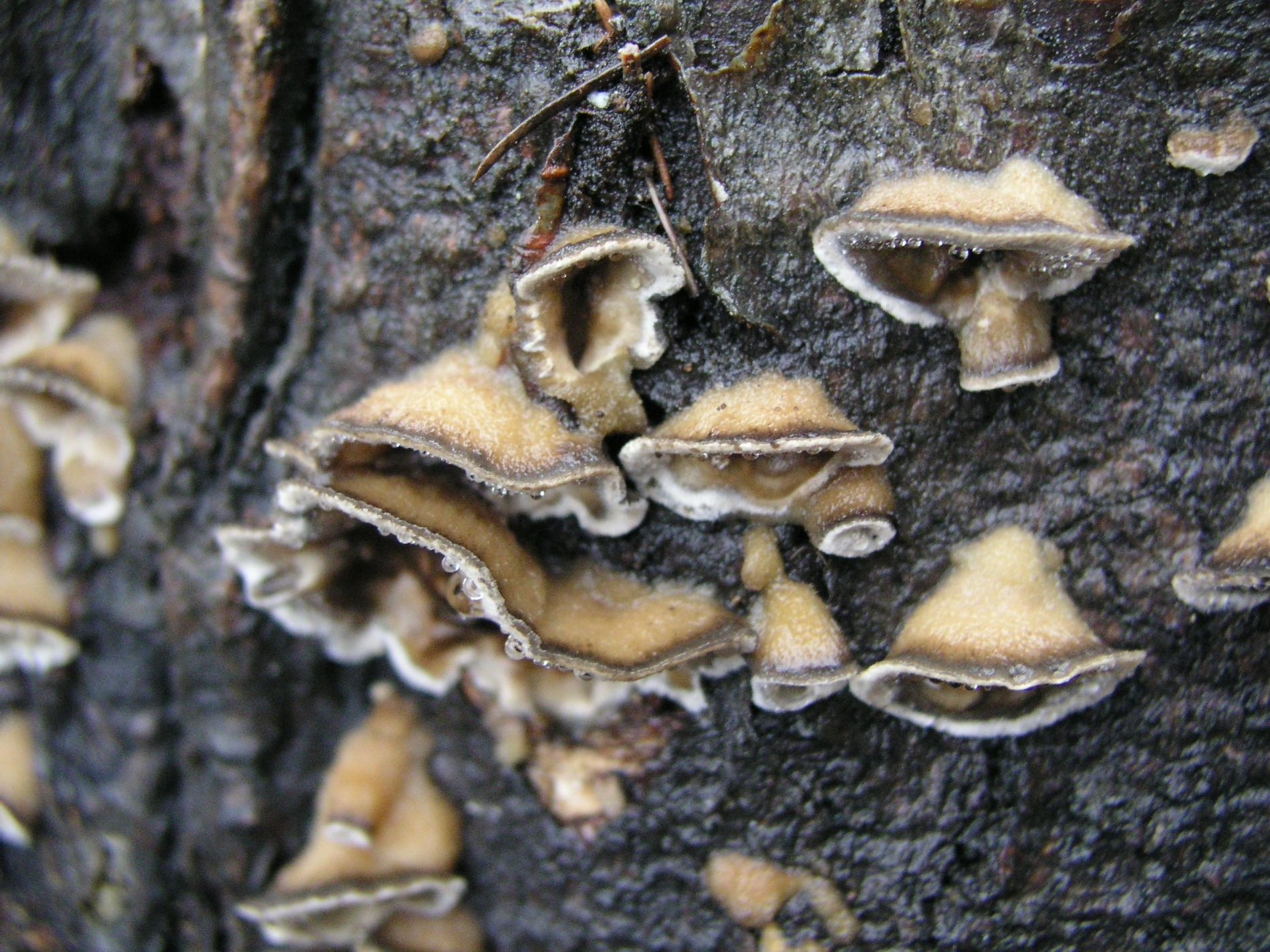
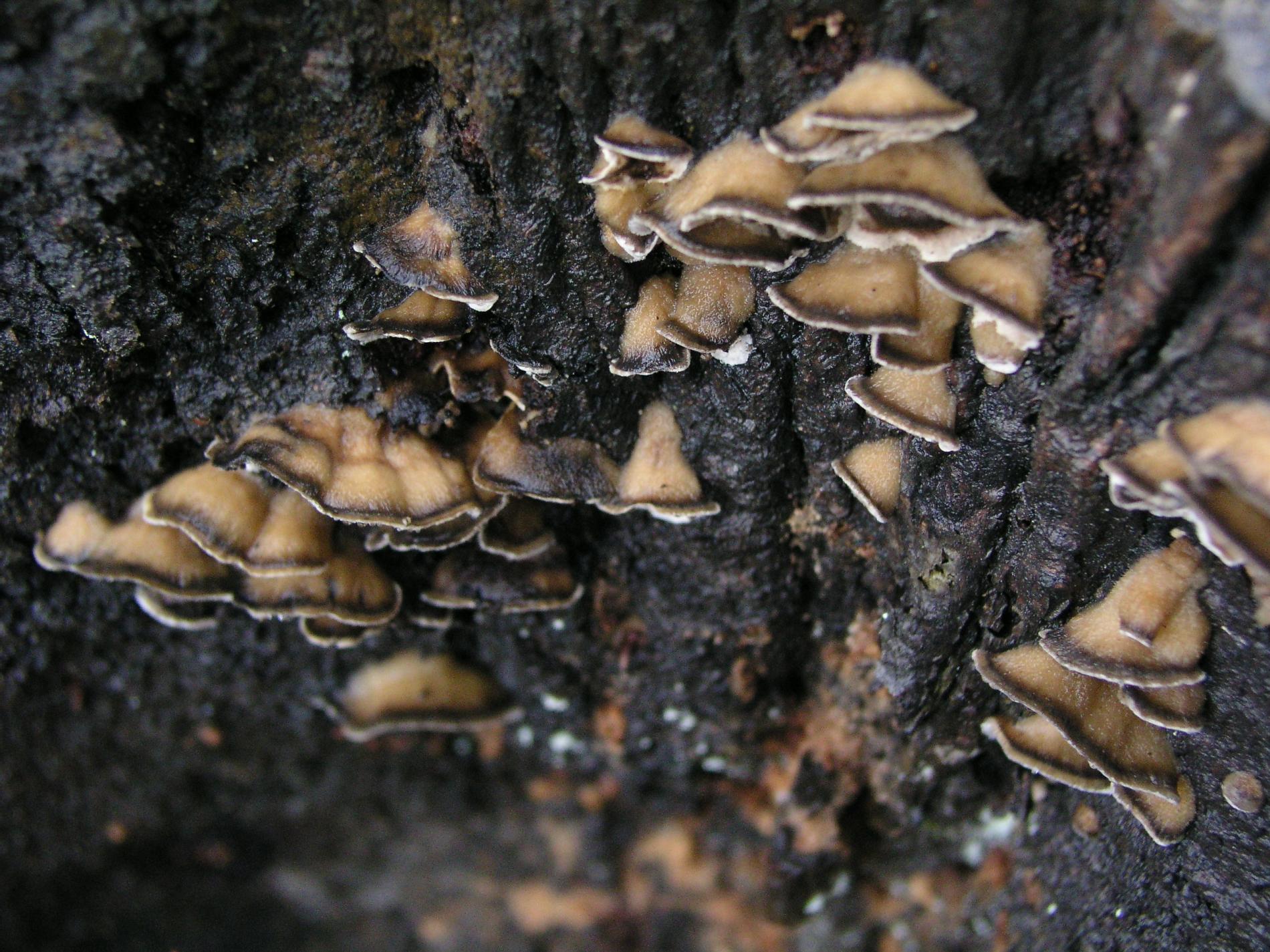
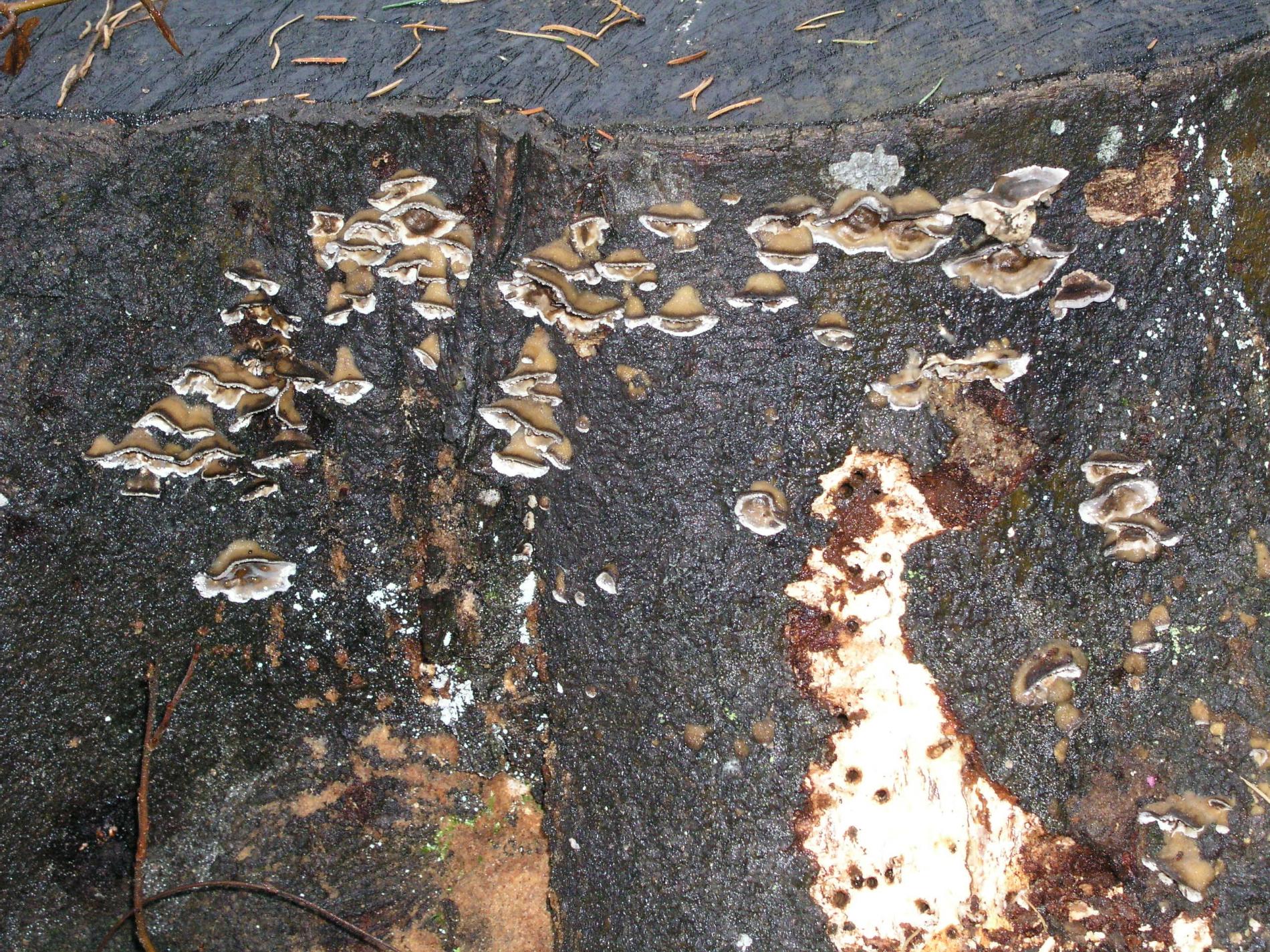
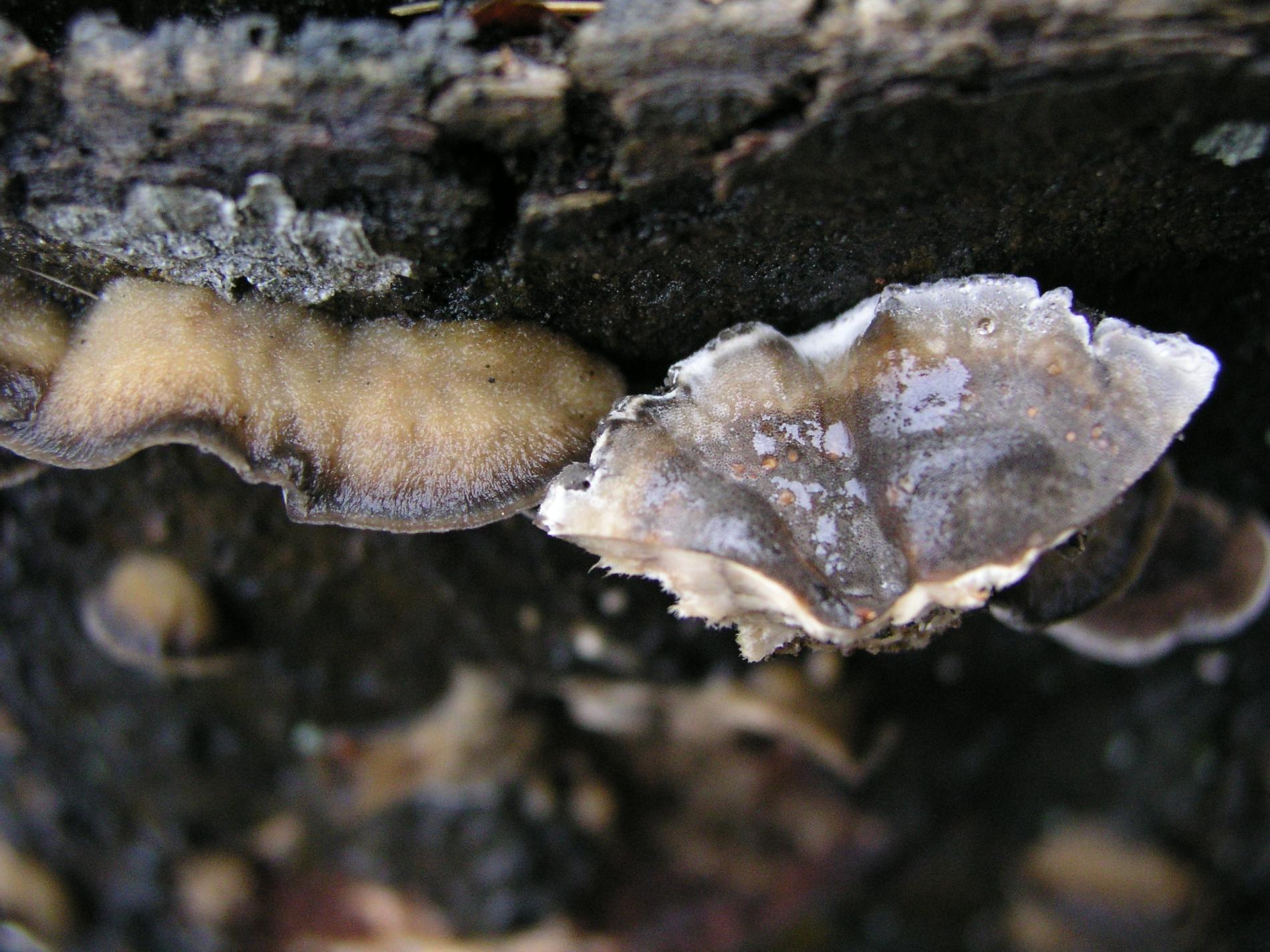
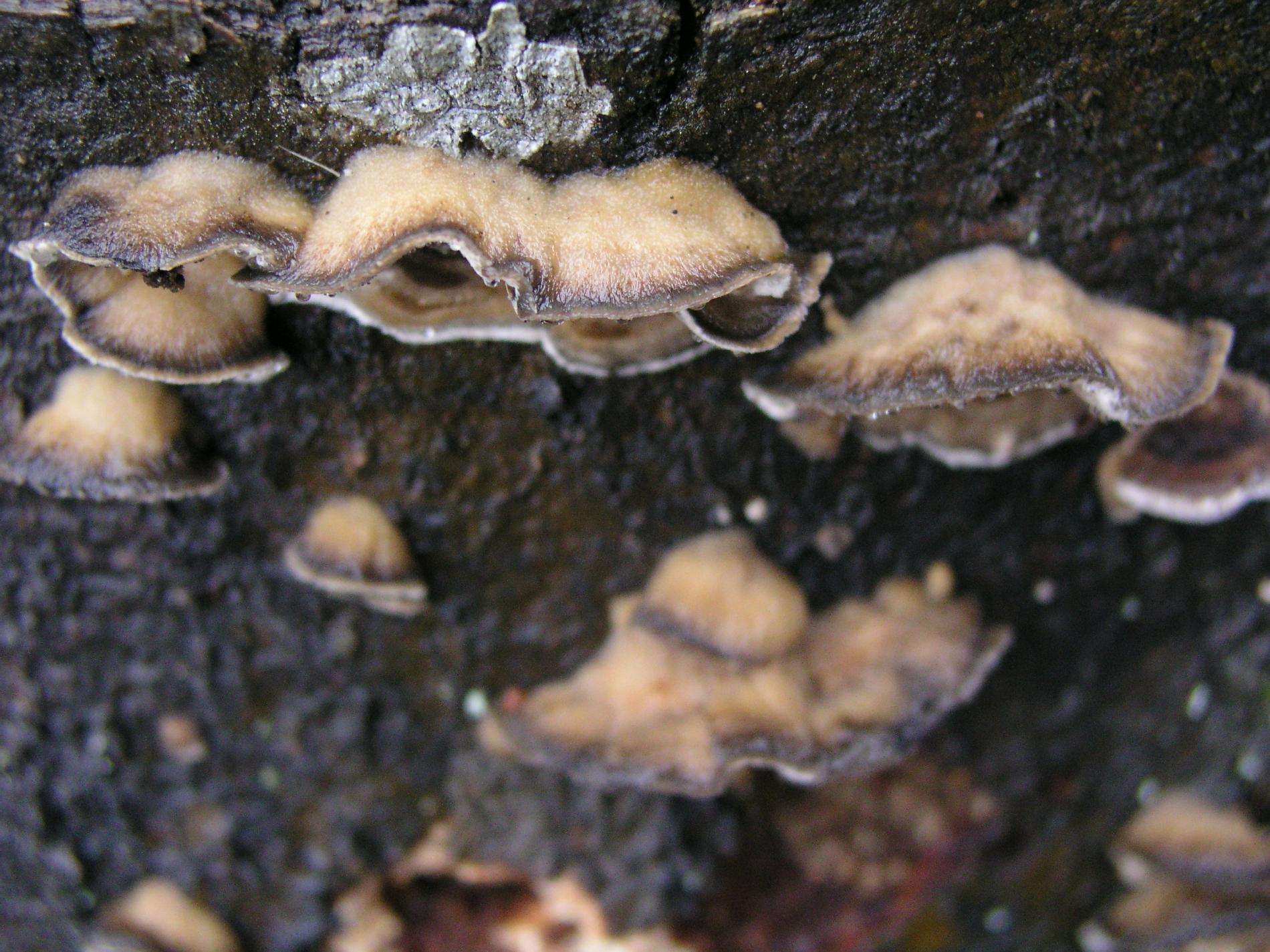
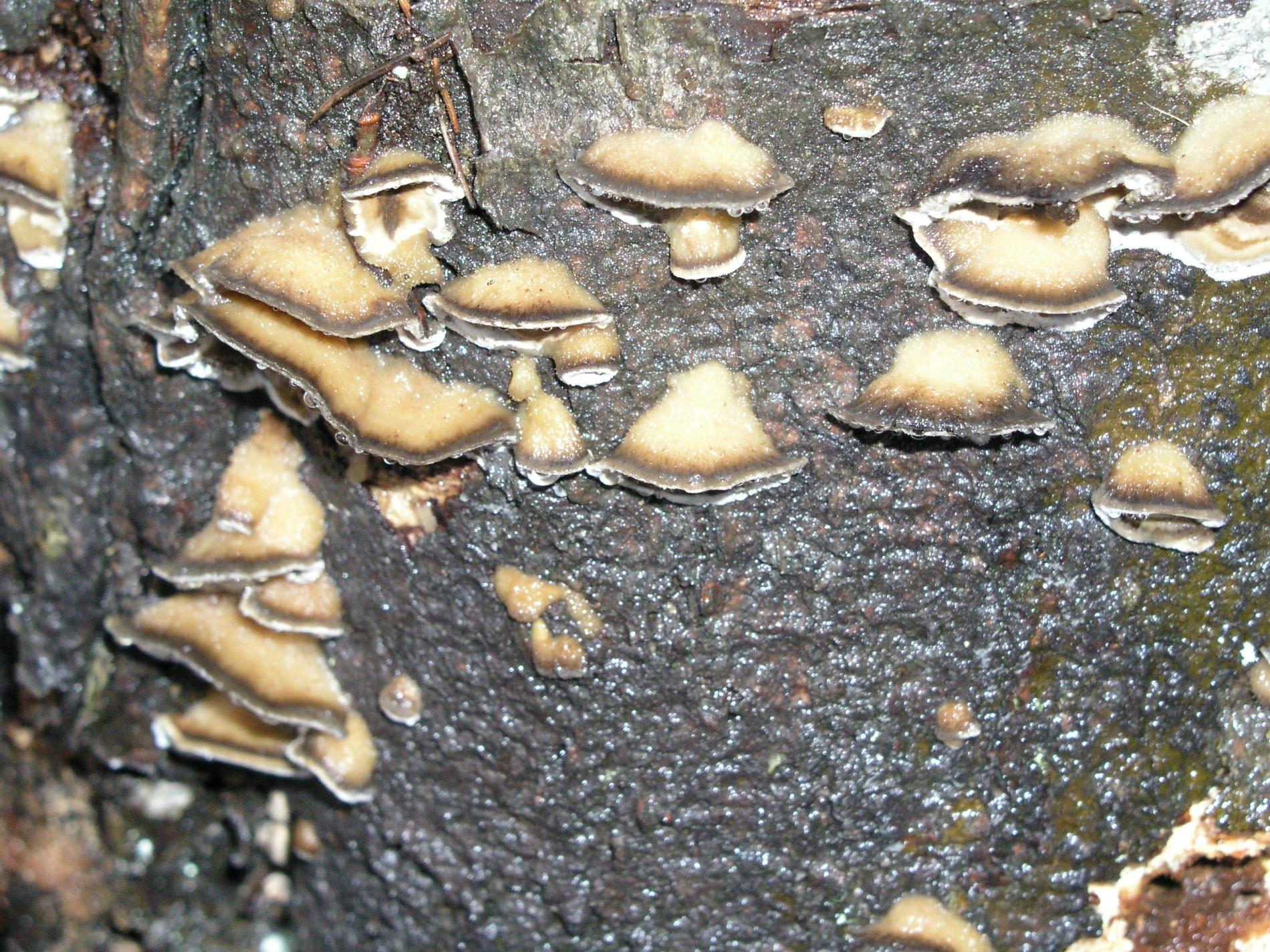
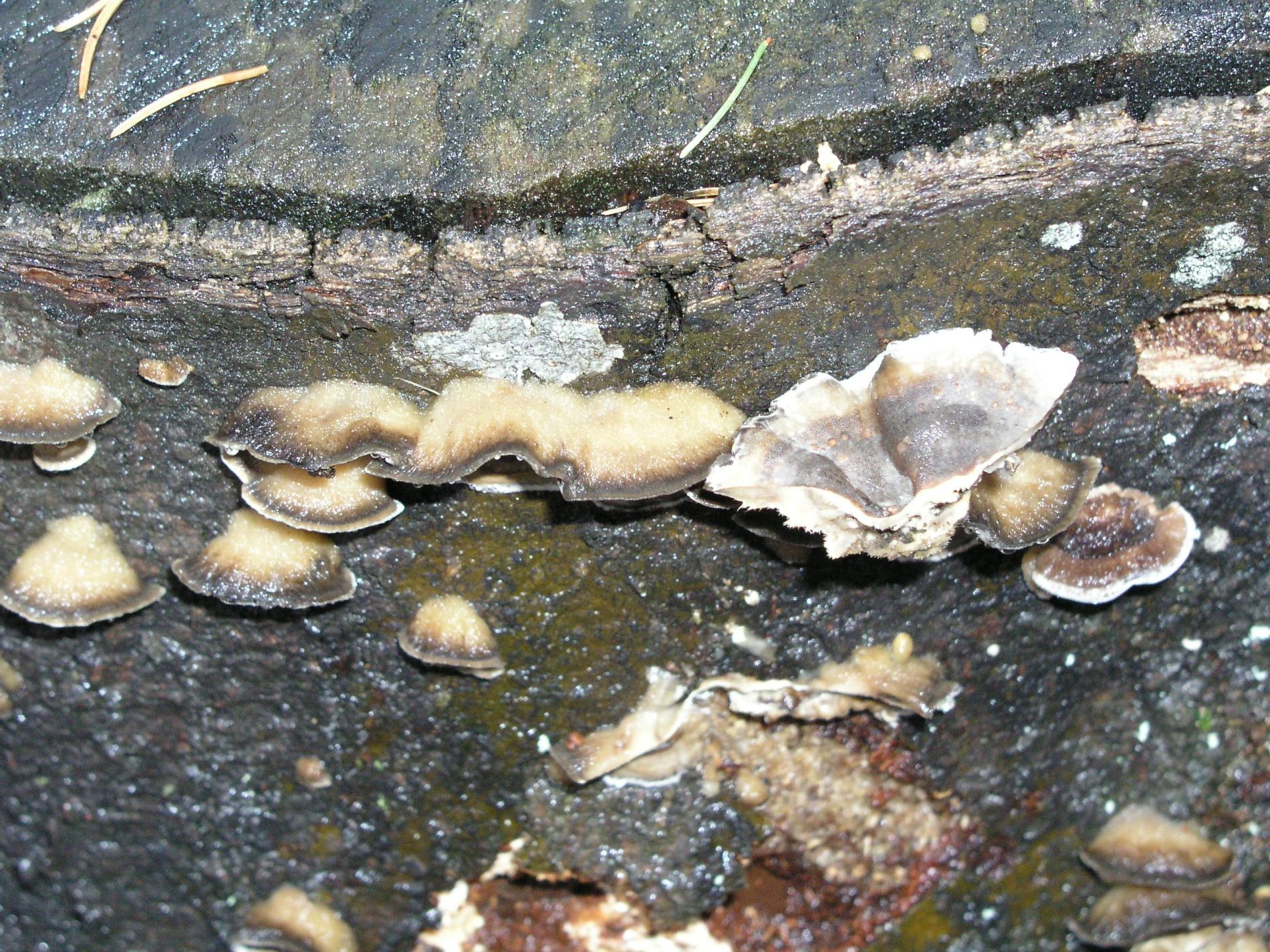
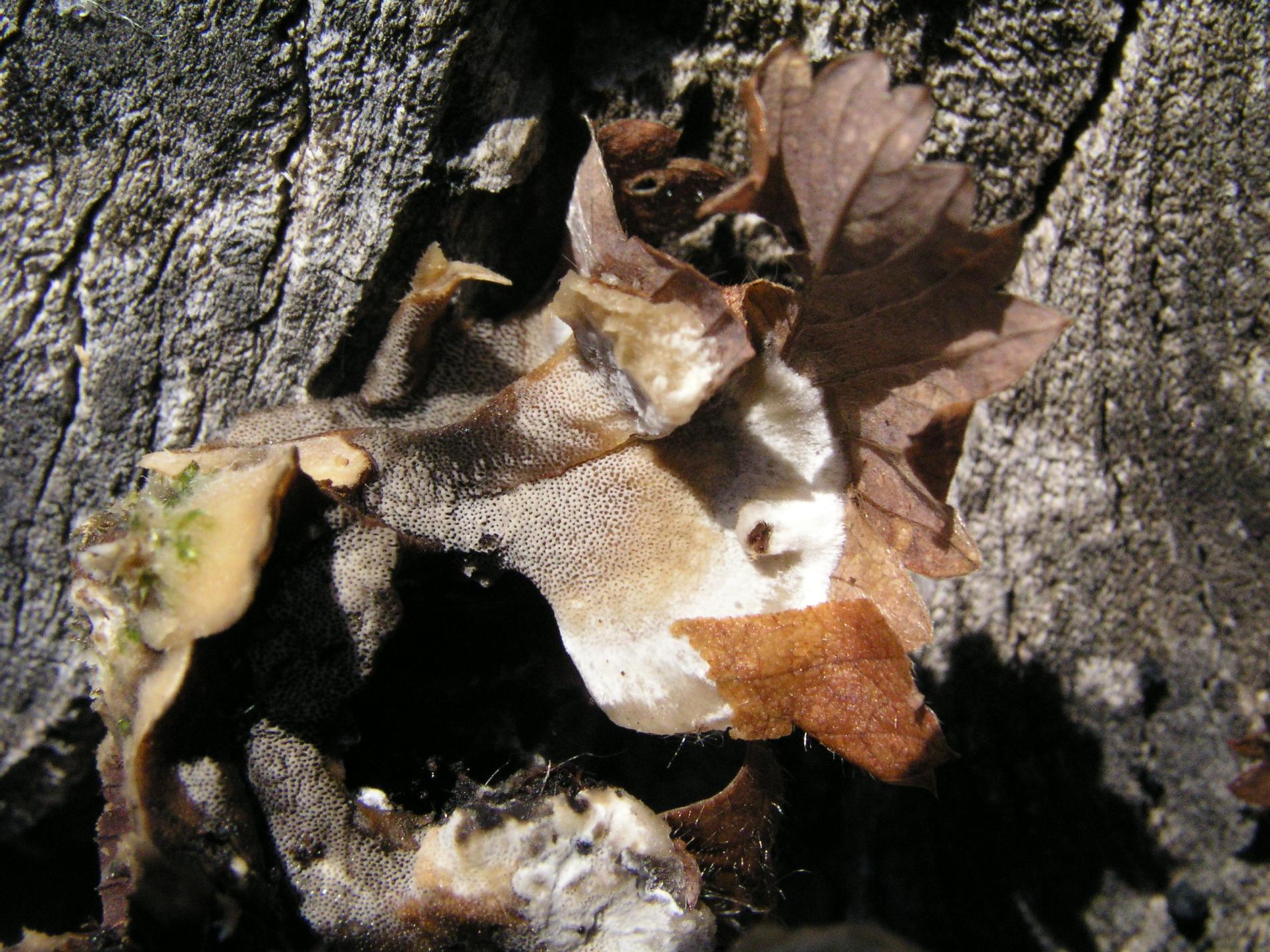
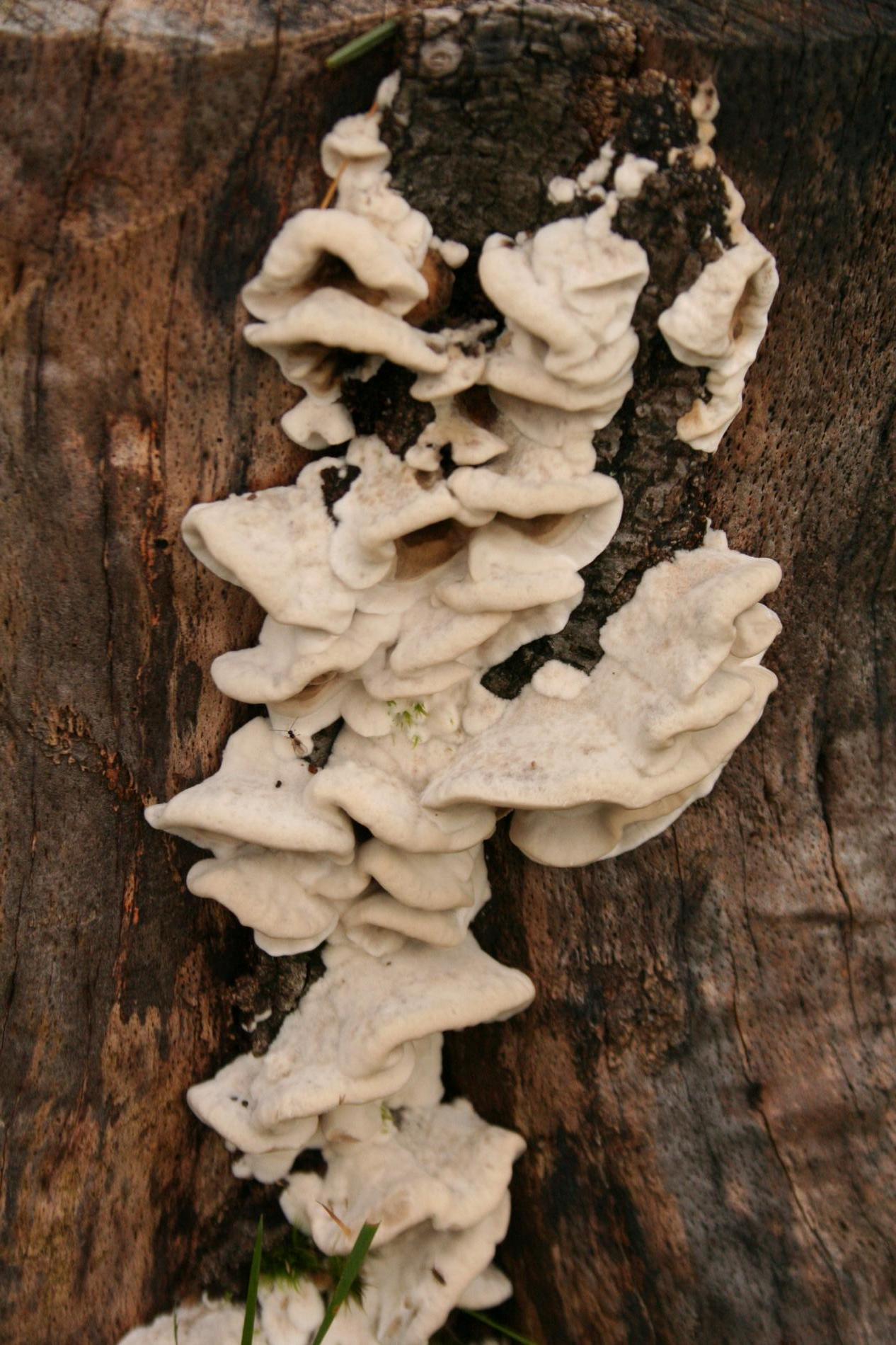
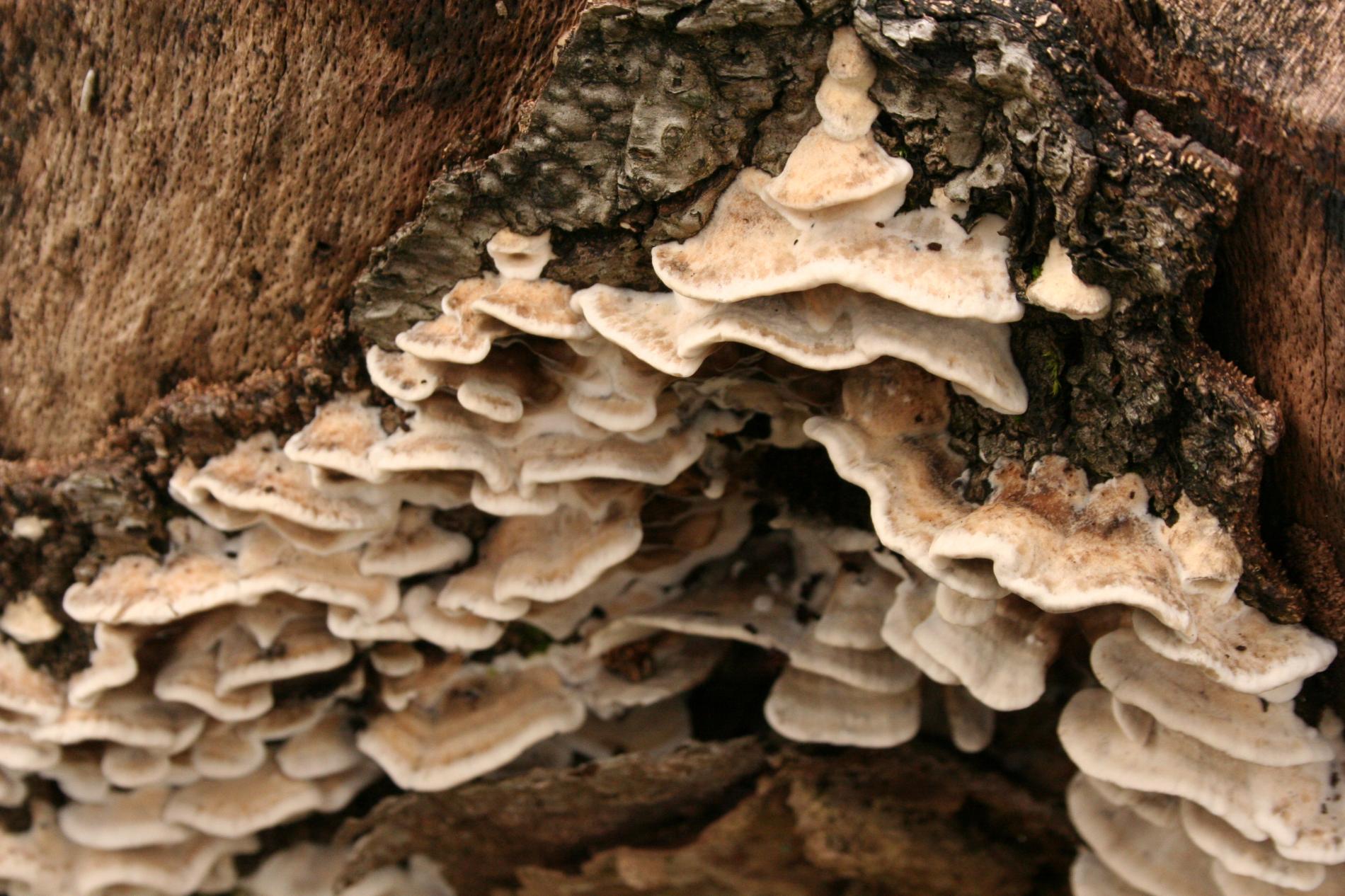
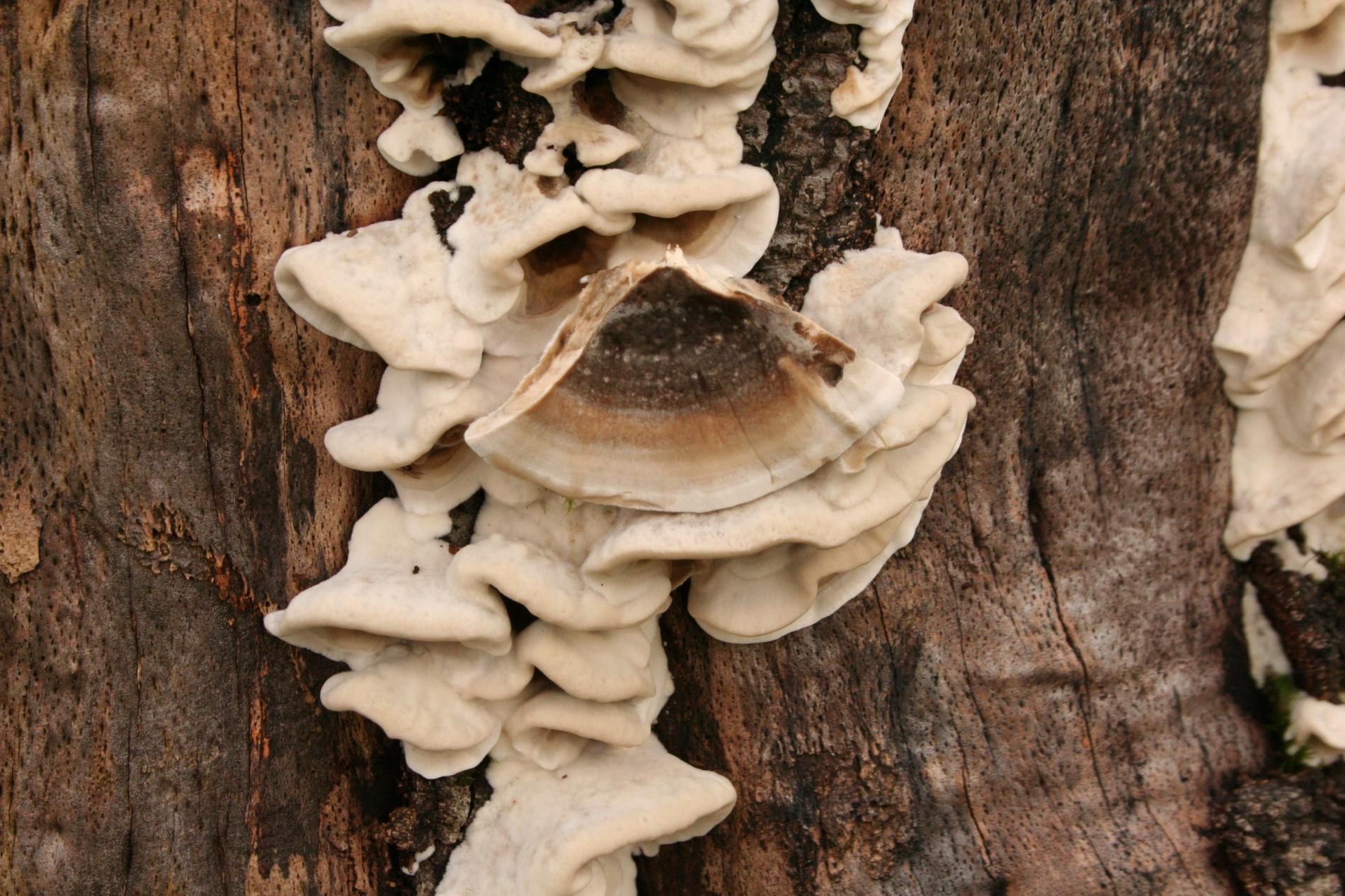
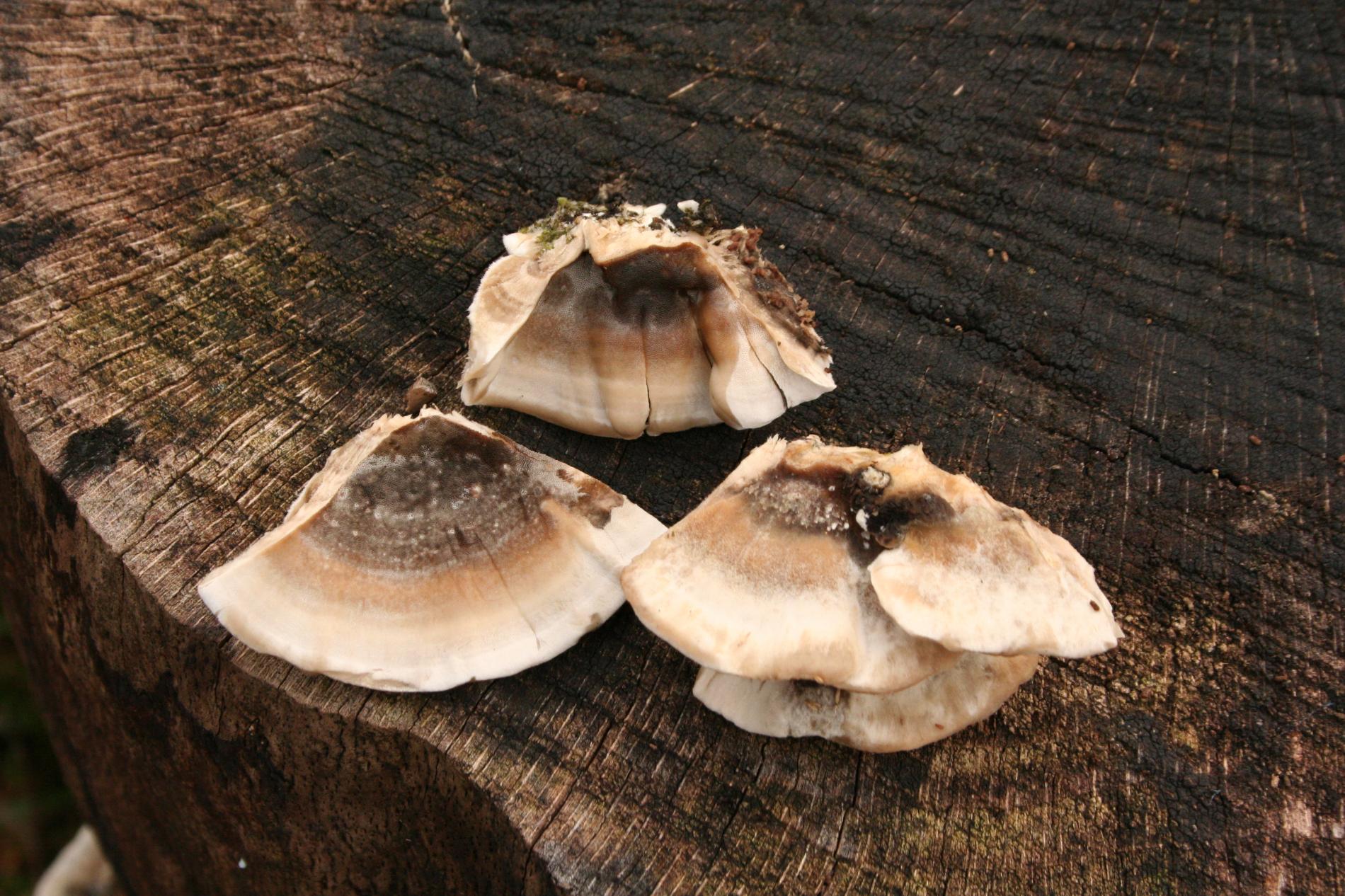
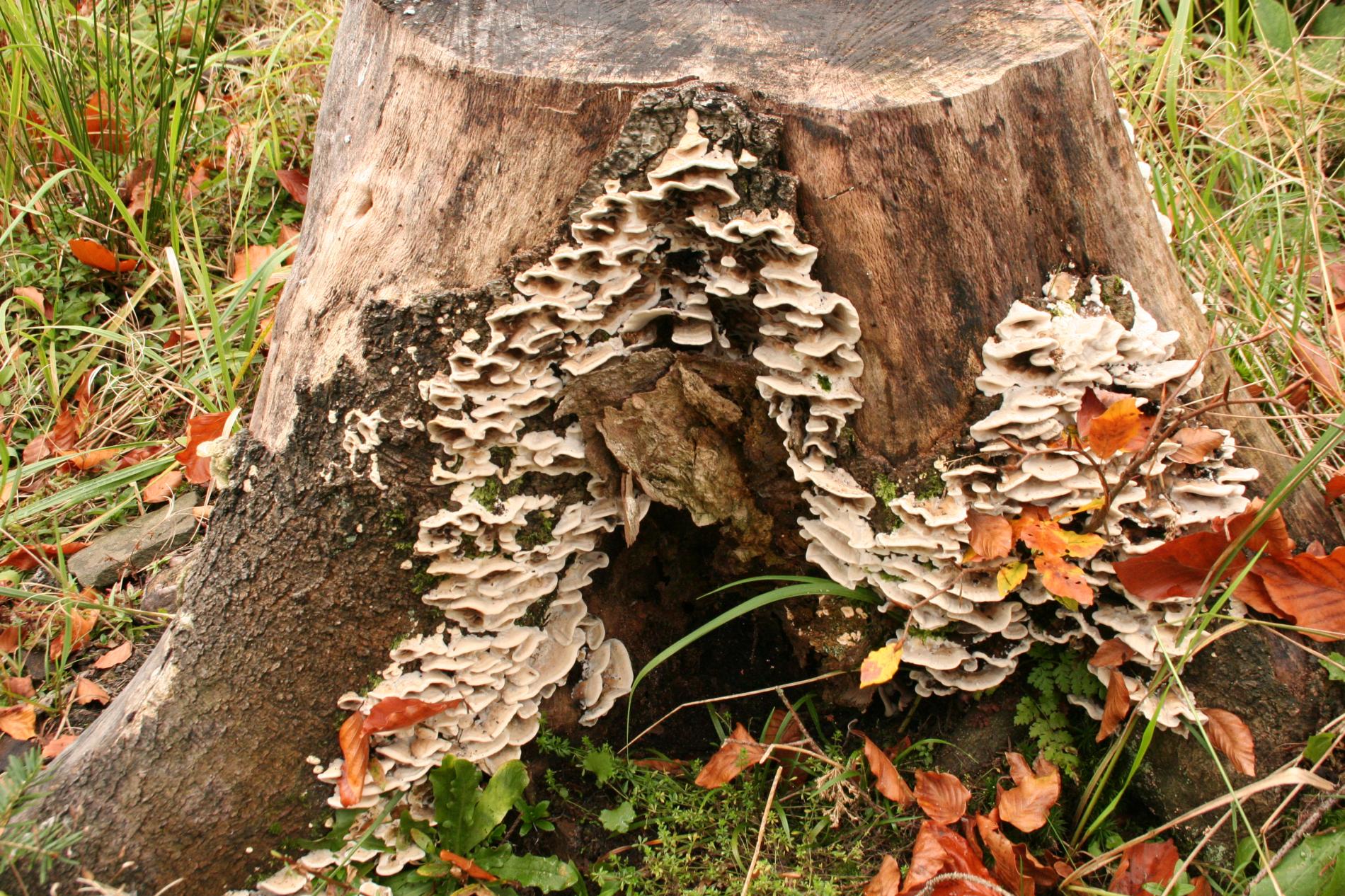
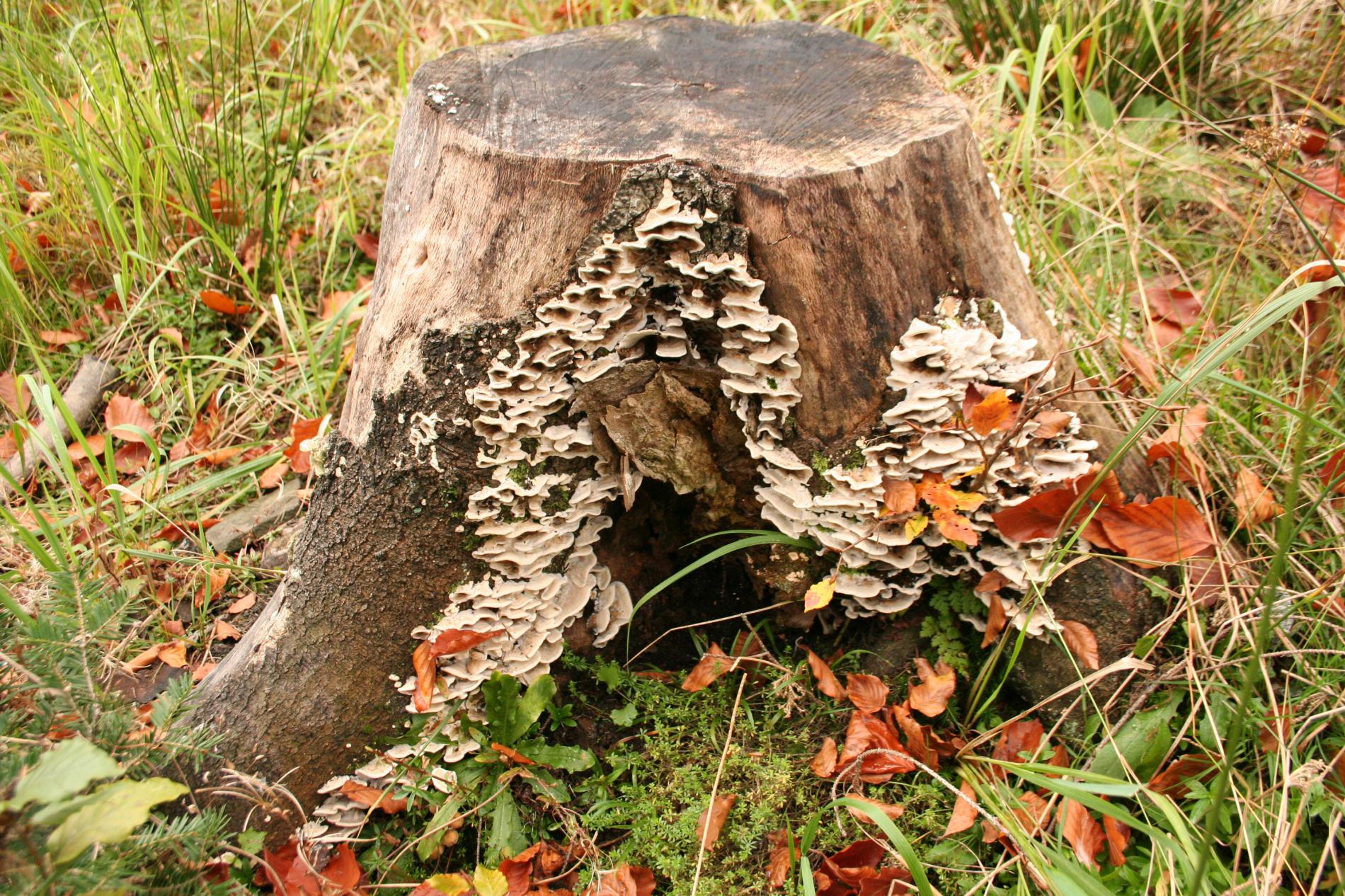
The caps are mostly arranged roof-like, one above the other. First they are softly prickly, ochre-grey, always with a white edge when young. The pores are irregular, whitish, when pushed they change their colour to greyish brown, later grey to greyish black. The fungus is a saprophyte on dead branches, trunks, and stumps. It can become a parasite when the wounded trunk is infected. The mycelium causes intense white rot of the attacked wood, mostly of heart wood. The mycelium activity in wood can result in drying of the crown and reducing of trunk strength. The fungus is spread from lowlands to mountainous regions.
The presence of light gray caps of fruiting bodies.
Tree Species: Beech, Oak, Hornbeam, Ash, Maple, Alder, Spruce
Part of a plant- attacked: Tree trunk
Pest significance: Harmful
Pest Category: Fungi
Invasive Species: No
Present in EU: Yes
Pest group: Fungi
Affected part of wood: Heartwood, Sapwood
Depth of damages: More than 5 cm depth, Under bark only, Up to 0,5 cm depth, Up to 2 cm depth, Up to 5 cm depth
The extent of damage: Whole trunk
Prevalence in Europe: Very common
Damaged products: Firewood, Fresh timber logs (water still in the sapwood), Furniture, Lumber, boards and prisms, Wood chips, Wooden house constructions
Roundwood size: Diameter 50+, Diameter from 10 up to 50 cm
Wood discoloration: Yes
Pest subcategory: White-rot
Similar pests

Bjerkandera fumosa

Trametes pubescens
