


Aromia bungii
Red-necked longhorn beetle
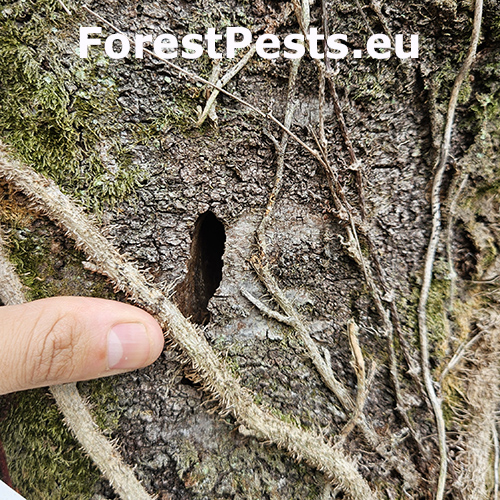
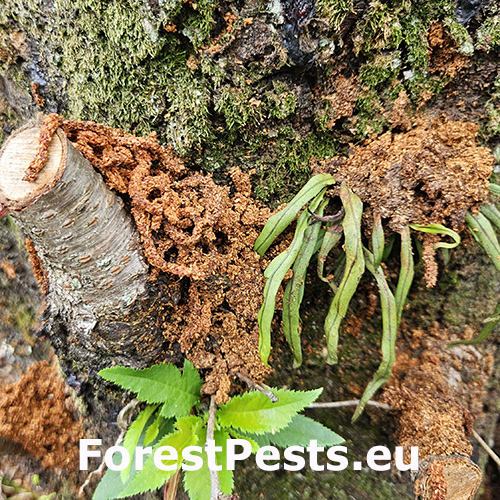
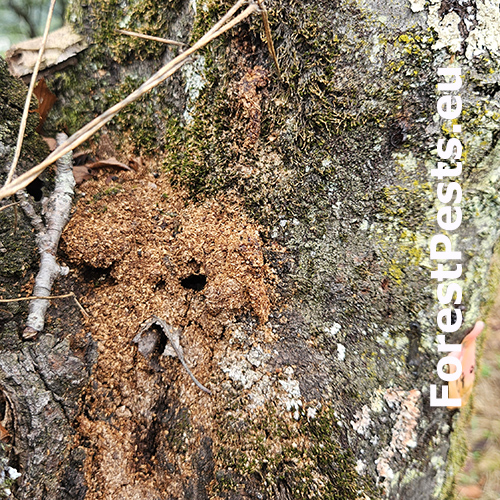
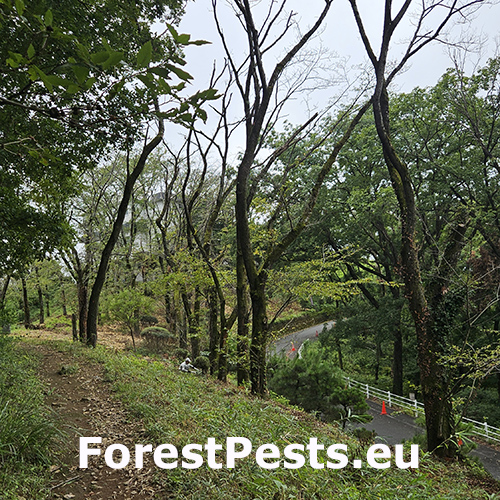
The red-necked longhorn beetle, Aromia bungii, is distinctive with its shiny black body and striking reddish or copper-colored neck (prothorax). Adults typically measure about 20–40 mm in length, with antennae that are often longer than their body. Aromia bungii is native to East Asia, primarily found in countries such as China and Korea. It has become a significant pest in these regions, particularly in orchards, and has recently spread to other parts of the world, including Europe. Females lay eggs on tree bark, and larvae bore into the wood, feeding on the cambium layer, which causes significant damage. The larval stage can last up to 2-3 years. Pupation occurs within the tree stem, with adults emerging in late spring or summer. Aromia bungii was accidentally introduced into Europe around 2010–2012 (Italy, Germany), raising concerns about its spread and potential damage to European orchards, gardens, parks and forests ecosystems.
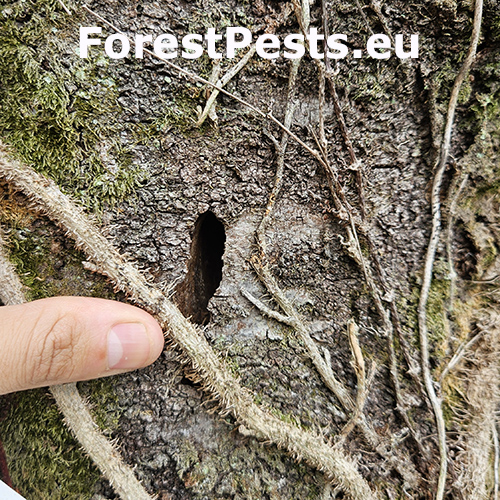
Infestations are identified by oval exit holes (6–12 mm) in the bark, made by adult beetles as they emerge, and the accumulation of coarse wood shavings or frass (a sawdust-like material) around the base of the tree or in bark cracks. Internal tunnels created by larvae weaken the tree, and infested branches may die due to larvae feeding on the cambium layer. Some trees may also exude sap around the infestation site as a defense response.
Tree Species: Black Locust, Cherry, Pear, Apple Tree, Apricots, Mulberry, Walnut, Plum, Poplar
Part of a plant- attacked: Tree trunk, Branch
Pest significance: Very harmful
Pest Category: Insects
Invasive Species: Yes
Present in EU: Yes
Pest group: Insect
Affected part of wood: Heartwood, Sapwood
Depth of damages: Bark, More than 5 cm depth, Under bark only, Up to 0,5 cm depth, Up to 2 cm depth, Up to 5 cm depth
The extent of damage: Lokally
Prevalence in Europe: Very rare
Damaged products: Firewood, Fresh timber logs (water still in the sapwood), Lumber, boards and prisms
Roundwood size: Branches and twigs, Diameter 50+, Diameter from 10 up to 50 cm, Diameter up to 10 cm
Wood discoloration: No
Exit holes: Oval
Pest subcategory: Wood-boring insect
Similar pests

Neoclytus acuminatus

Pyrrhidium sanguineum
