


Armillaria ostoyae
Dark honey fungus
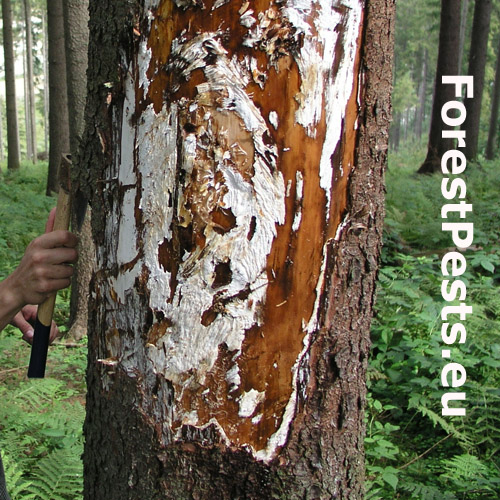
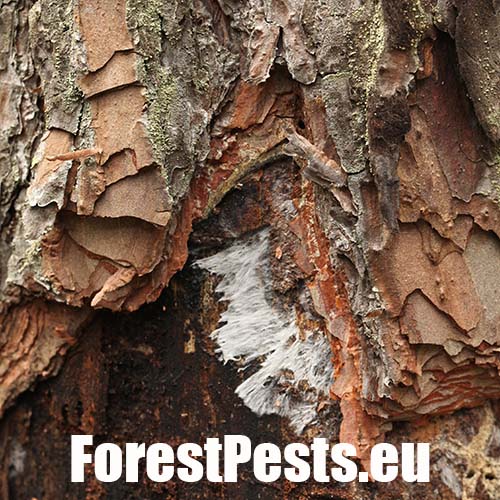
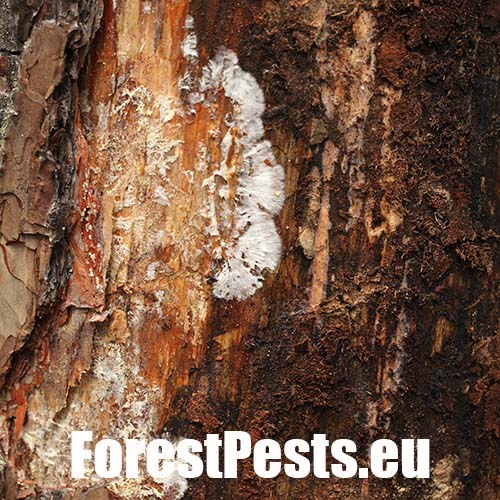
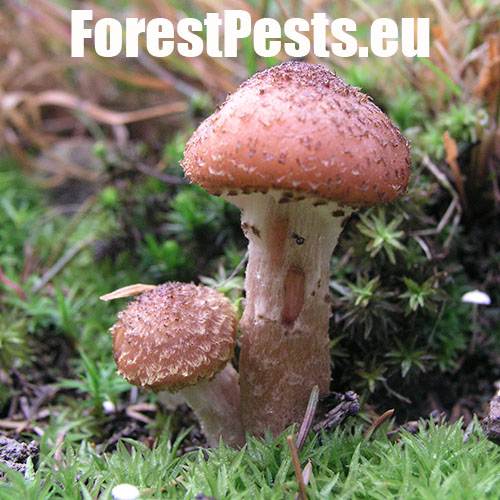
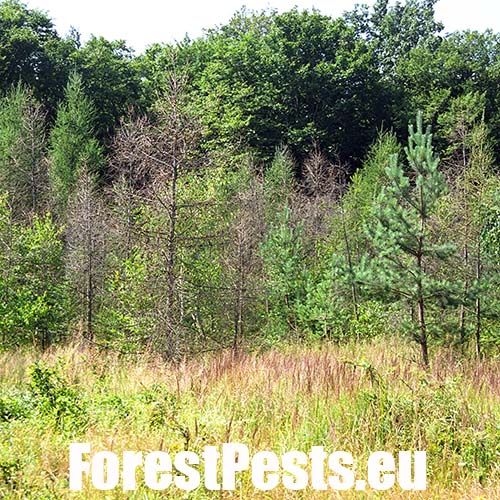
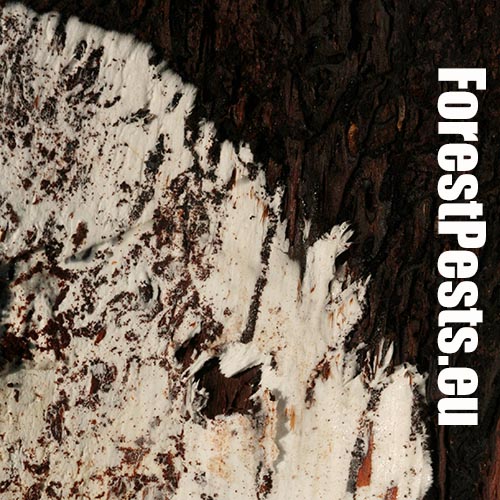
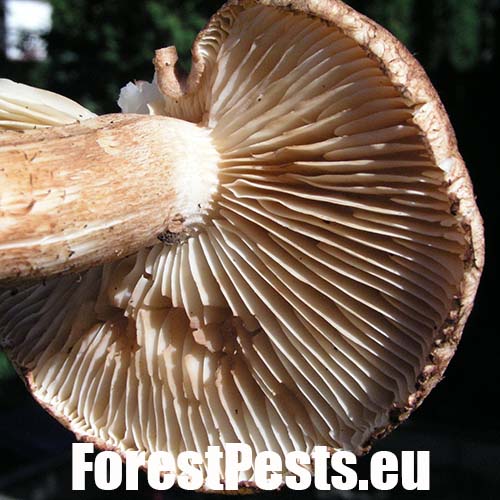
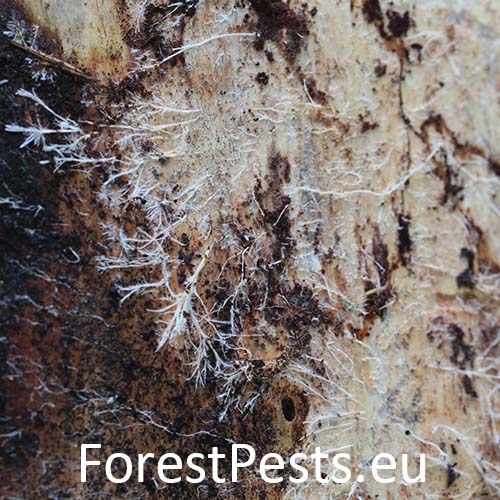
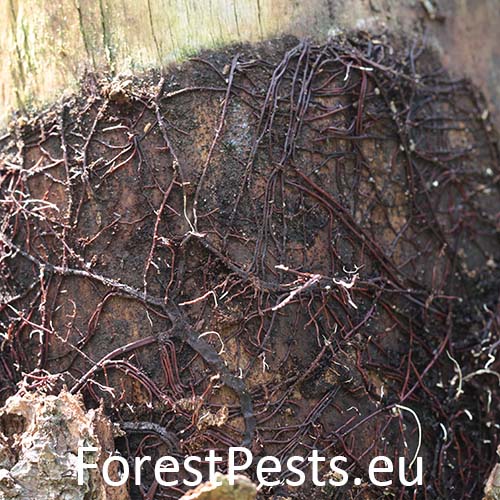
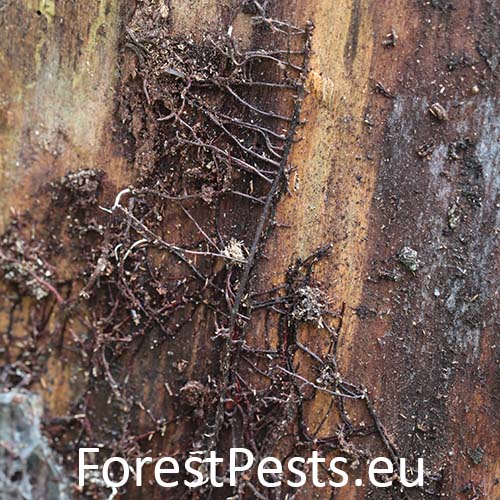
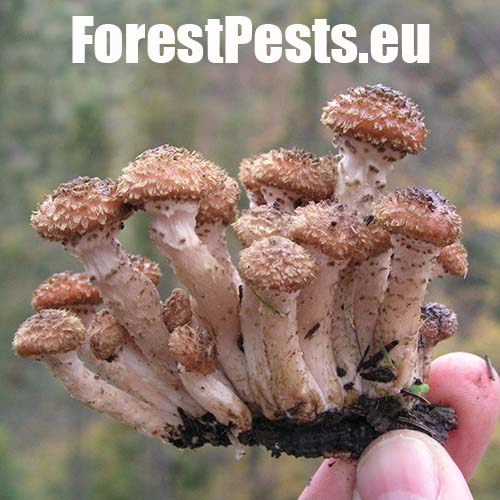
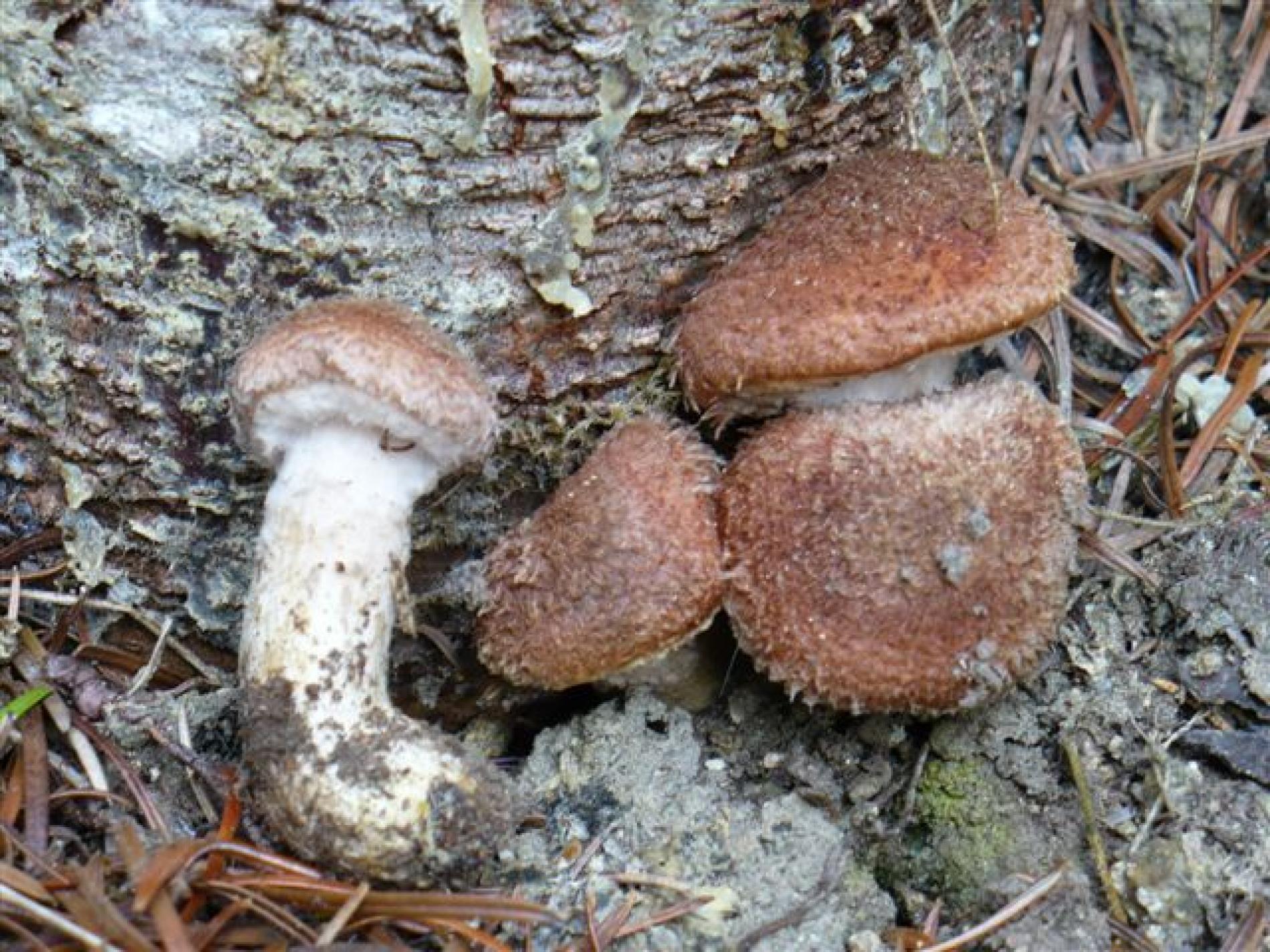
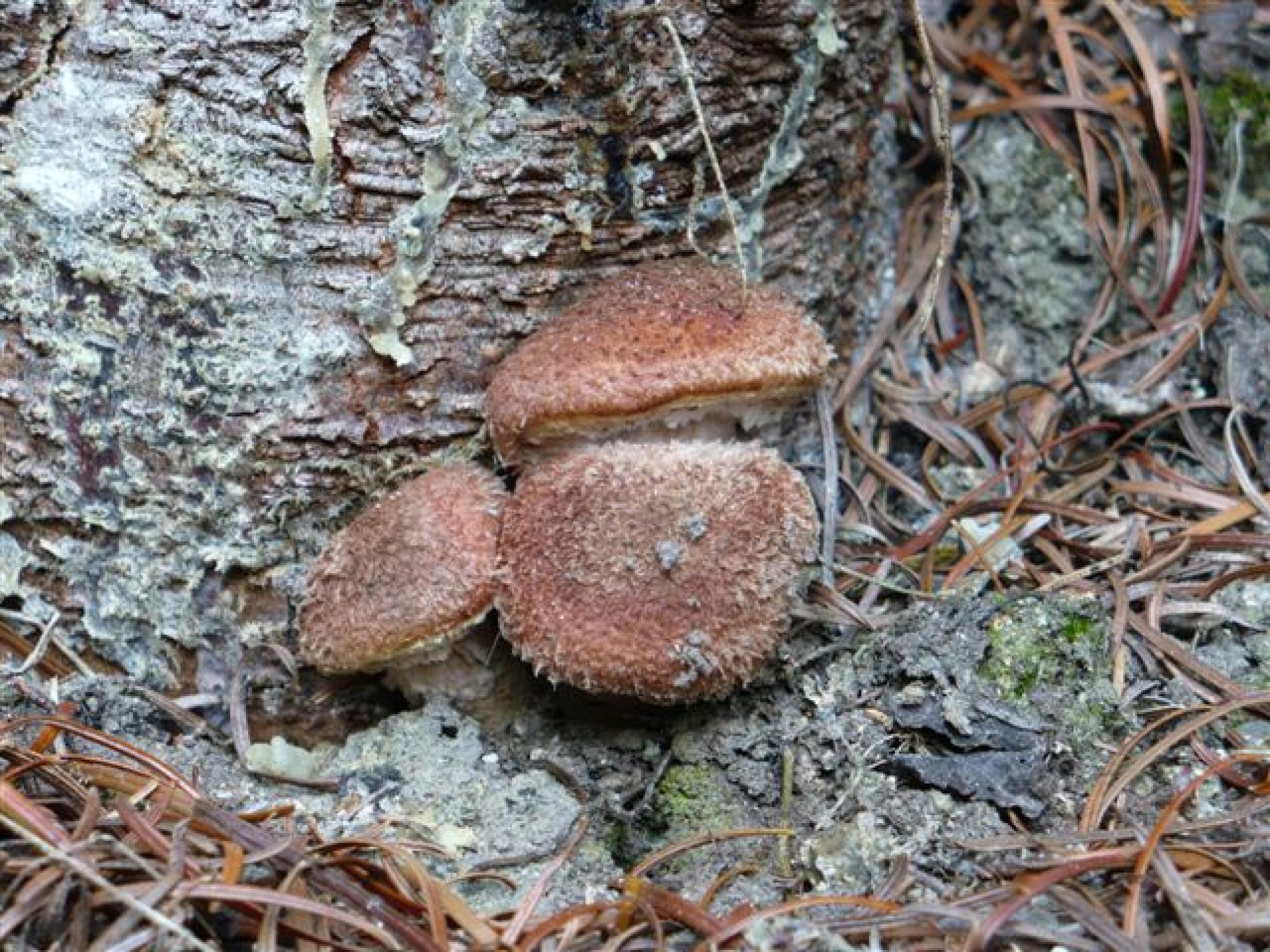
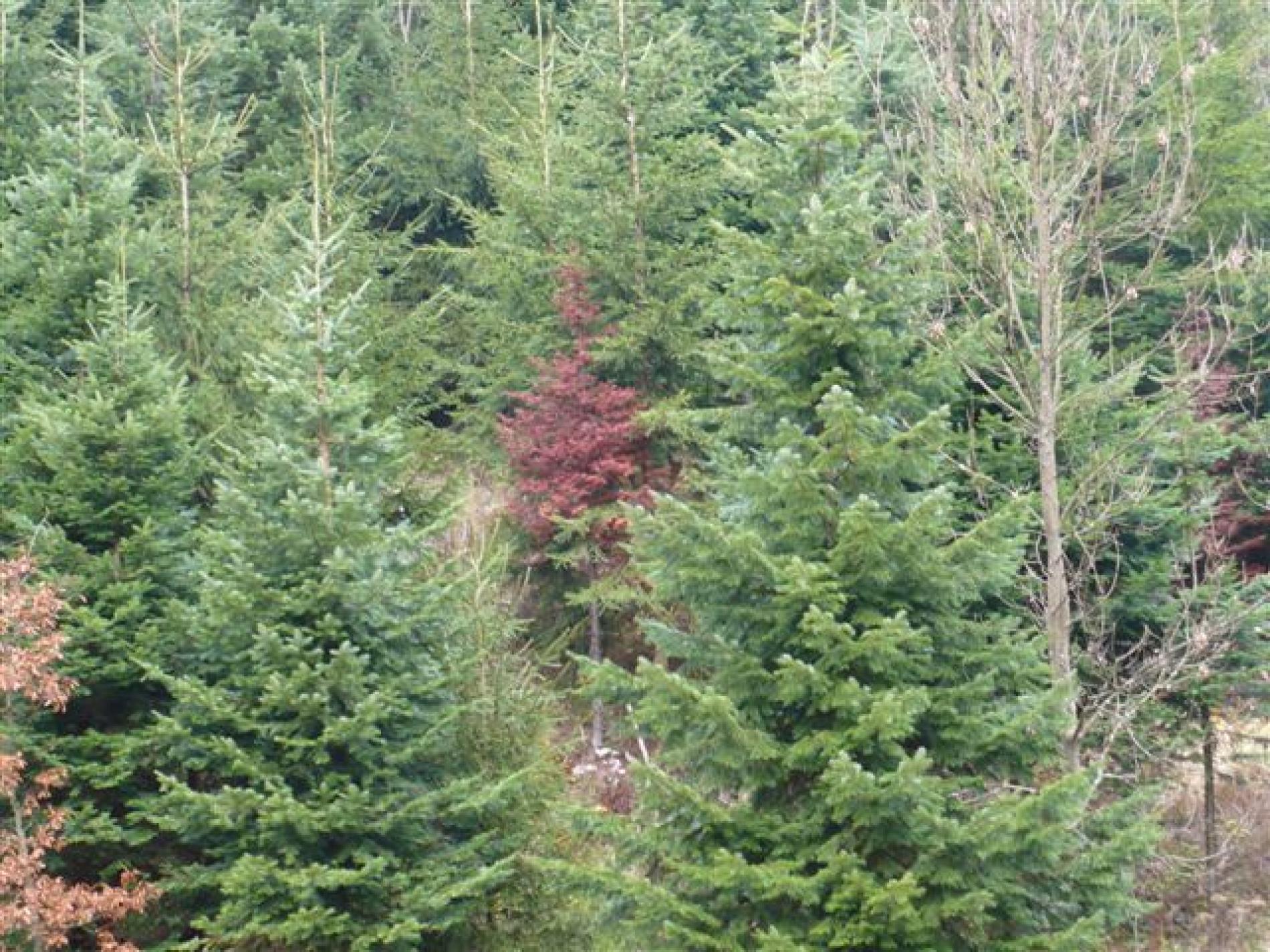
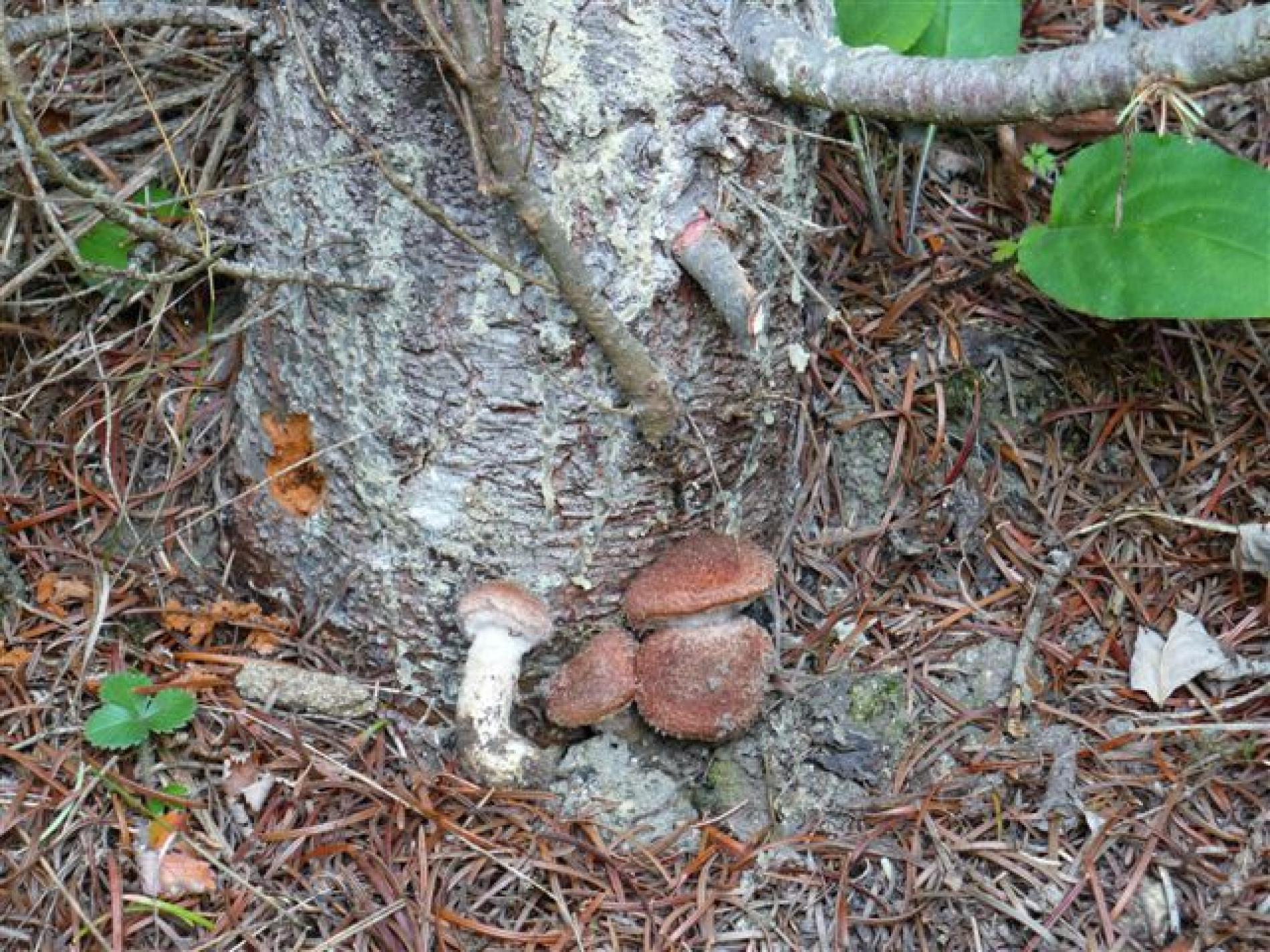
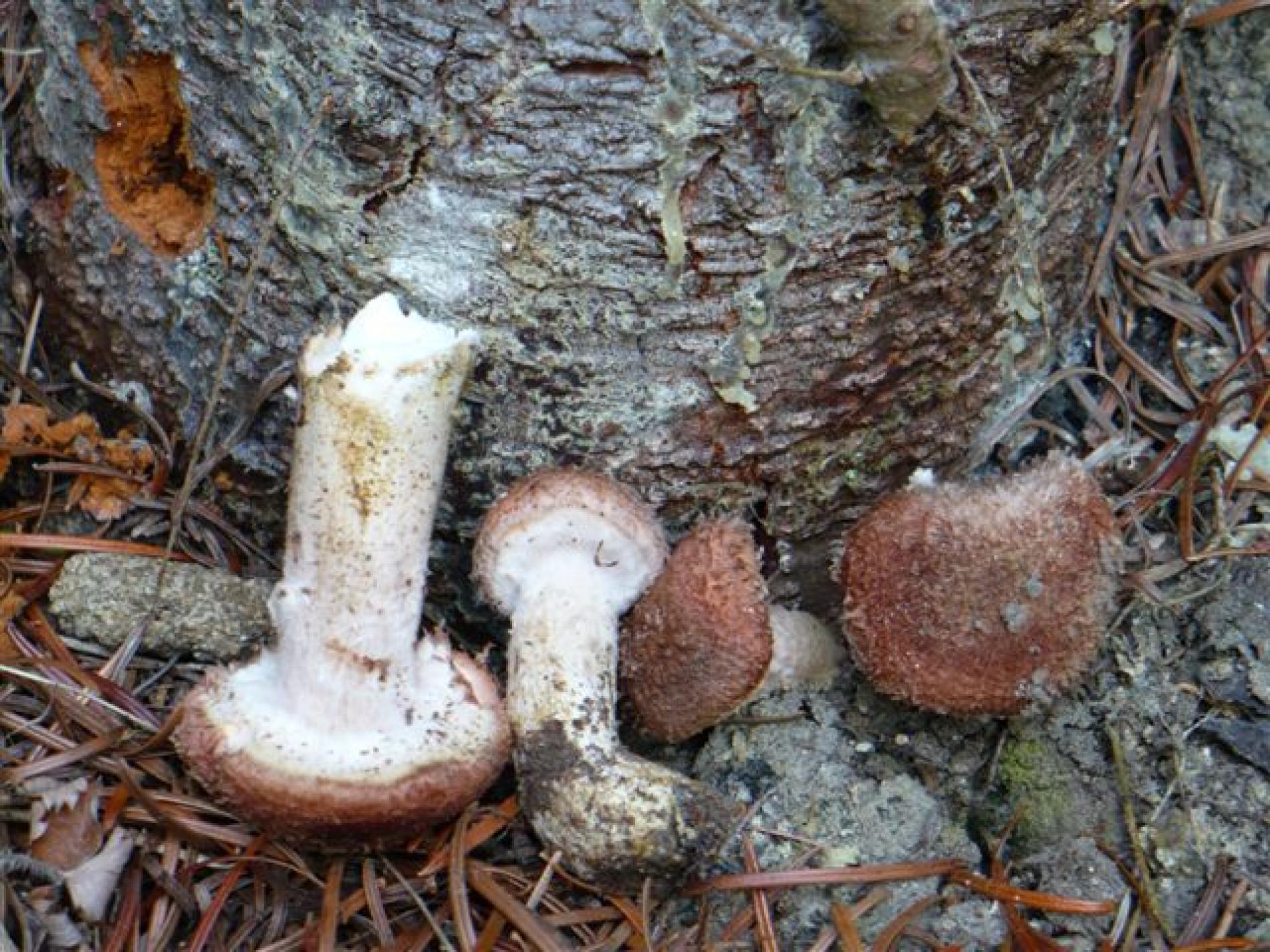
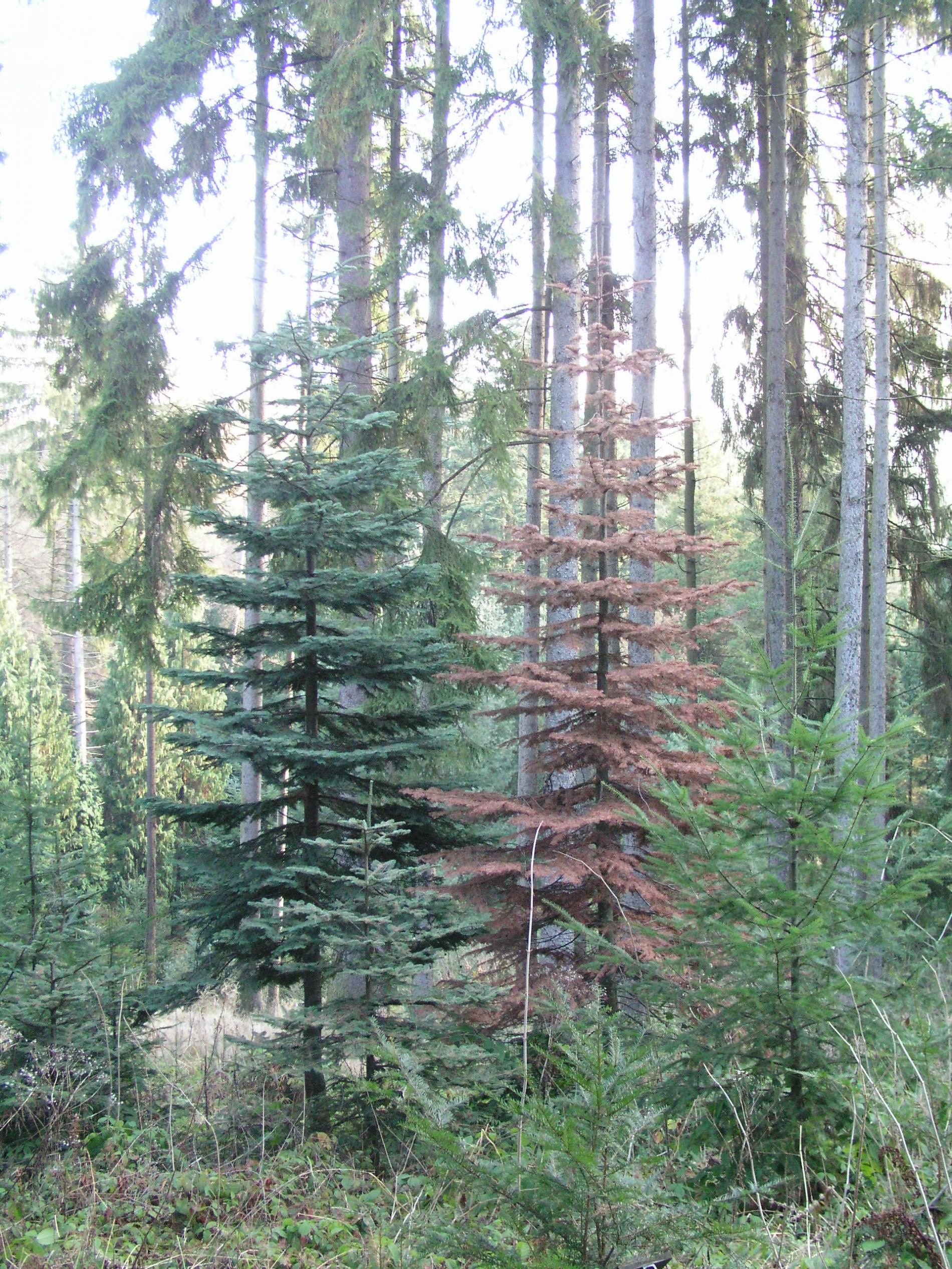
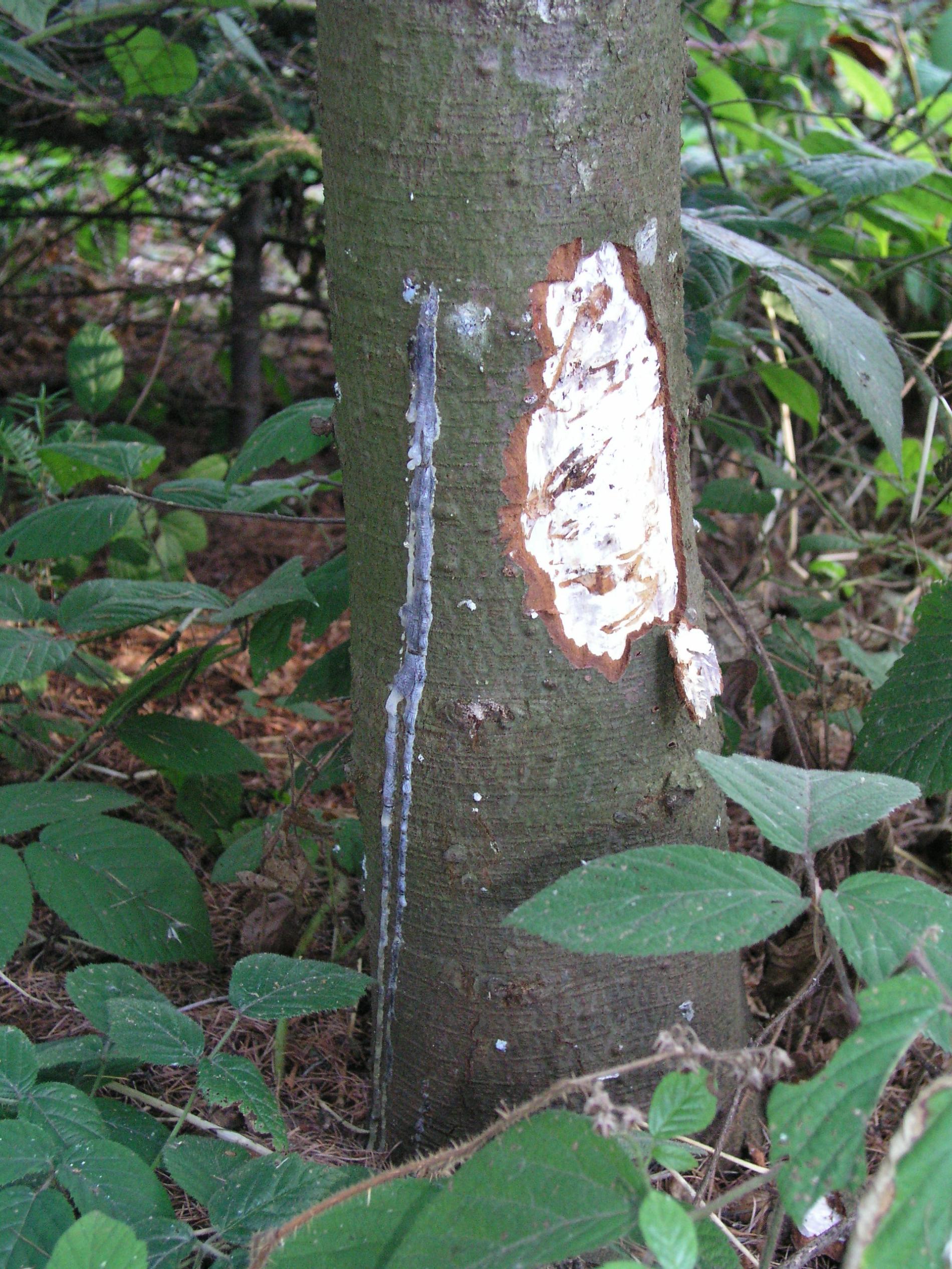
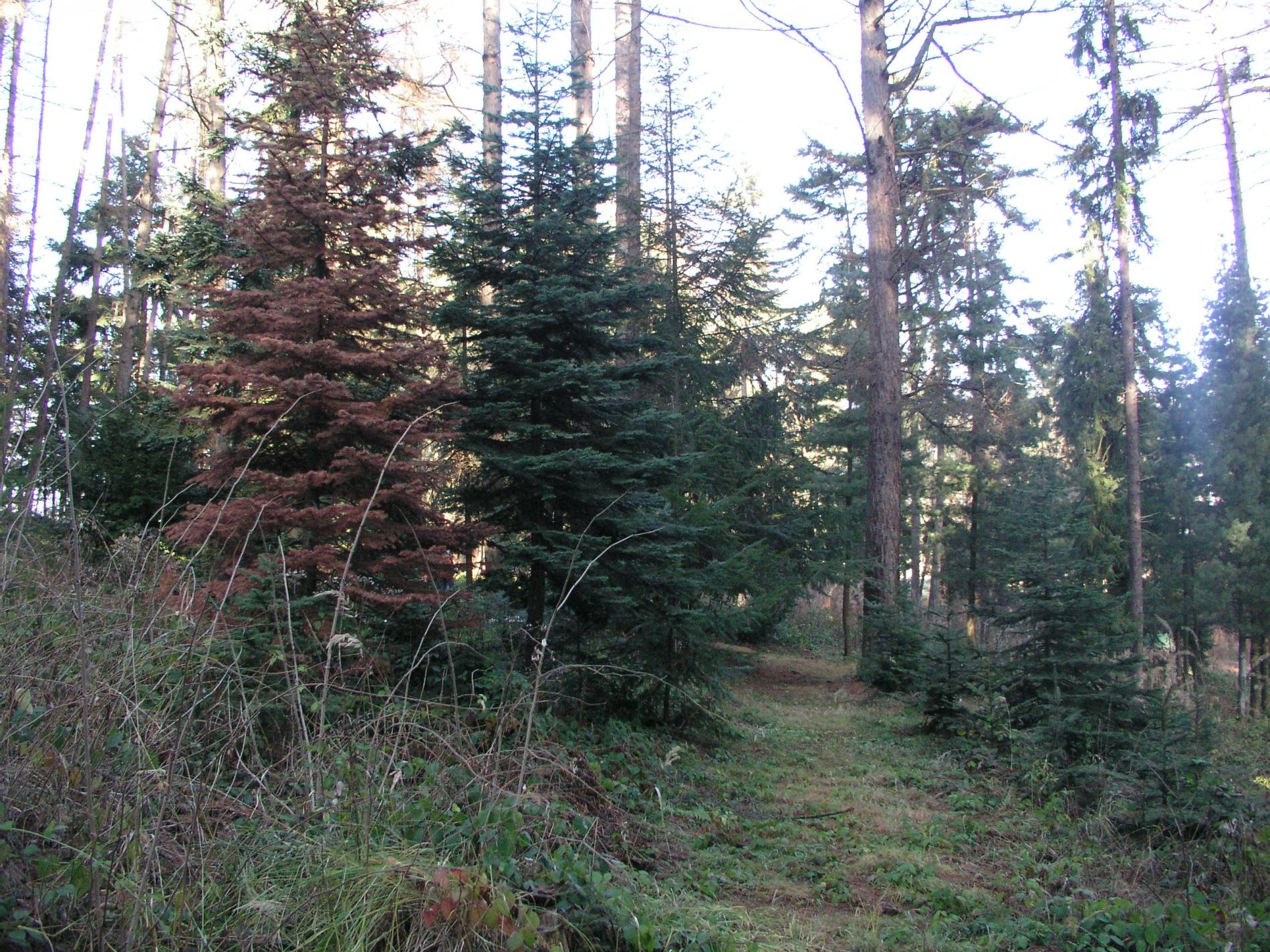
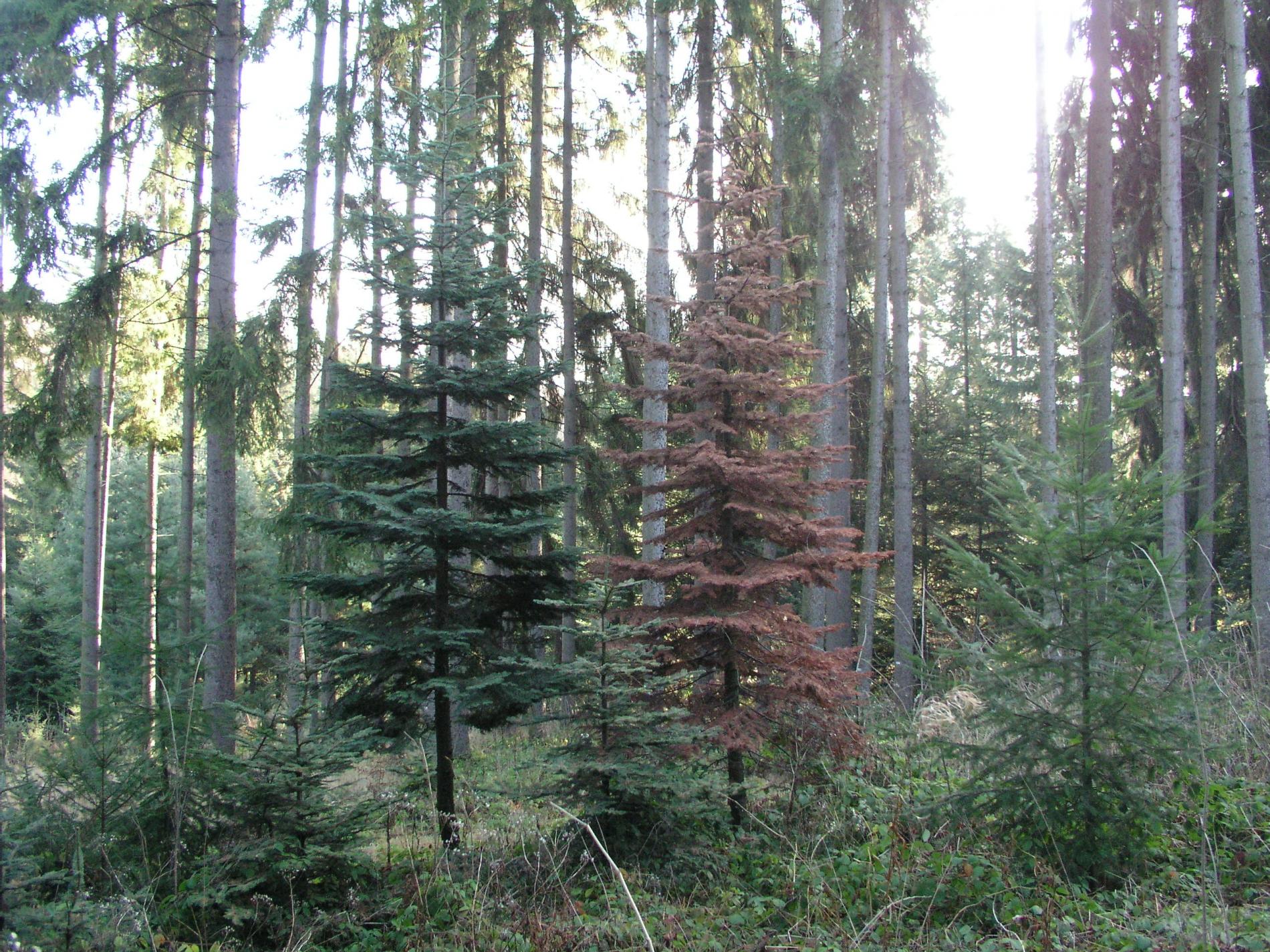
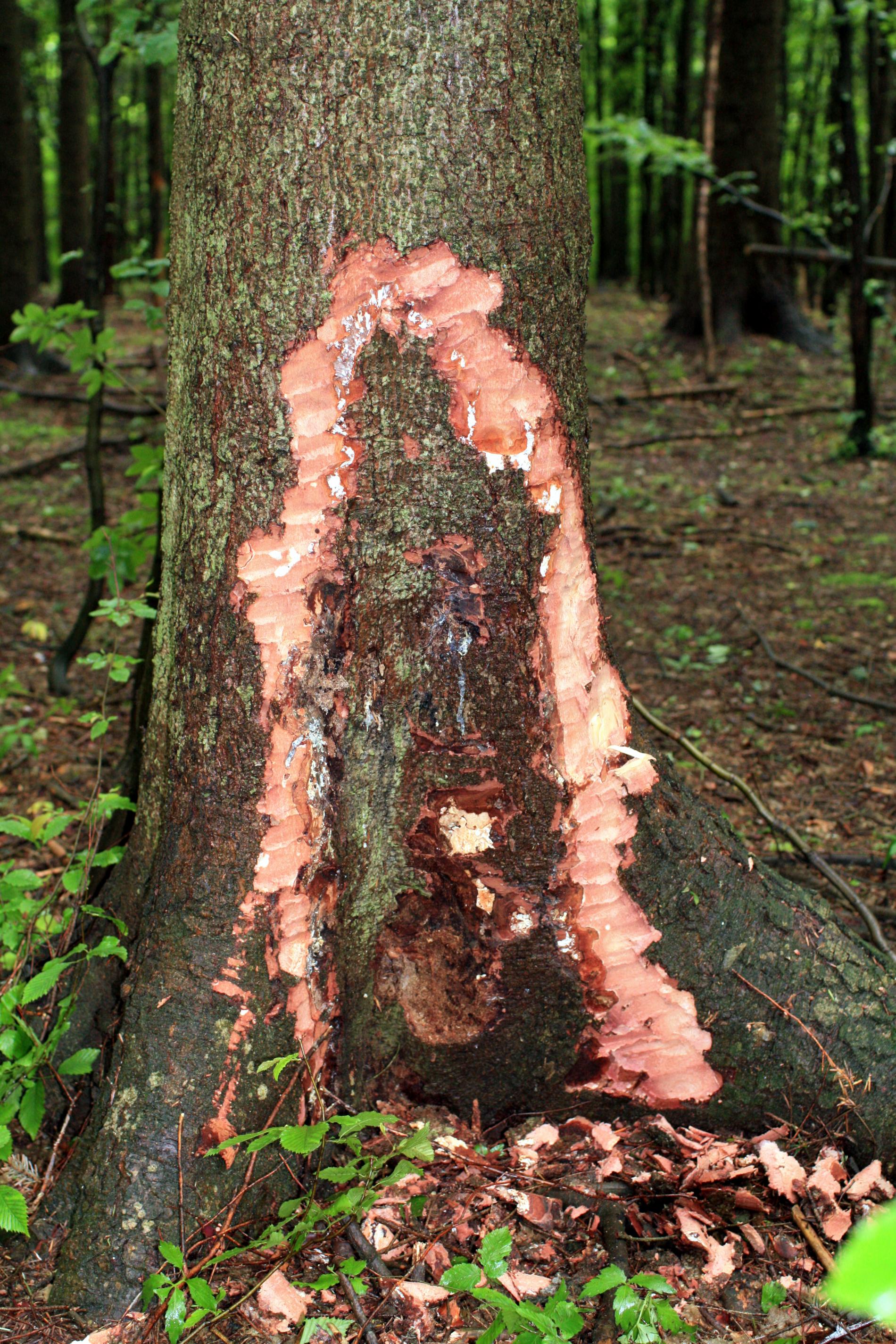
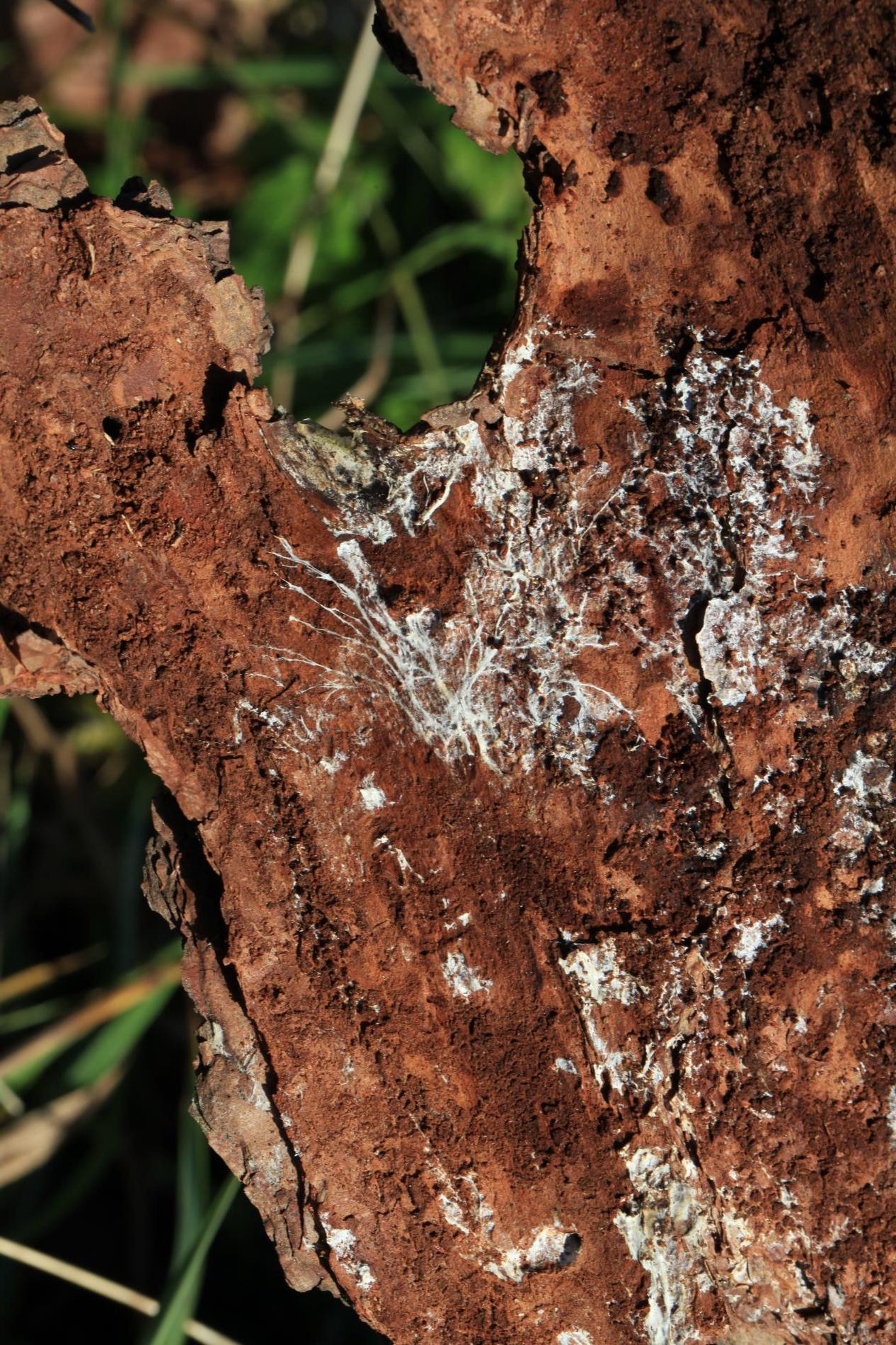
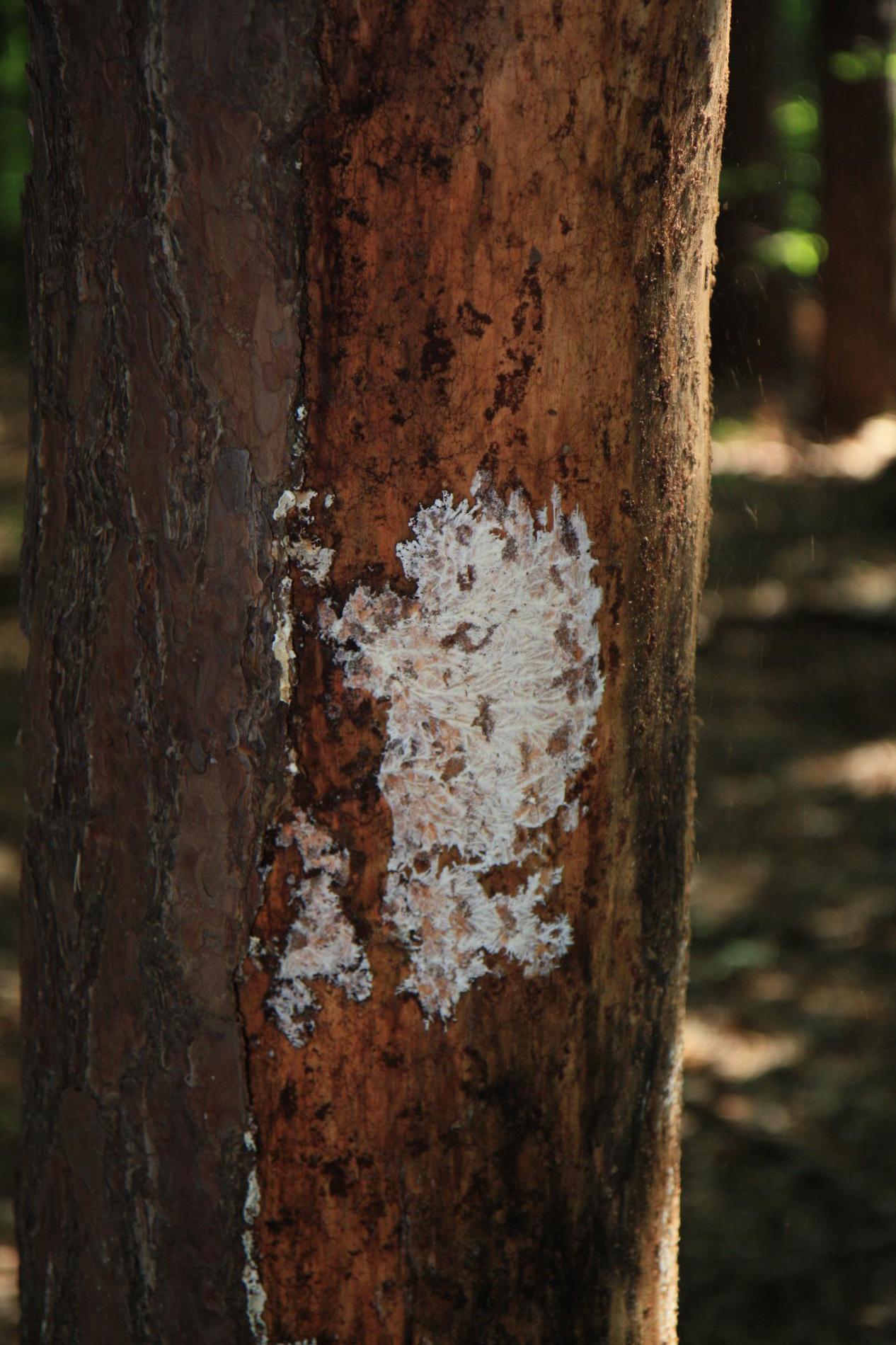
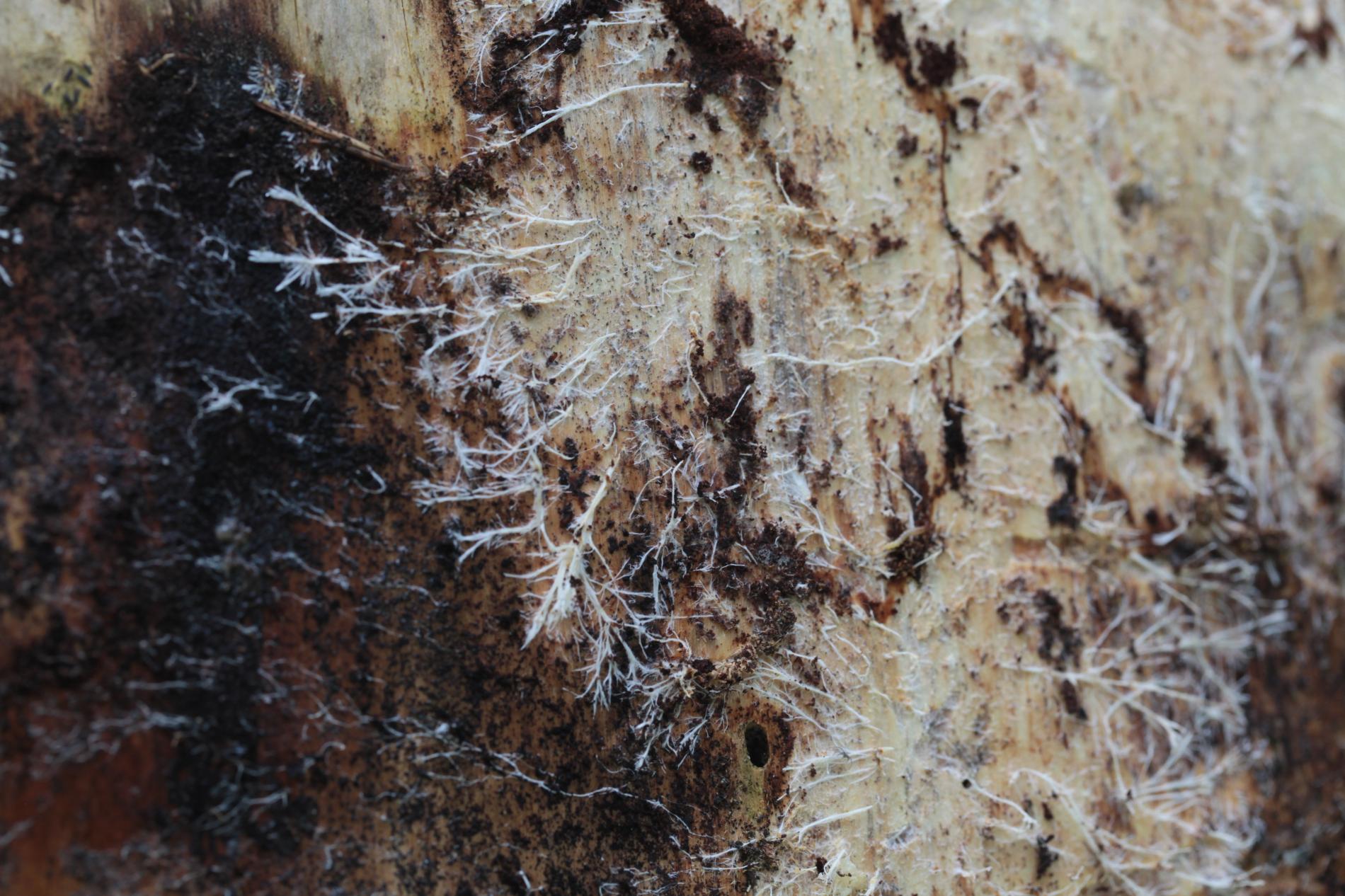
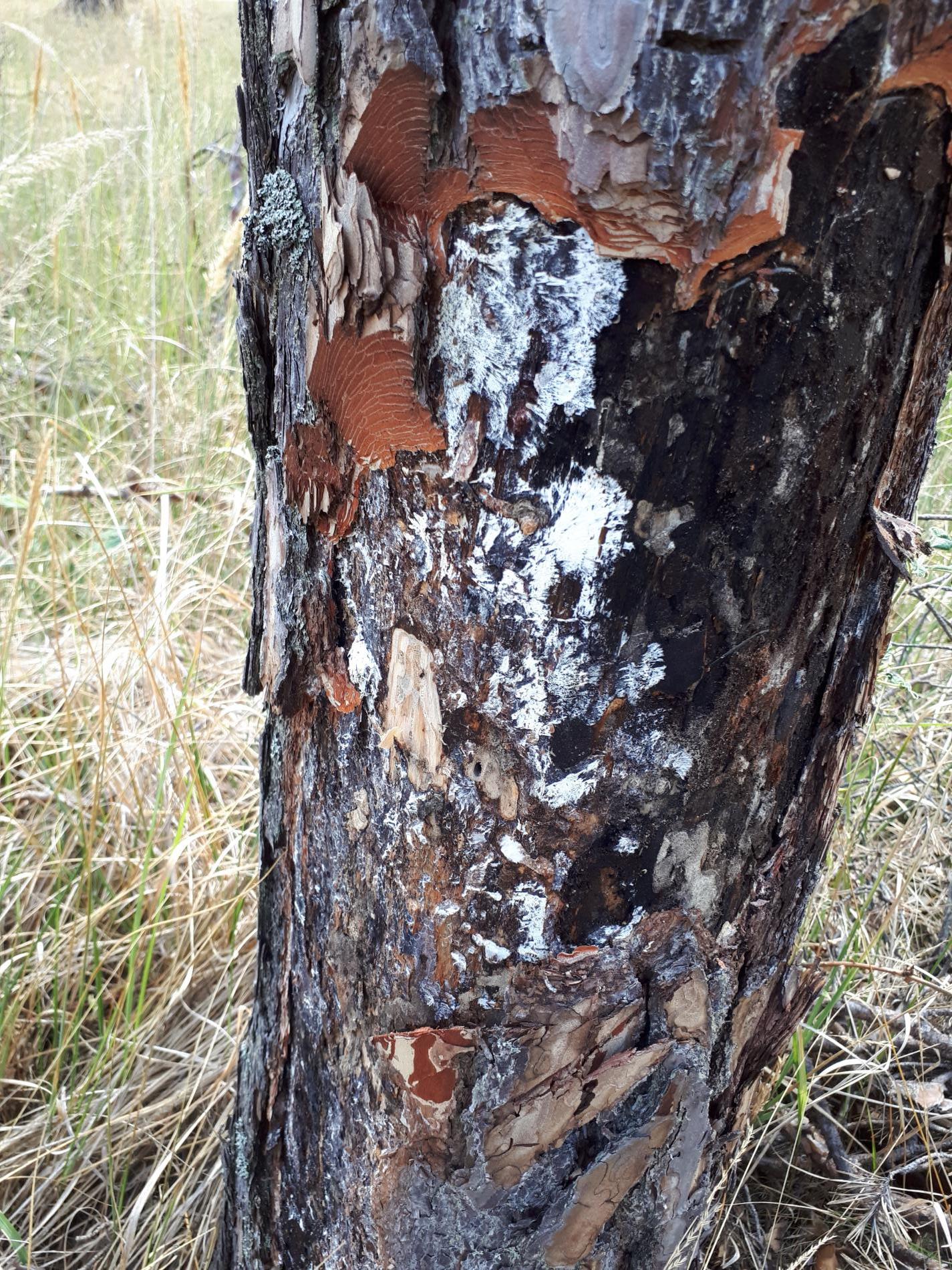
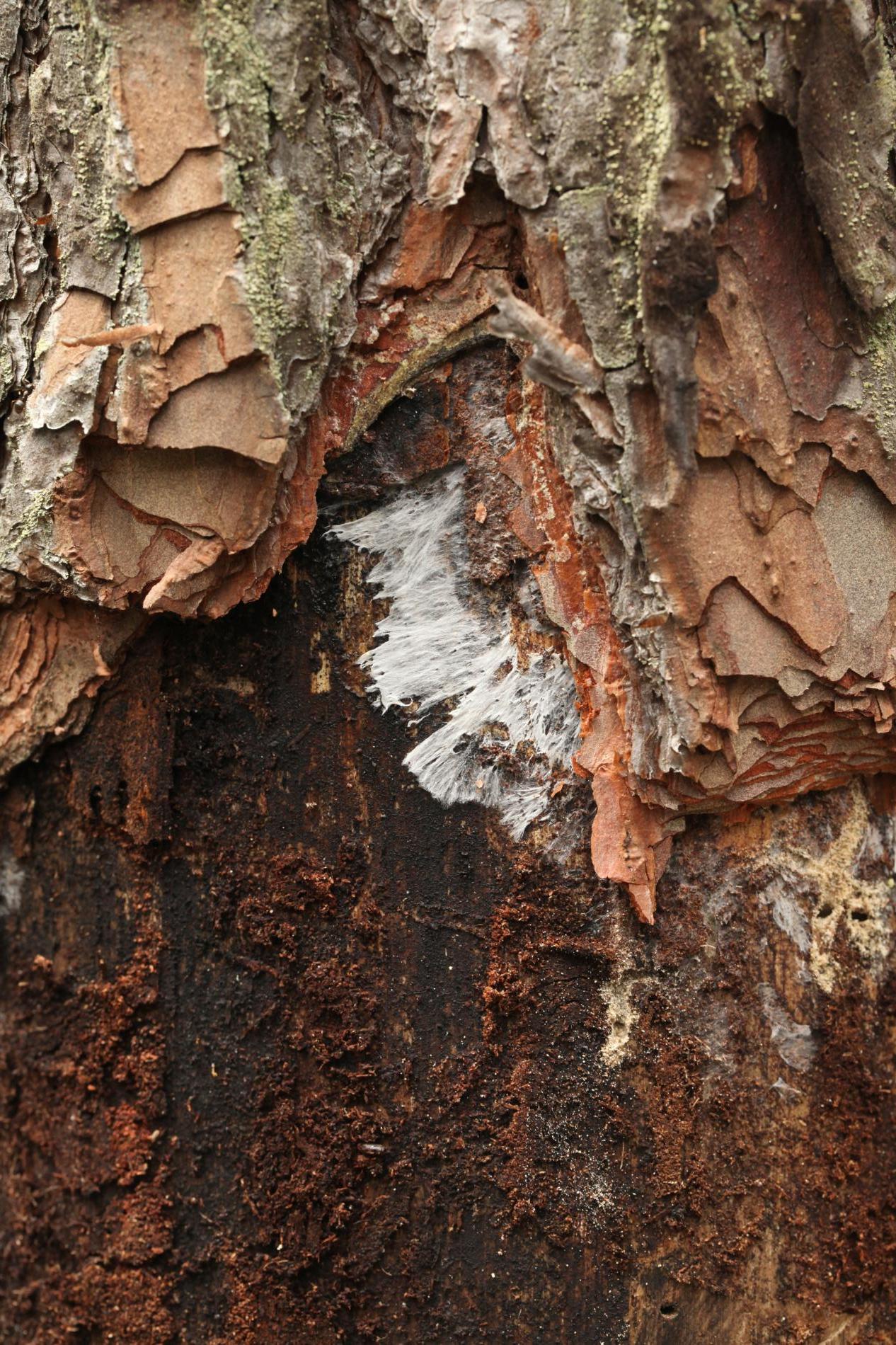
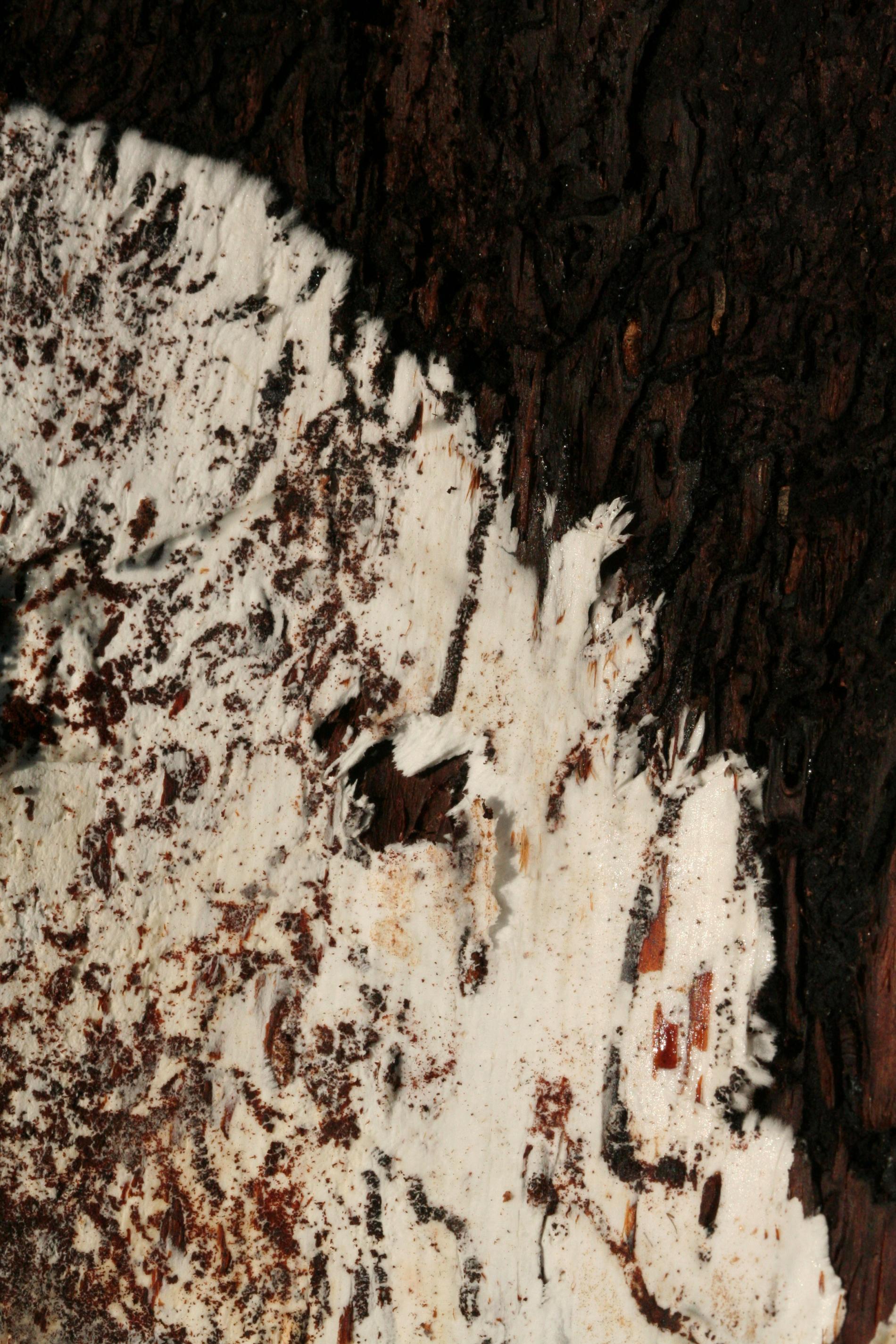
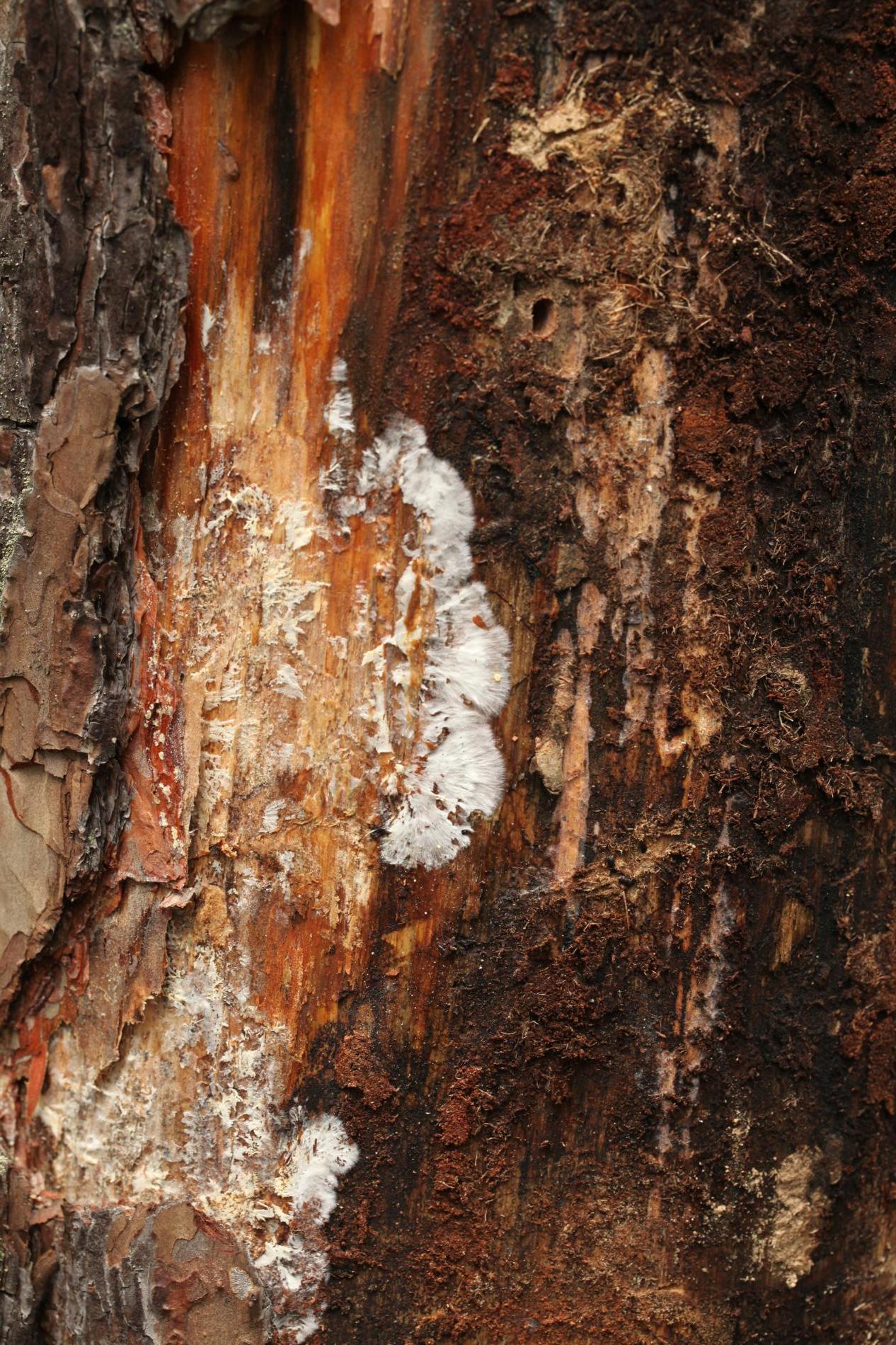
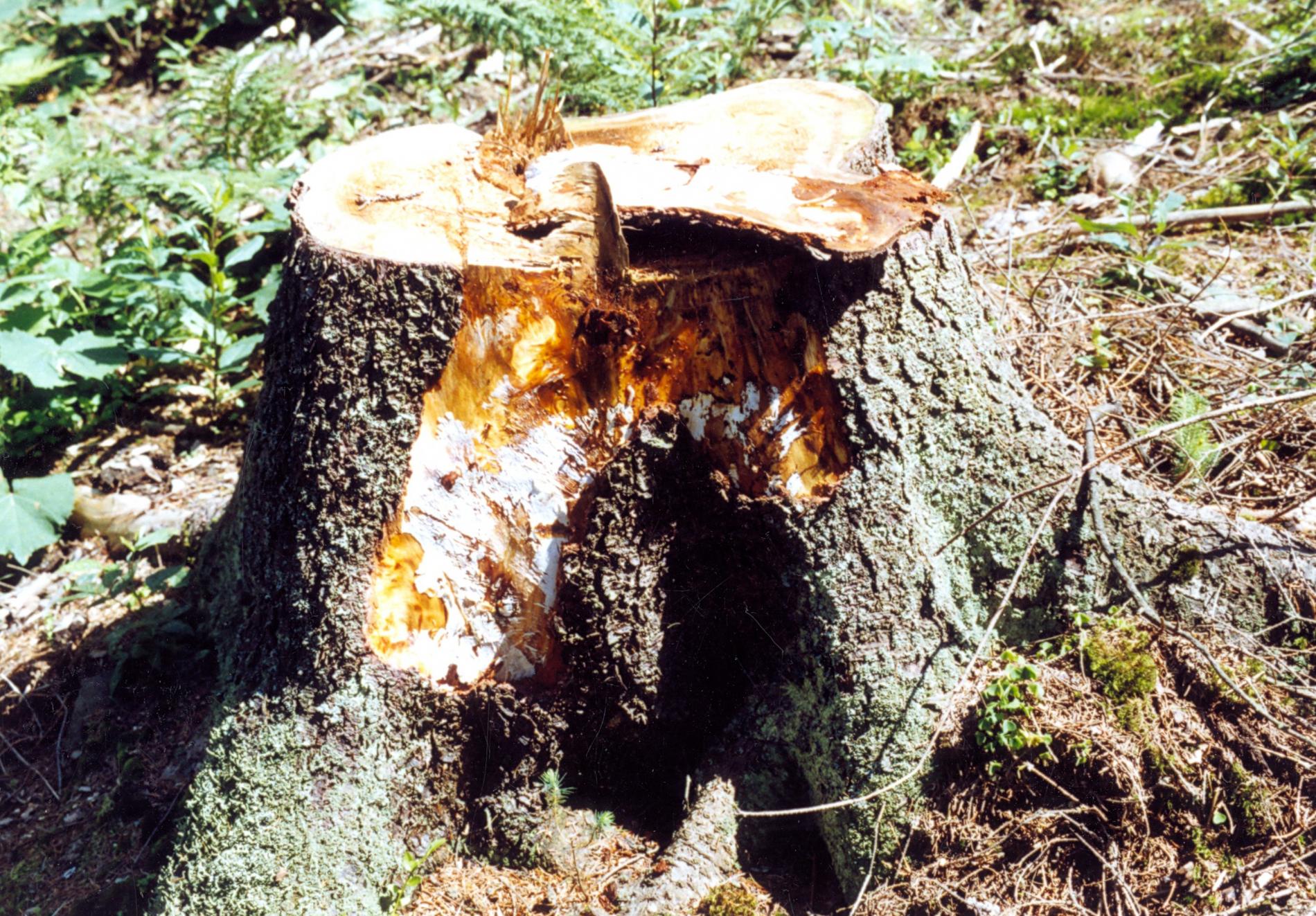
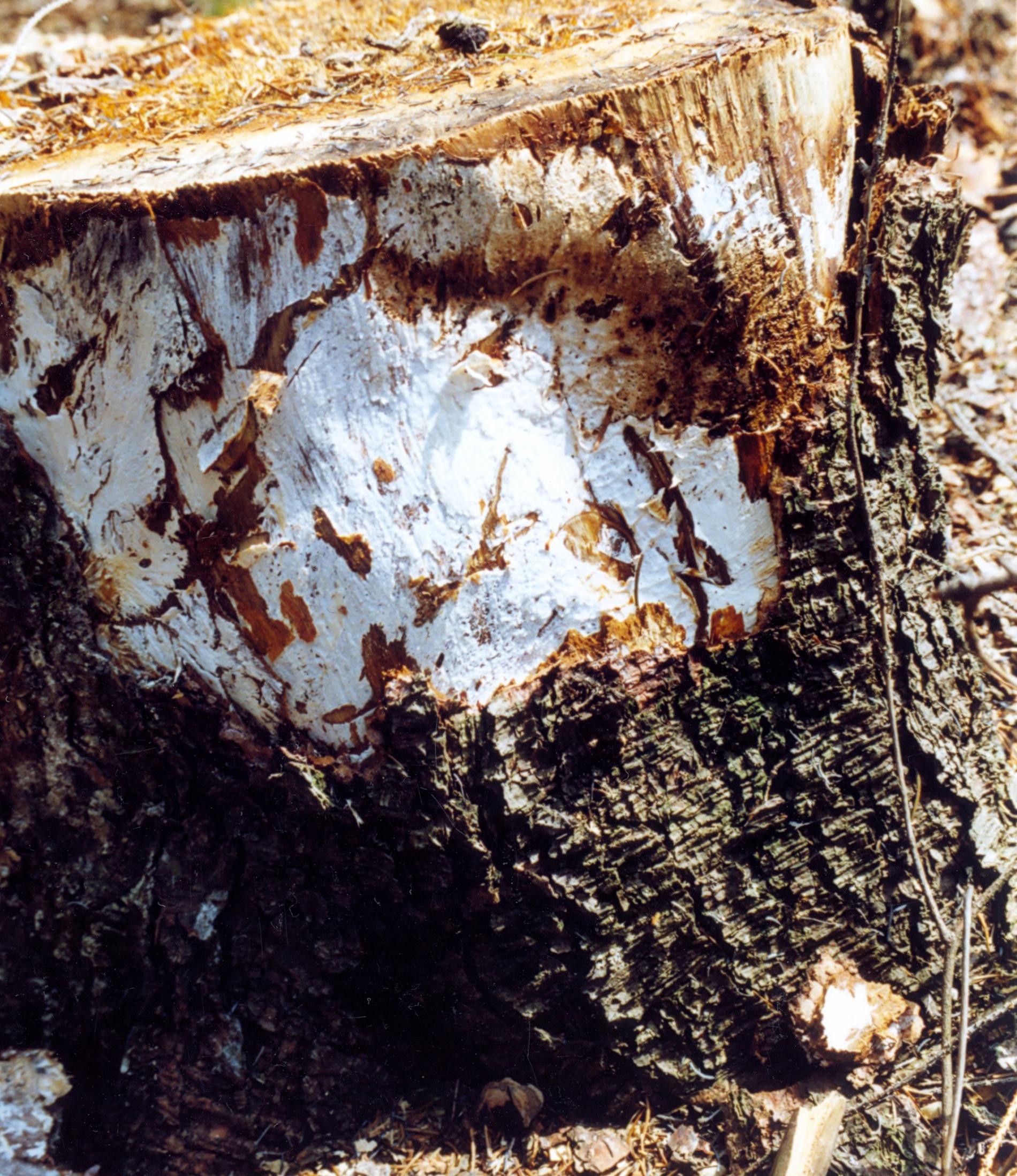
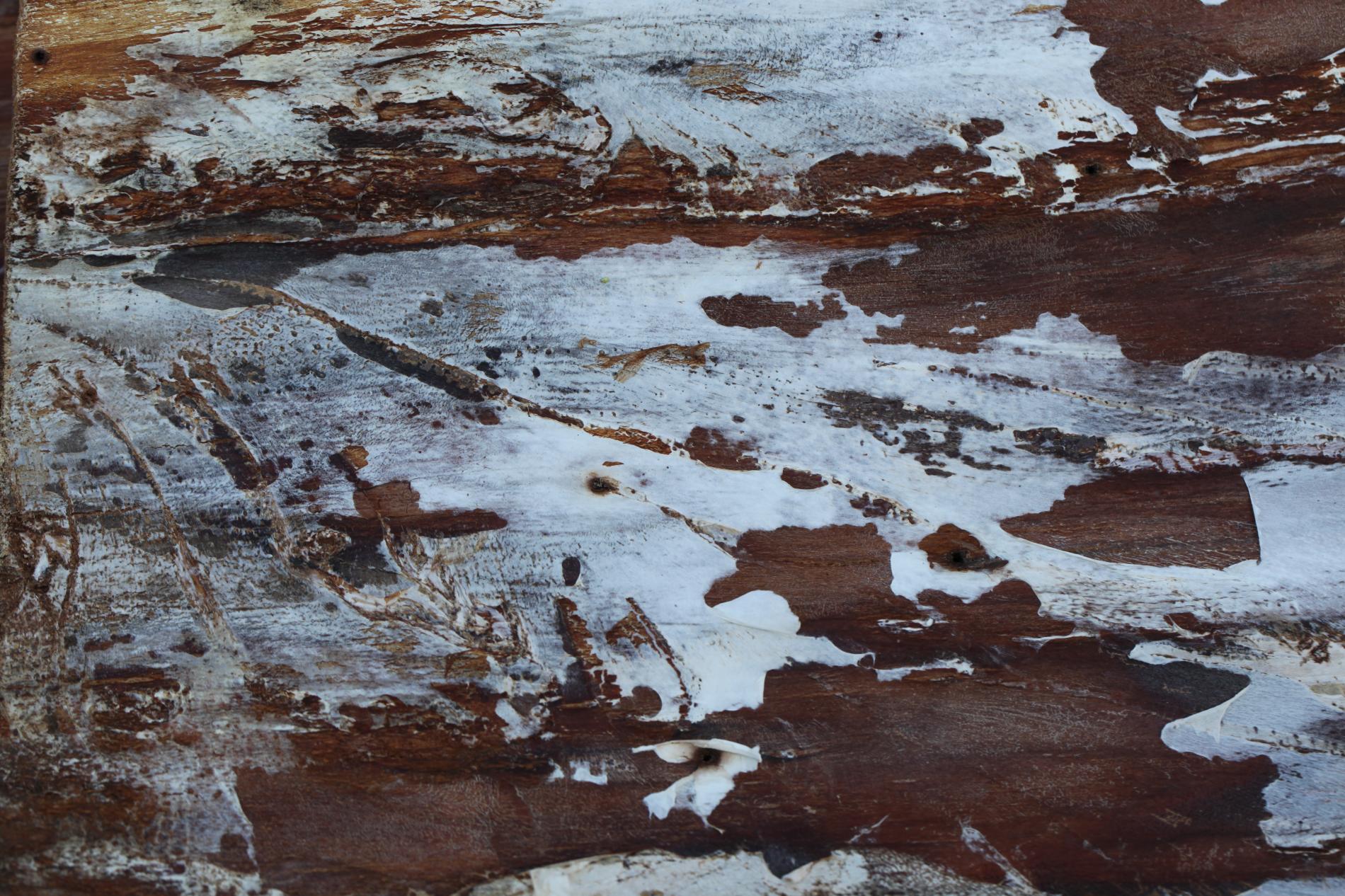
Dark honey fungus is one of the most significant pathogens of the root system of the conifers from seedlings up to mature trees. It causes intense, rapidly spreading white rot of roots and trunk sapwood. Syrrocium causes quick death of cambium. An indication of sudden tree death may be withering and dying off of just flushed shoots (similarly to frost damage of shoots) as well as the entire tree within several weeks of infection. The fruiting bodies occur at the end of the season. It also survives as a saprophyte; however, it only rarely colonizes fallen trees.
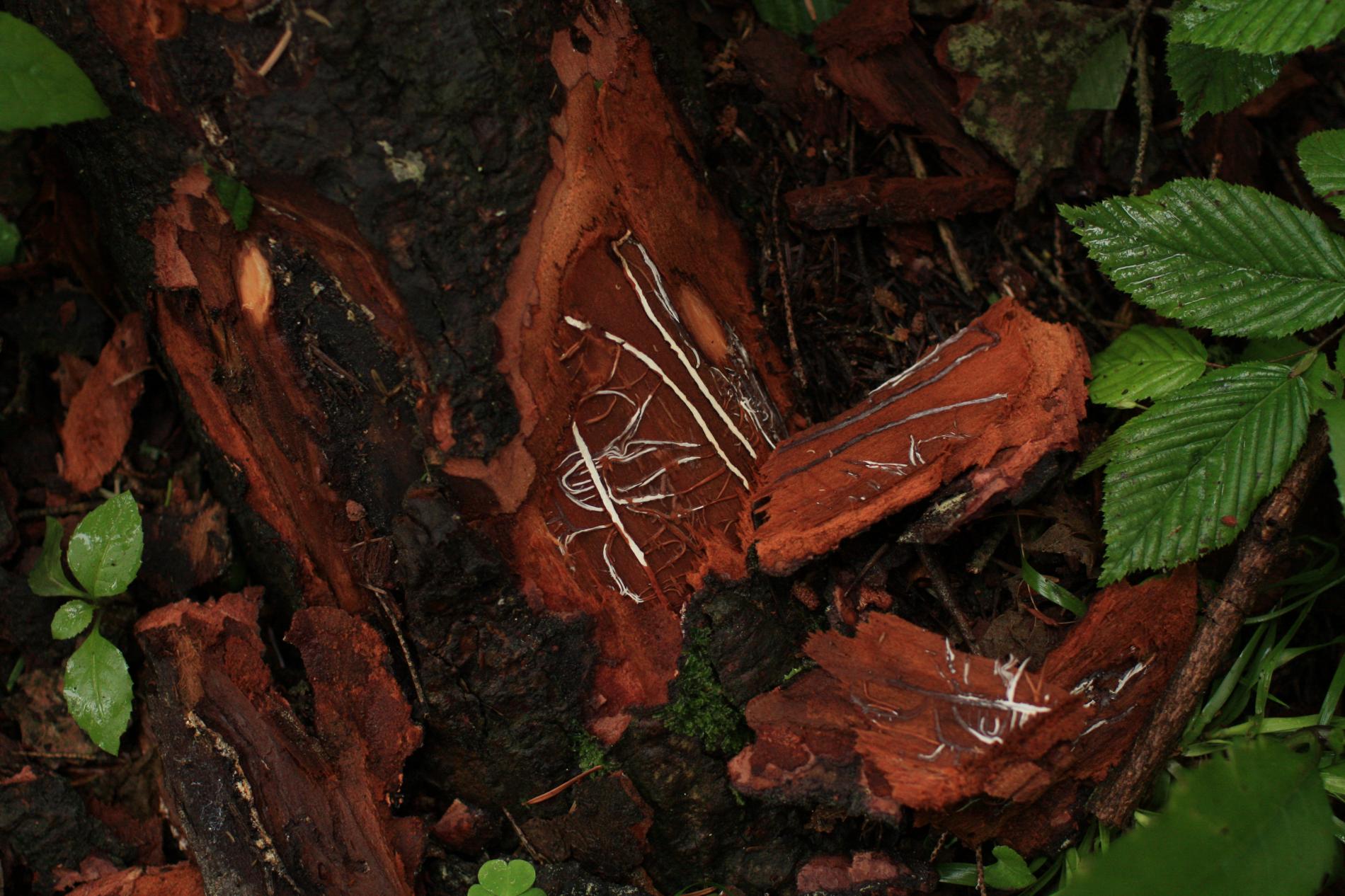
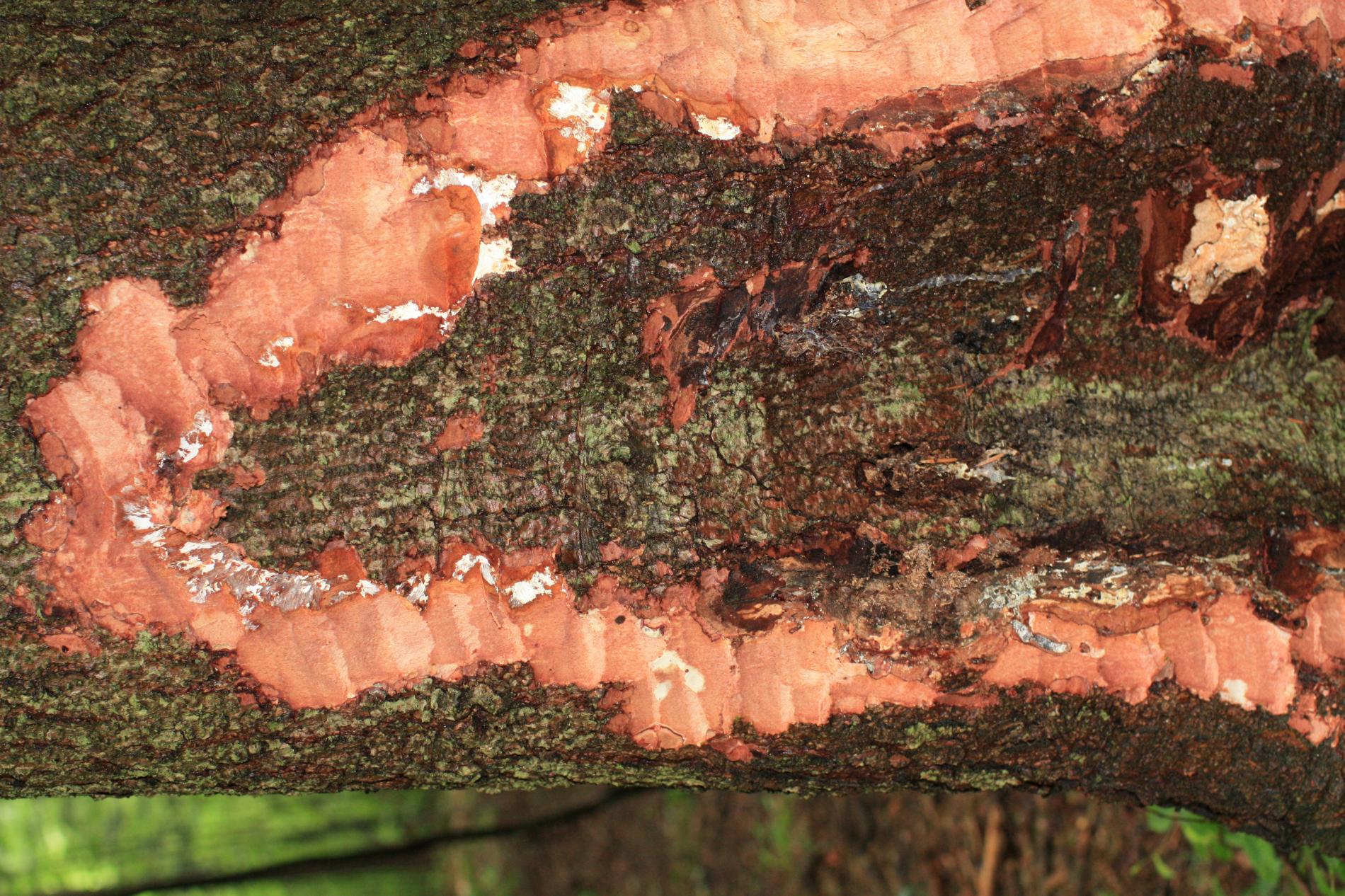
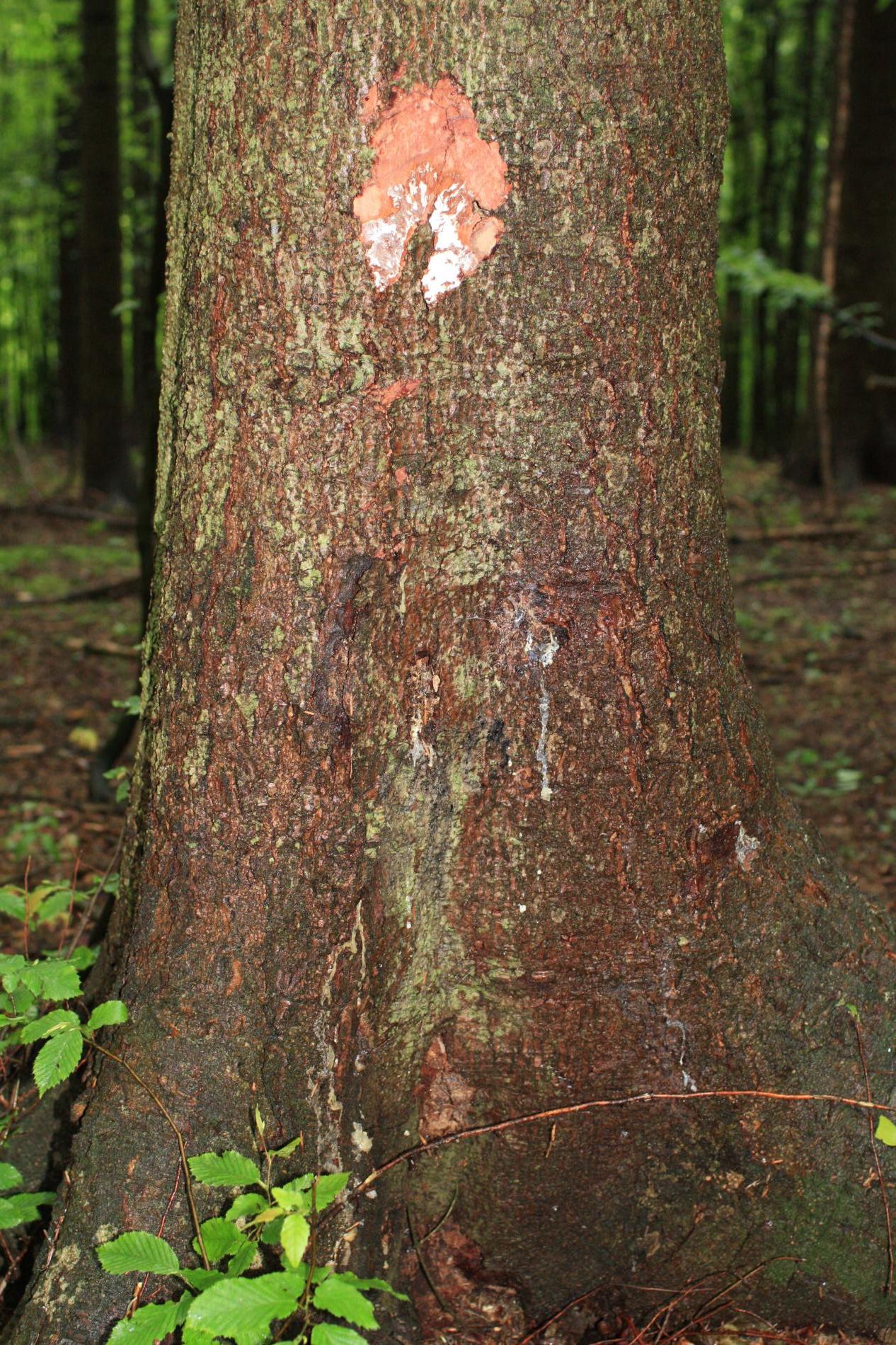
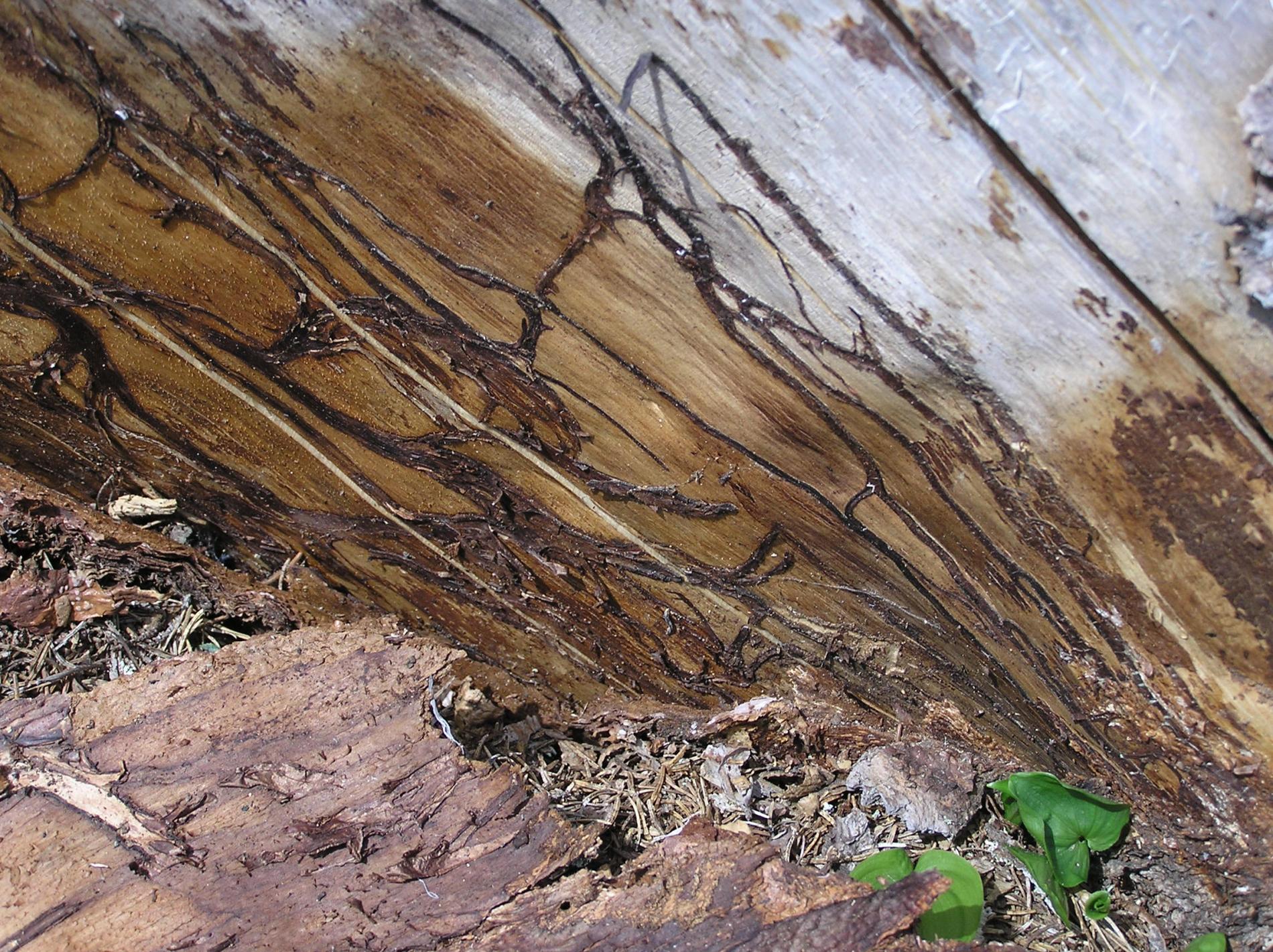
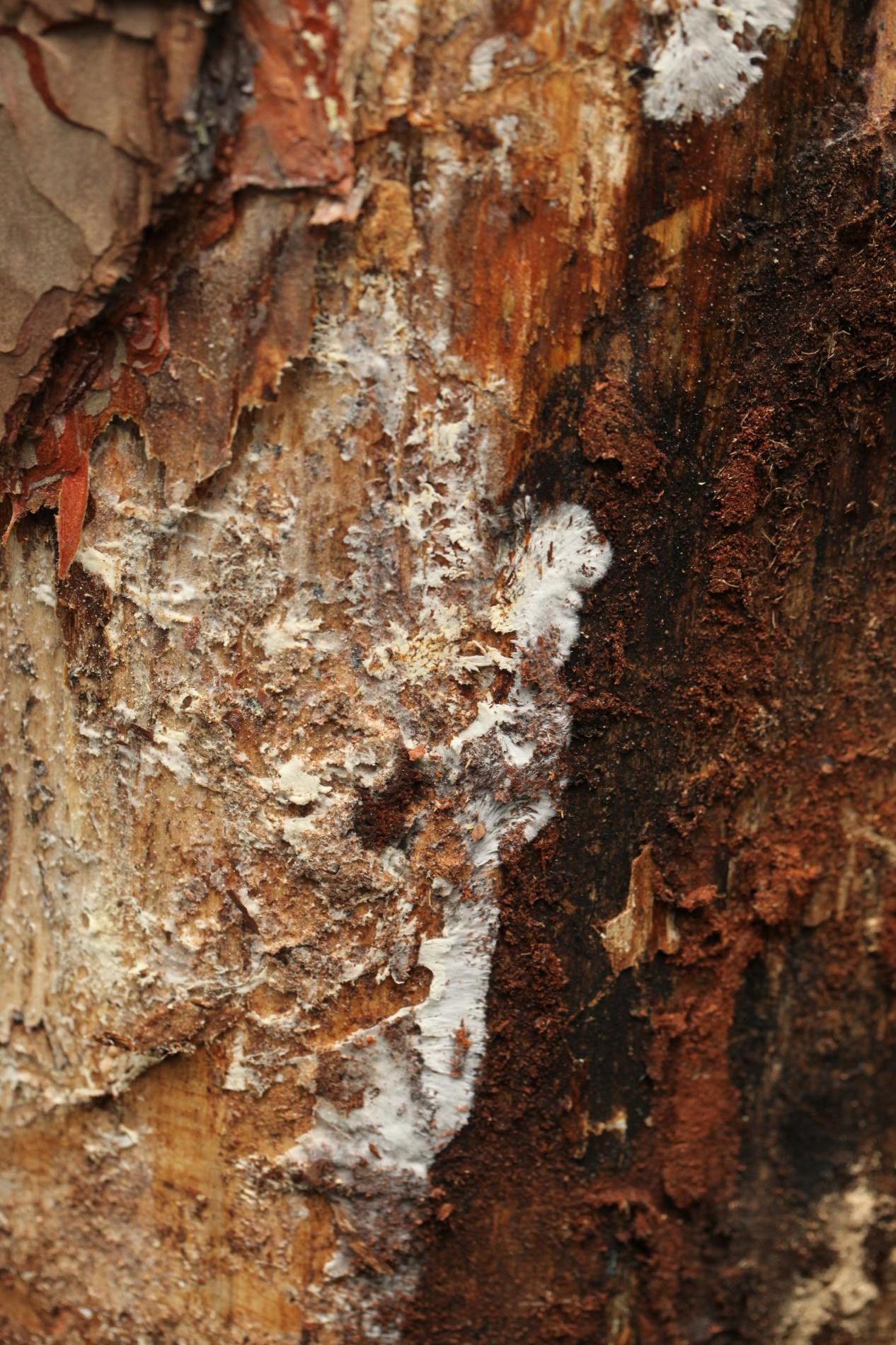
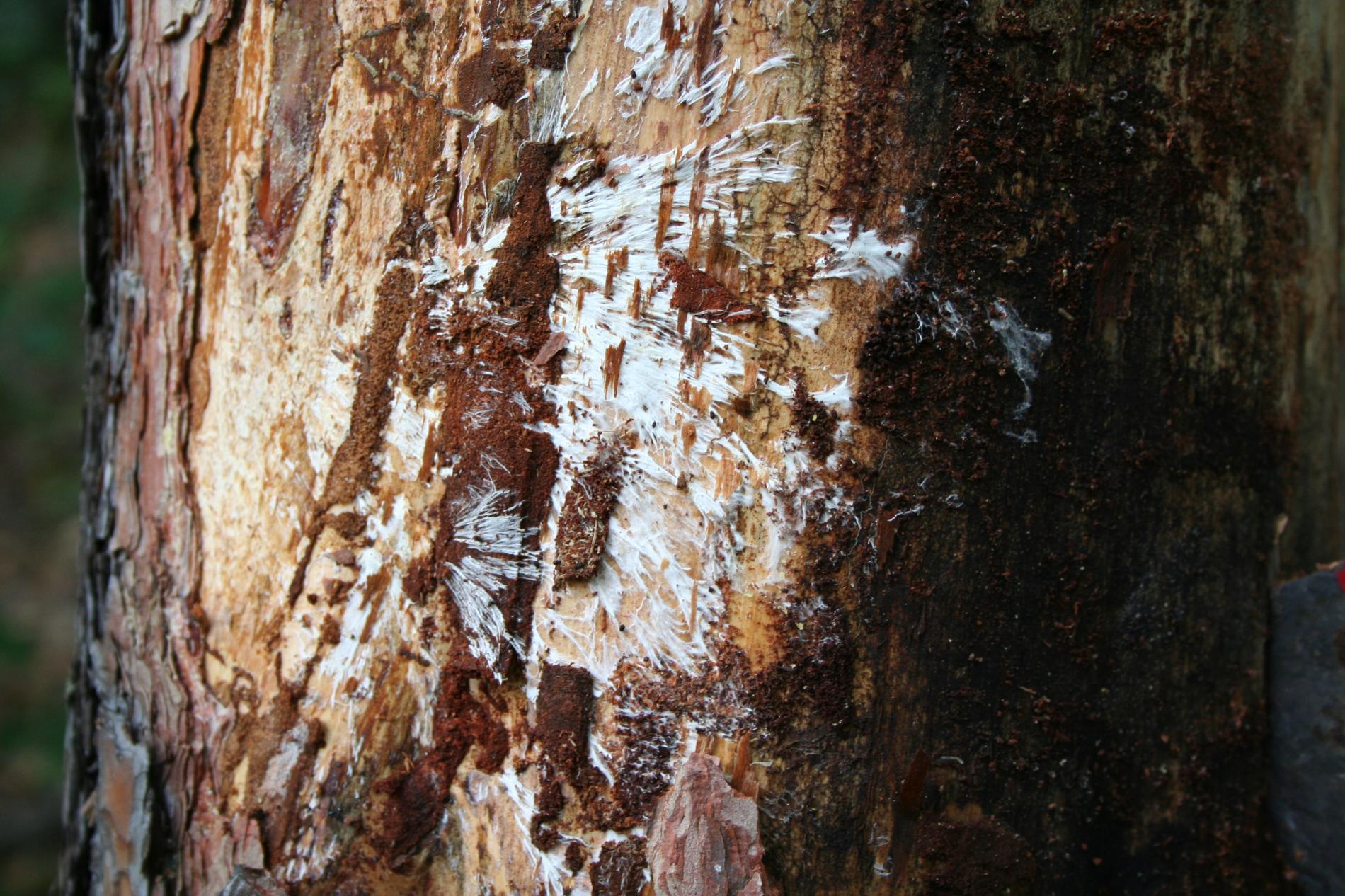
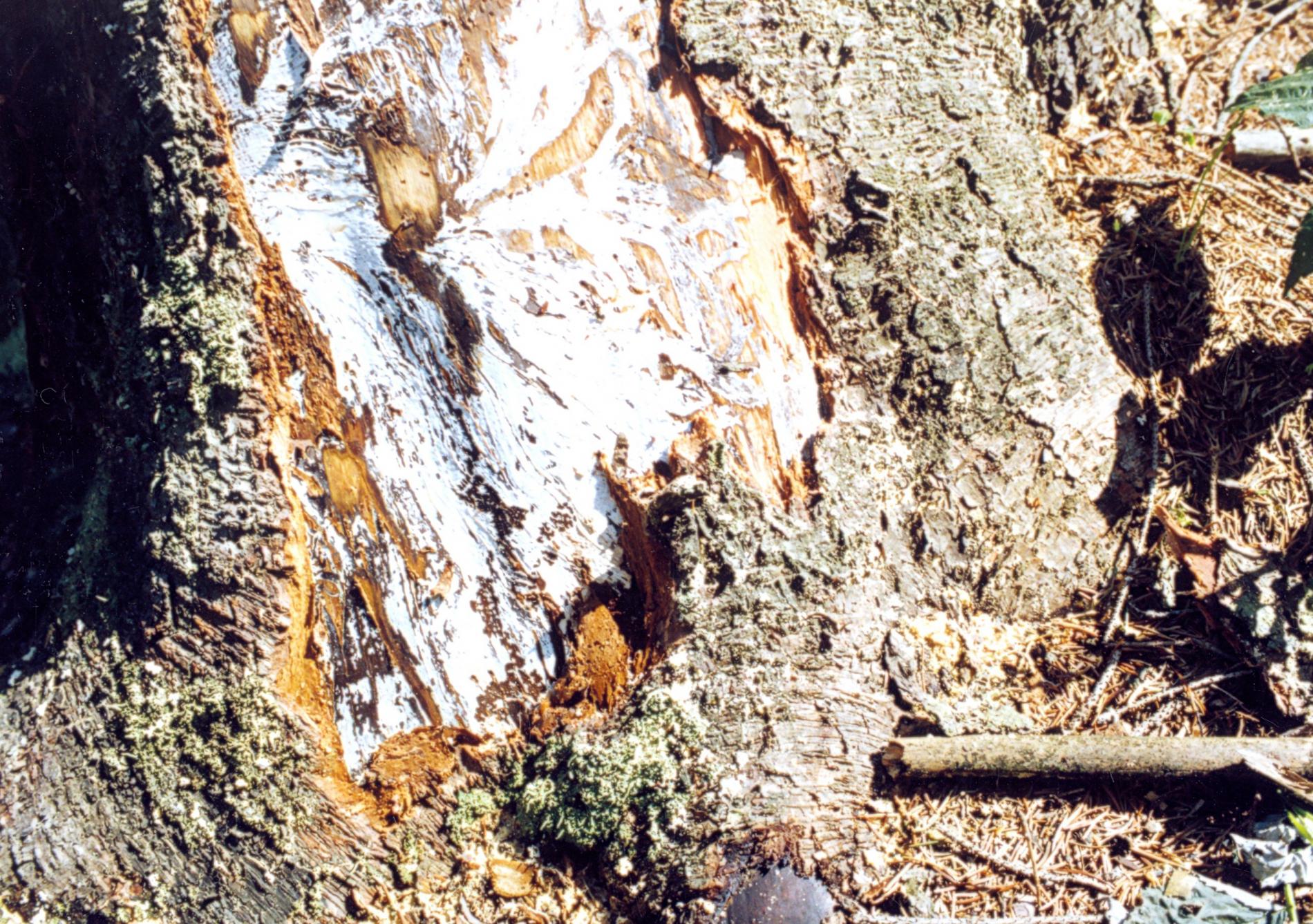
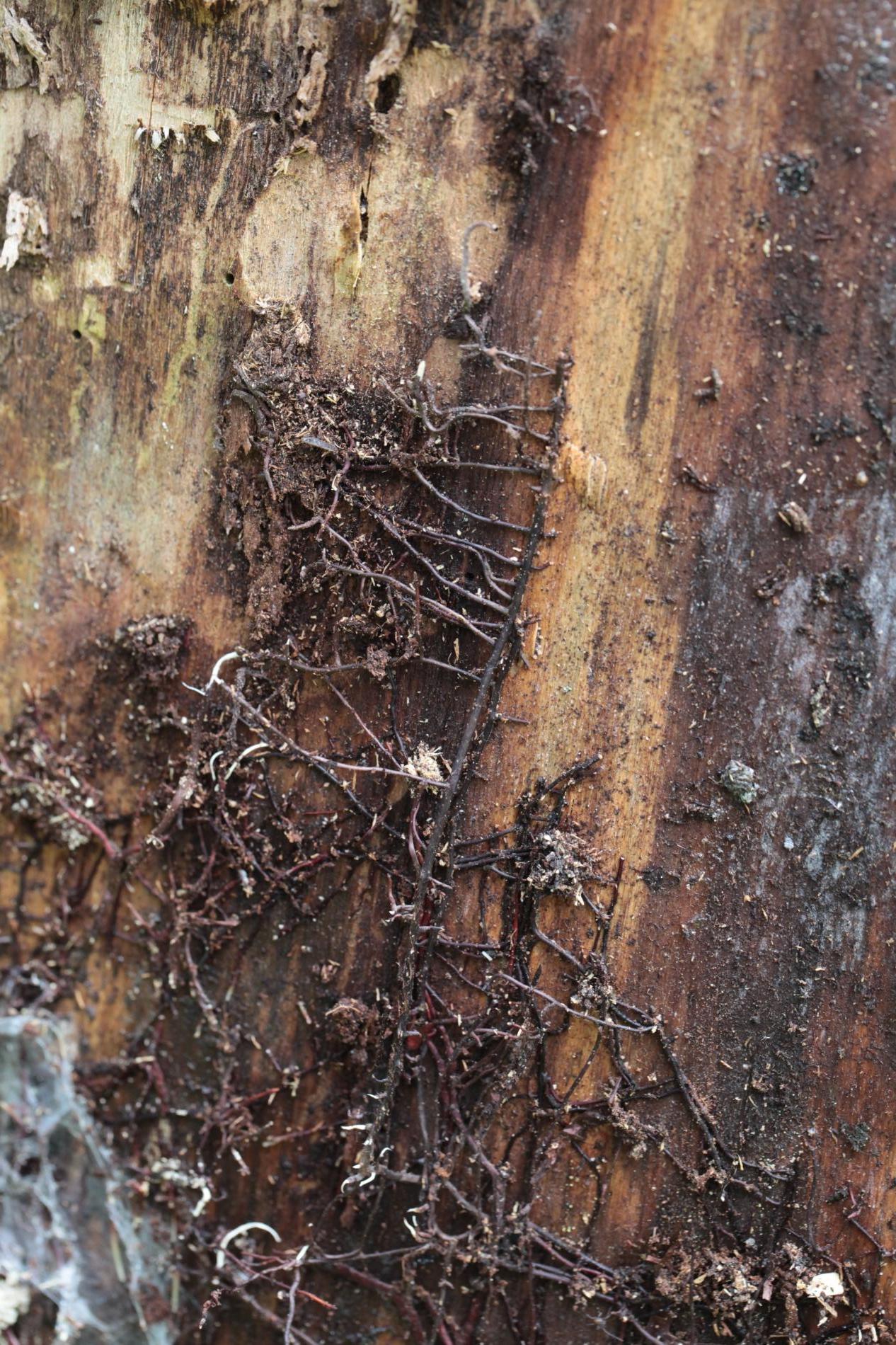
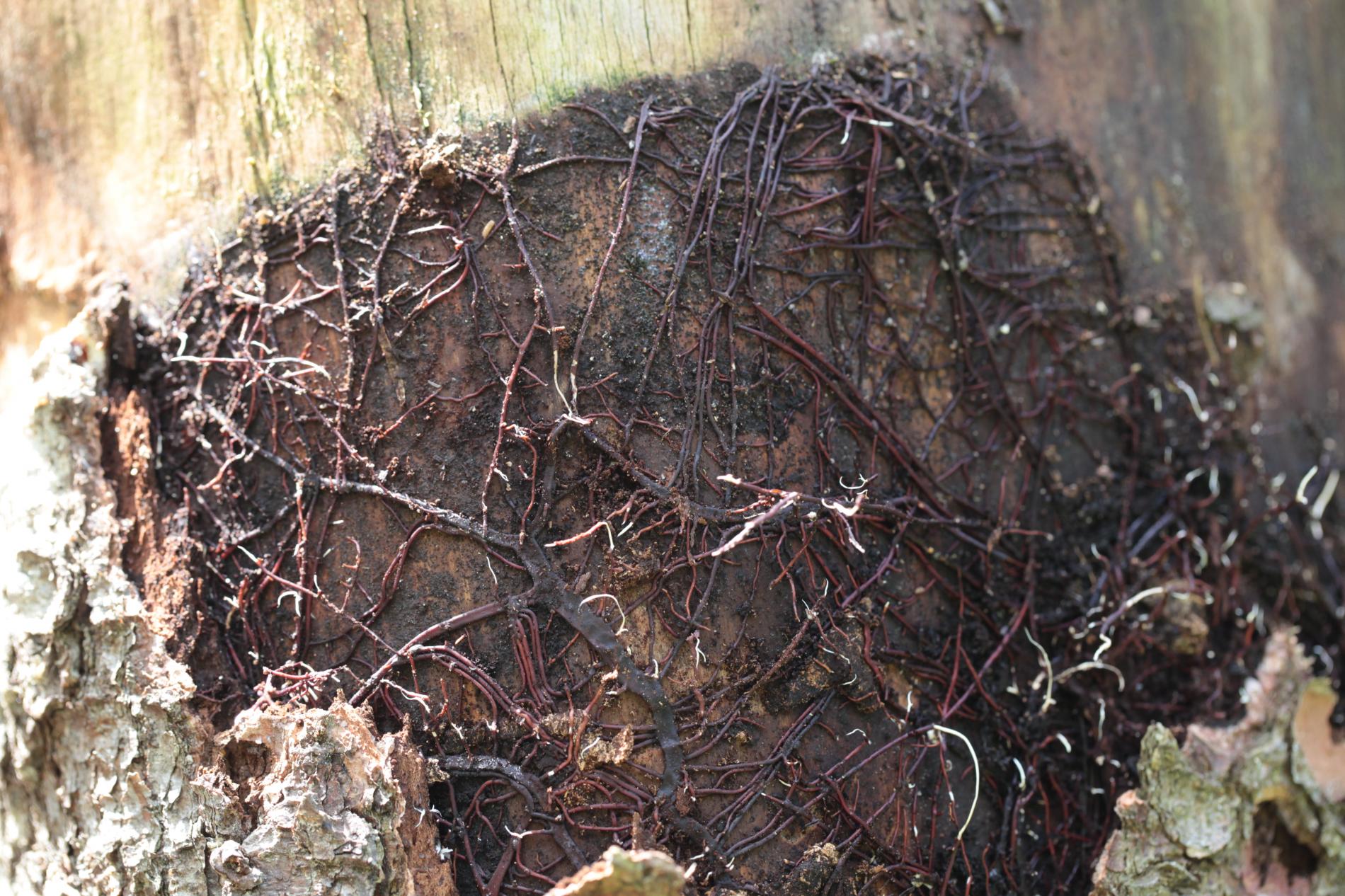
White coatings and rope-like formations under the bark, swelling (bottle-shaped) of the trunk, in autumn the presence of fruiting bodies at the roots, trunk and stems.
Tree Species: Pine, Fir, Spruce, Larch
Part of a plant- attacked: Tree trunk
Pest significance: Very harmful
Pest Category: Fungi
Invasive Species: No
Present in EU: Yes
Pest group: Fungi
Affected part of wood: Heartwood, Sapwood
Depth of damages: More than 5 cm depth, Under bark only, Up to 0,5 cm depth, Up to 2 cm depth, Up to 5 cm depth
The extent of damage: Whole trunk
Prevalence in Europe: Very common
Damaged products: Firewood, Fresh timber logs (water still in the sapwood), Furniture, Lumber, boards and prisms, Wood chips, Wooden house constructions
Roundwood size: Diameter 50+, Diameter from 10 up to 50 cm
Wood discoloration: Yes
Pest subcategory: White-rot
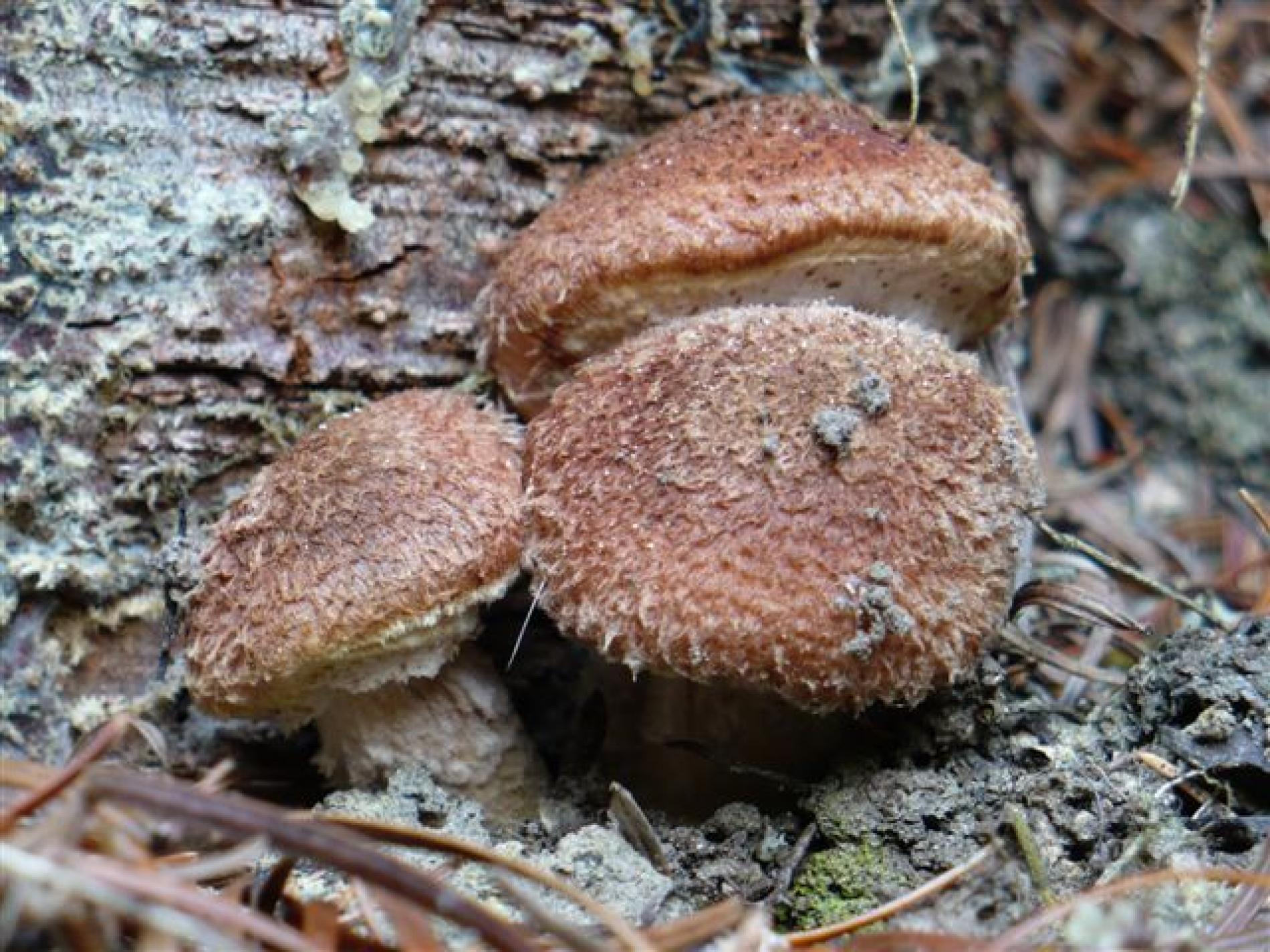
Similar pests

Armillaria mellea

Auricularia auricula-judae
