


Anthaxia manca
Elm jewel beetle
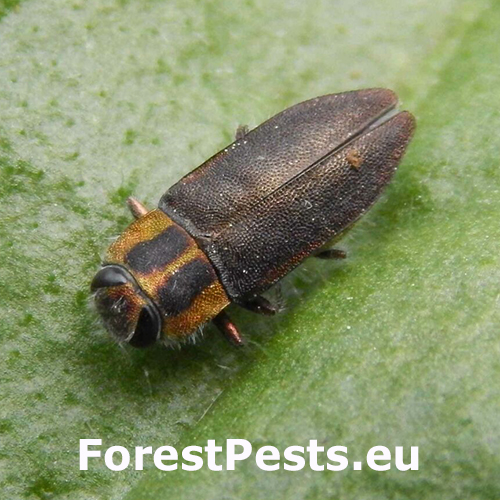
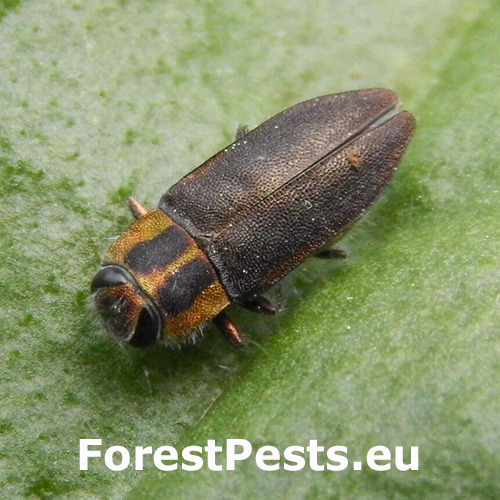
The Anthaxia manca, commonly known as the elm jewel beetle, is a beetle from the Buprestidae family. Adults are 7–11 mm long with metallic copper-red thorax and bronze-brown elytra. Its host plants include a wide range of broadleaf trees such as Ulmus species, Tilia cordata, Acer campestre, Prunus mahaleb, and Salix alba. The beetle is distributed across Southern, Central, and Eastern Europe, extending to North Africa and parts of Asia.
The larvae develop under the bark and in the wood of weakened or dying trees, preferring sunny and warm environments like floodplains, parks, or urban settings. The larval feeding creates galleries that disrupt nutrient transport in trees, worsening their vitality and aesthetic value. In severe cases, infestation can lead to branch dieback or even the death of the host tree, especially in already stressed specimens.
Infested trees exhibit irregular feeding galleries under the bark, often accompanied by bark cracking and discoloration. Under the bark are serpentine mines with, and branches may appear weakened or dead.
Tree Species: Elm, Cherry, Maple, Lime, Willow
Part of a plant- attacked: Tree trunk, Branch
Pest significance: Less harmful
Pest Category: Insects
Present in EU: Yes
Pest group: Insect
Affected part of wood: Sapwood
Depth of damages: Bark, Under bark only, Up to 0,5 cm depth
The extent of damage: Whole trunk
Prevalence in Europe: Rare
Damaged products: Firewood
Roundwood size: Branches and twigs, Diameter 50+, Diameter from 10 up to 50 cm, Diameter up to 10 cm
Wood discoloration: No
Exit holes: D-shape
Pest subcategory: Bark and underbark insect
Similar pests

Lamprodila festiva

Agrilus suvorovi populneus
