


Anisandrus dispar
Shot-hole borer
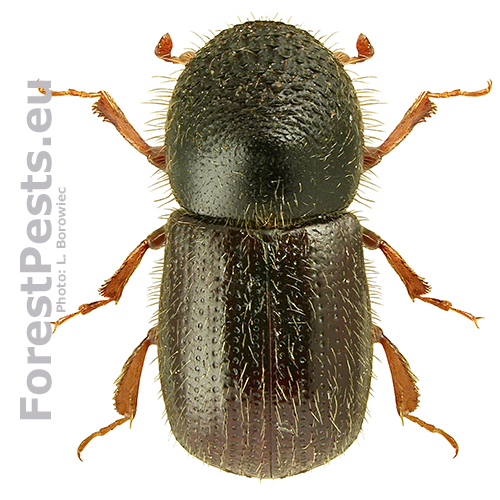
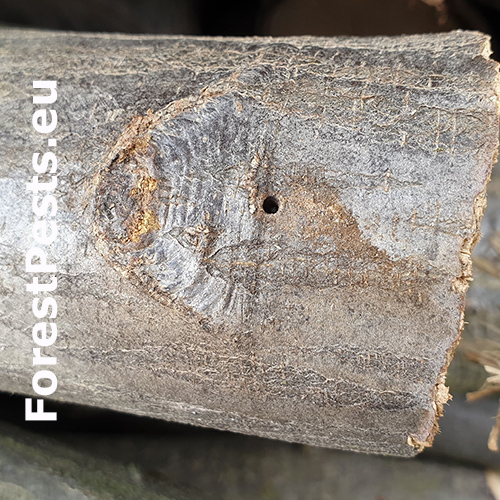
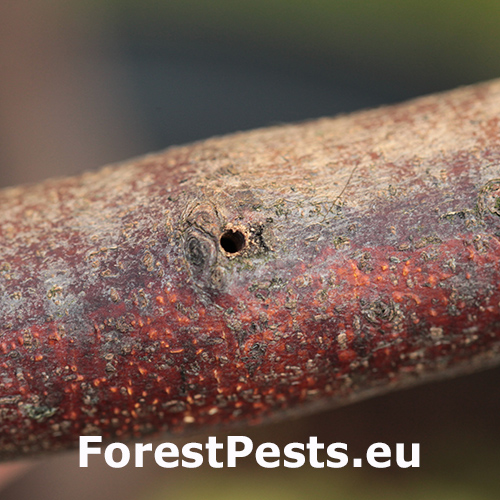
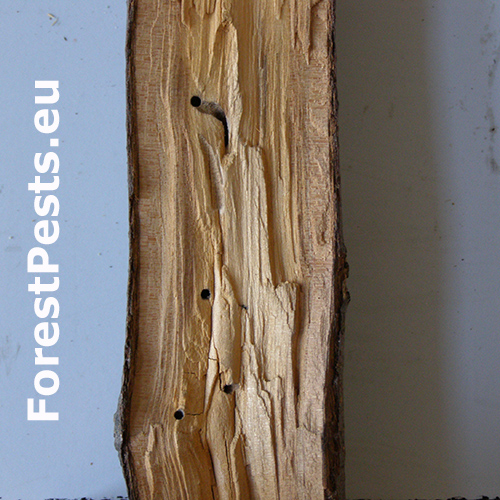
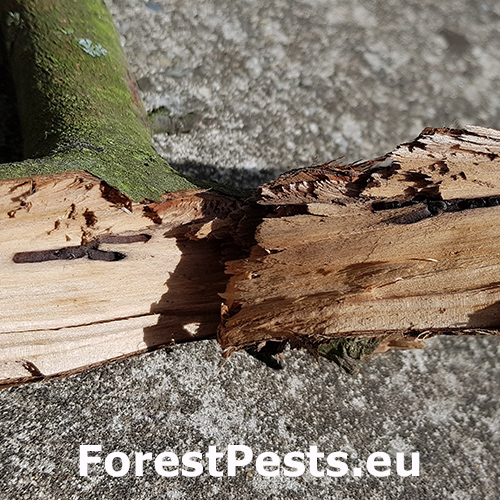
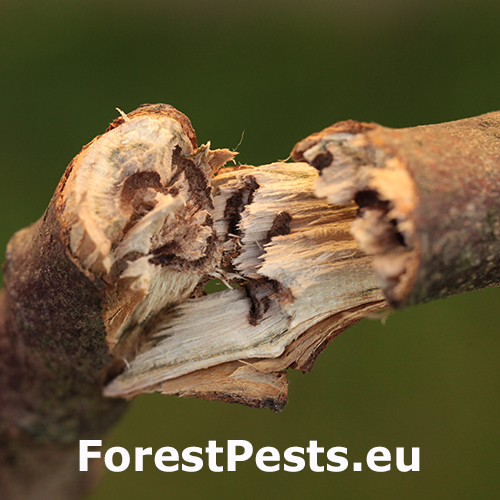
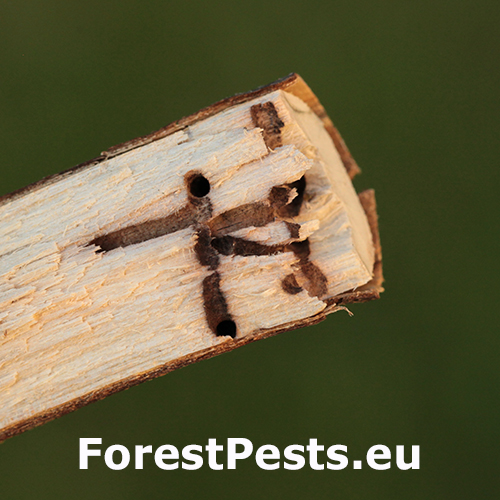
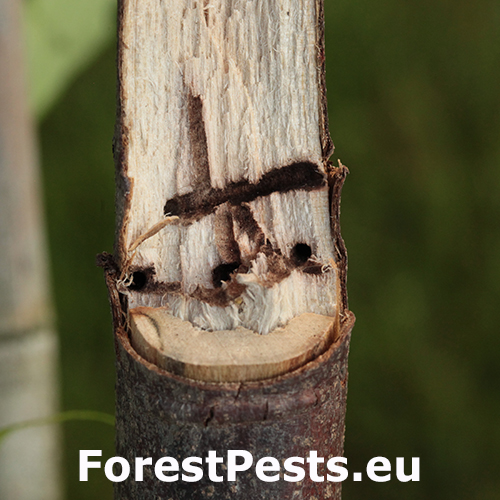
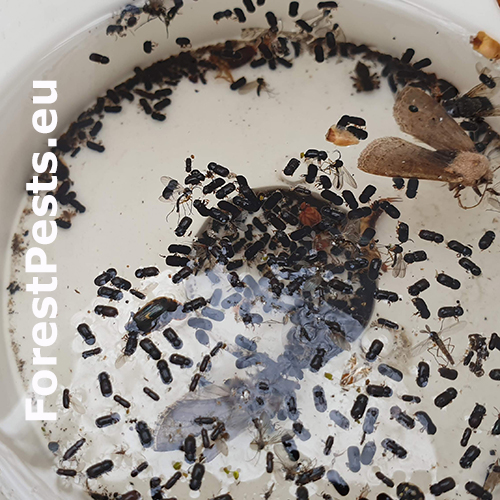
This beetle shows a distinct sexual dimorphism. The females have a cylindrical body 3–3.5 mm in length, while the males are plump and only 2 mm in size. They are so-called ambrosia beetles, i.e. the adults and larvae feed on fungi rather than on the wood itself. In spring, the females excavate short primary and secondary galleries and cultivate symbiotic fungi as a food source. Teneral females and males mate inside the breeding system and most remain there during winter. In April–May, the females emerge while the flightless males die off. They usually colonize recently died, old, weakened trees of any age. During the outbreak, healthy trees may also be attacked. The damage in terms of timber quality loss is minor because the breeding systems remain very shallow.
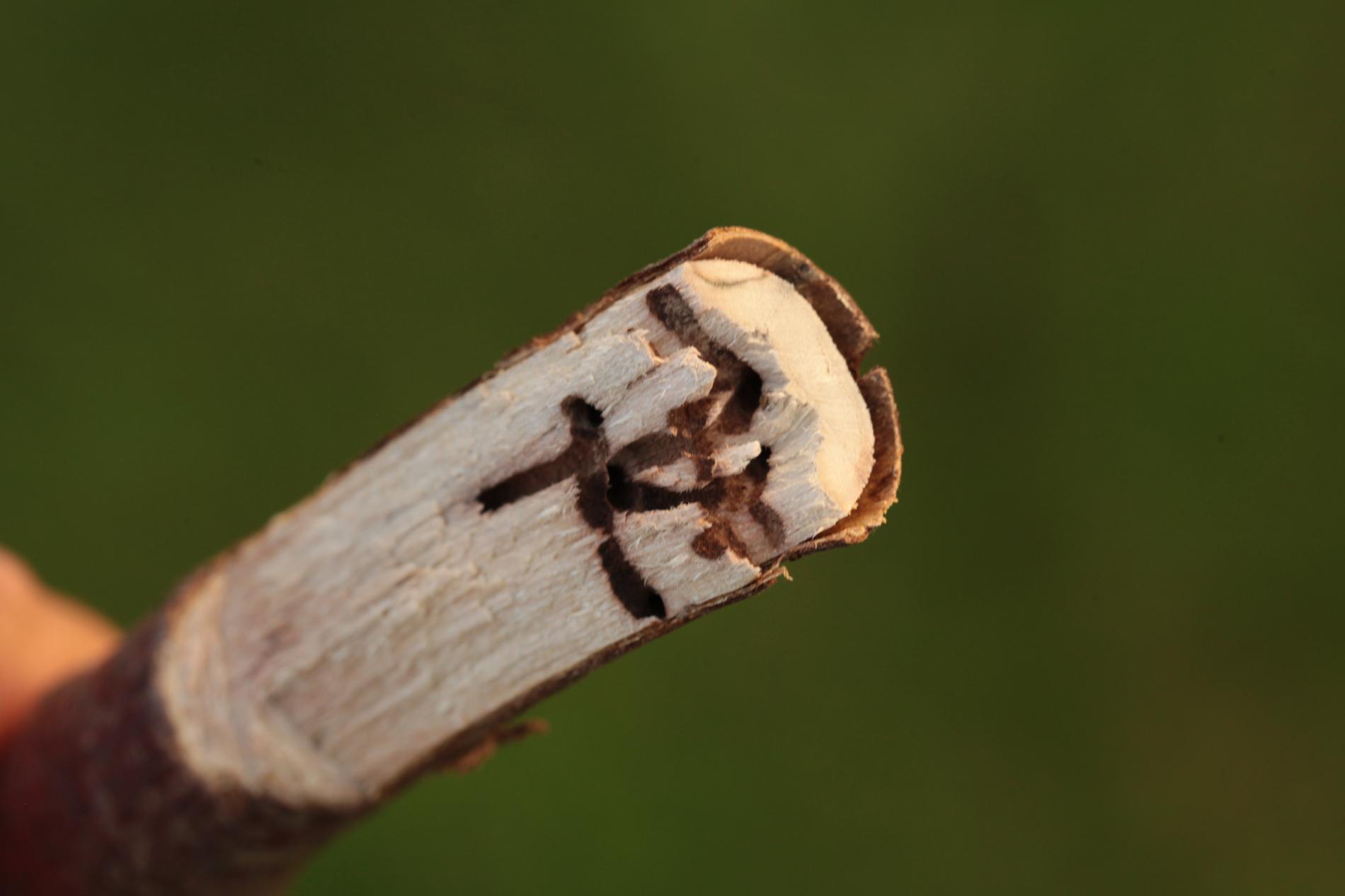
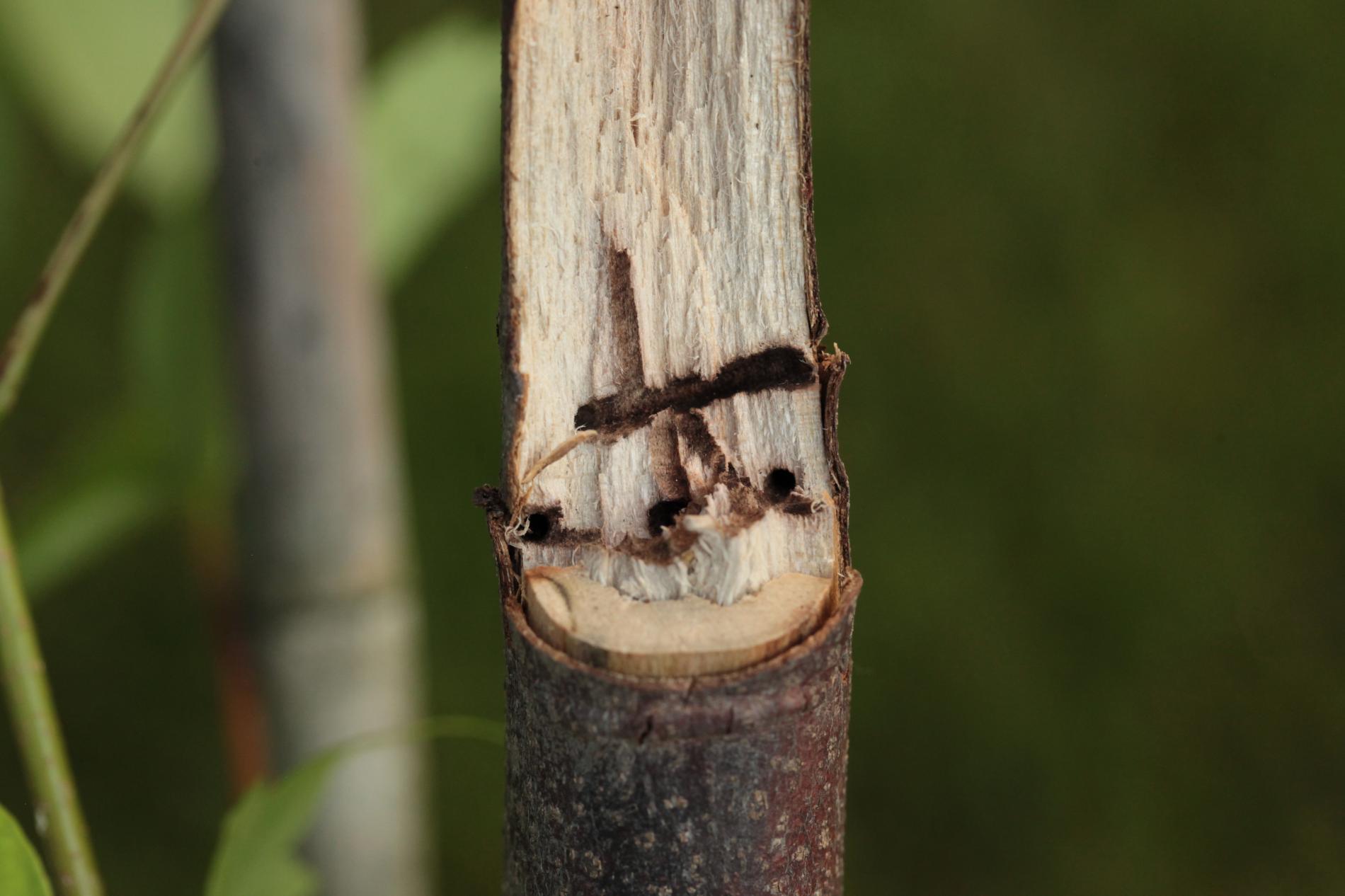
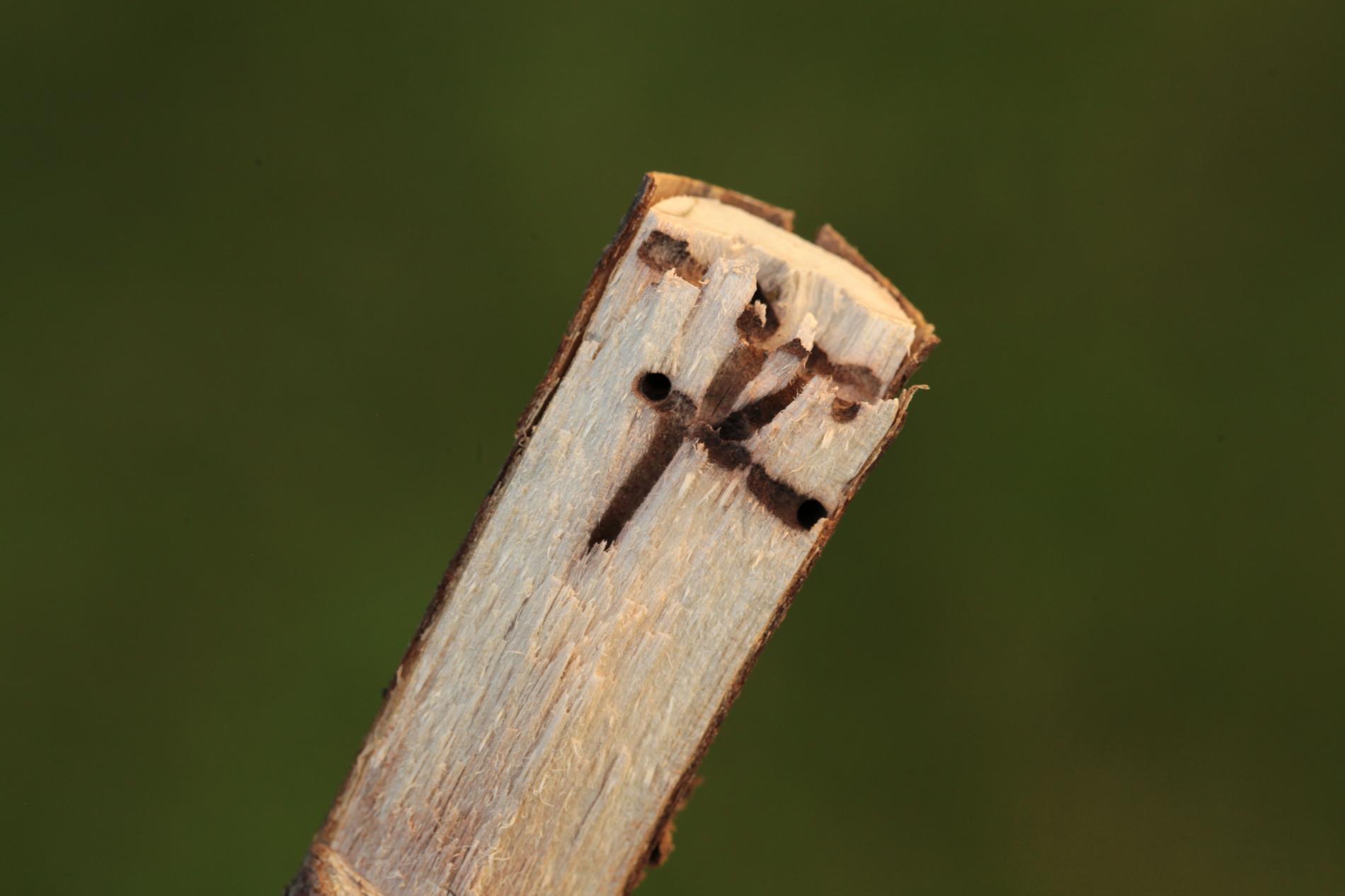
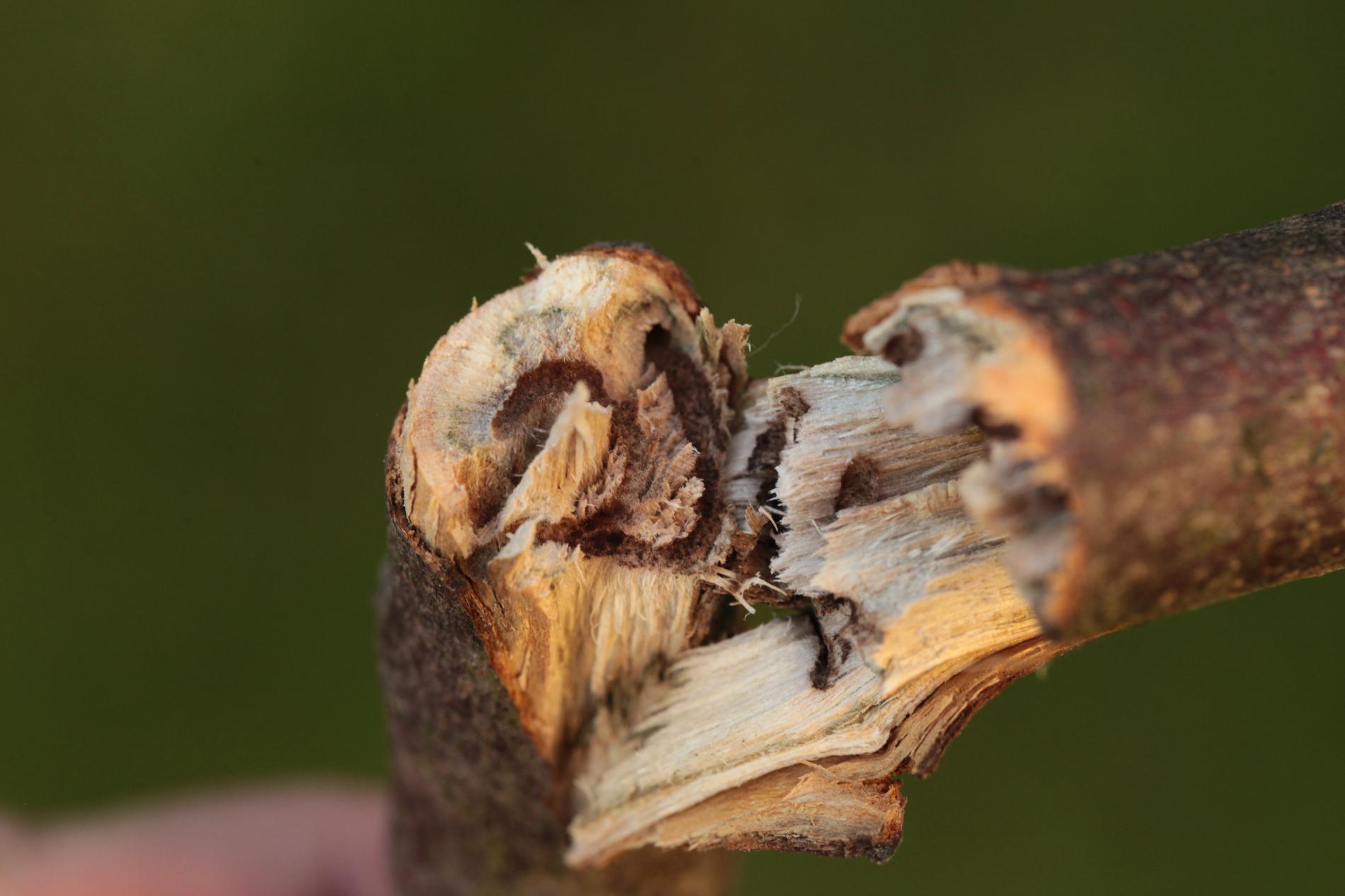
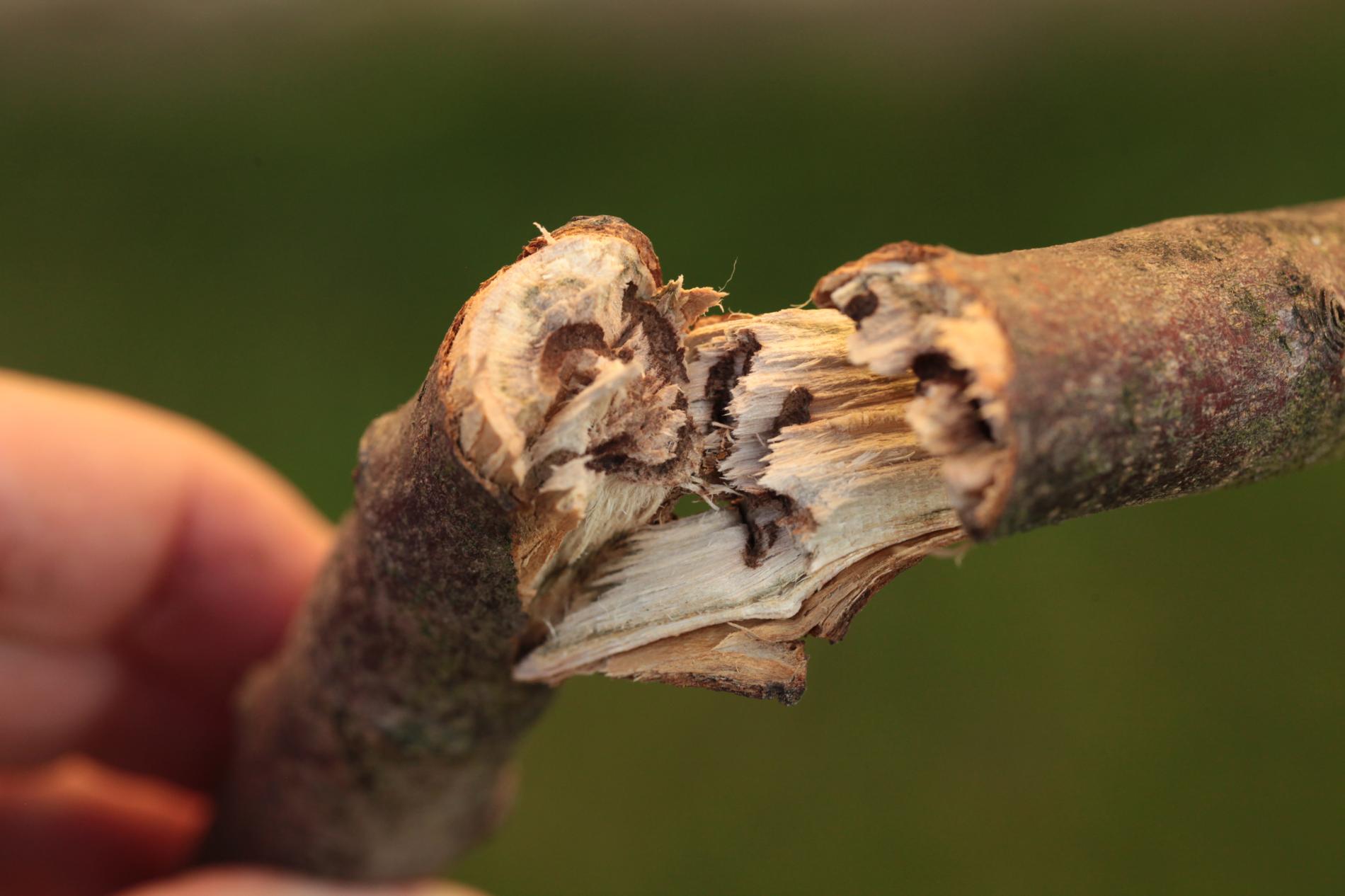
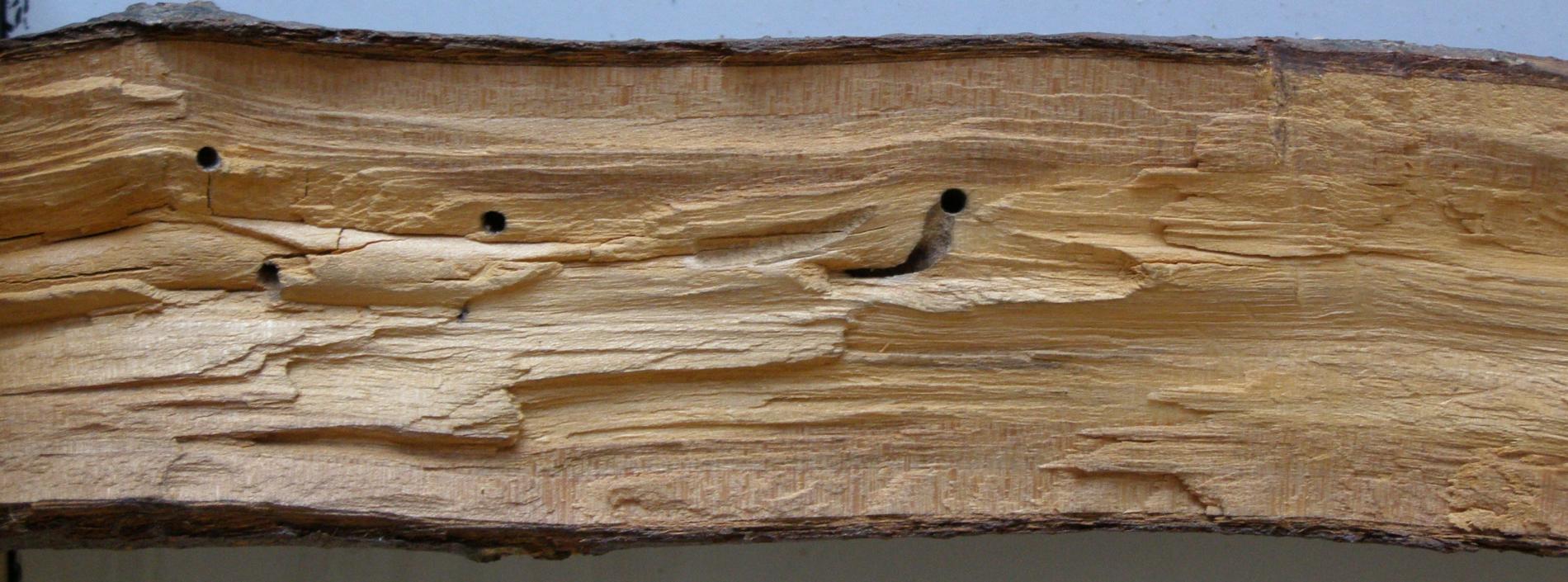
Short galleries in the wood.
Tree Species: Beech, Oak, Hornbeam, Pear, Apple Tree, Plum
Part of a plant- attacked: Tree trunk, Branch
Pest significance: Harmful
Pest Category: Insects
Invasive Species: No
Present in EU: Yes
Pest group: Insect
Affected part of wood: Sapwood
Depth of damages: Bark, Under bark only, Up to 2 cm depth, Up to 5 cm depth
The extent of damage: Whole trunk
Prevalence in Europe: Common
Damaged products: Firewood, Fresh timber logs (water still in the sapwood), Lumber, boards and prisms, Wooden house constructions
Roundwood size: Branches and twigs, Diameter 50+, Diameter from 10 up to 50 cm, Diameter up to 10 cm
Wood discoloration: Yes
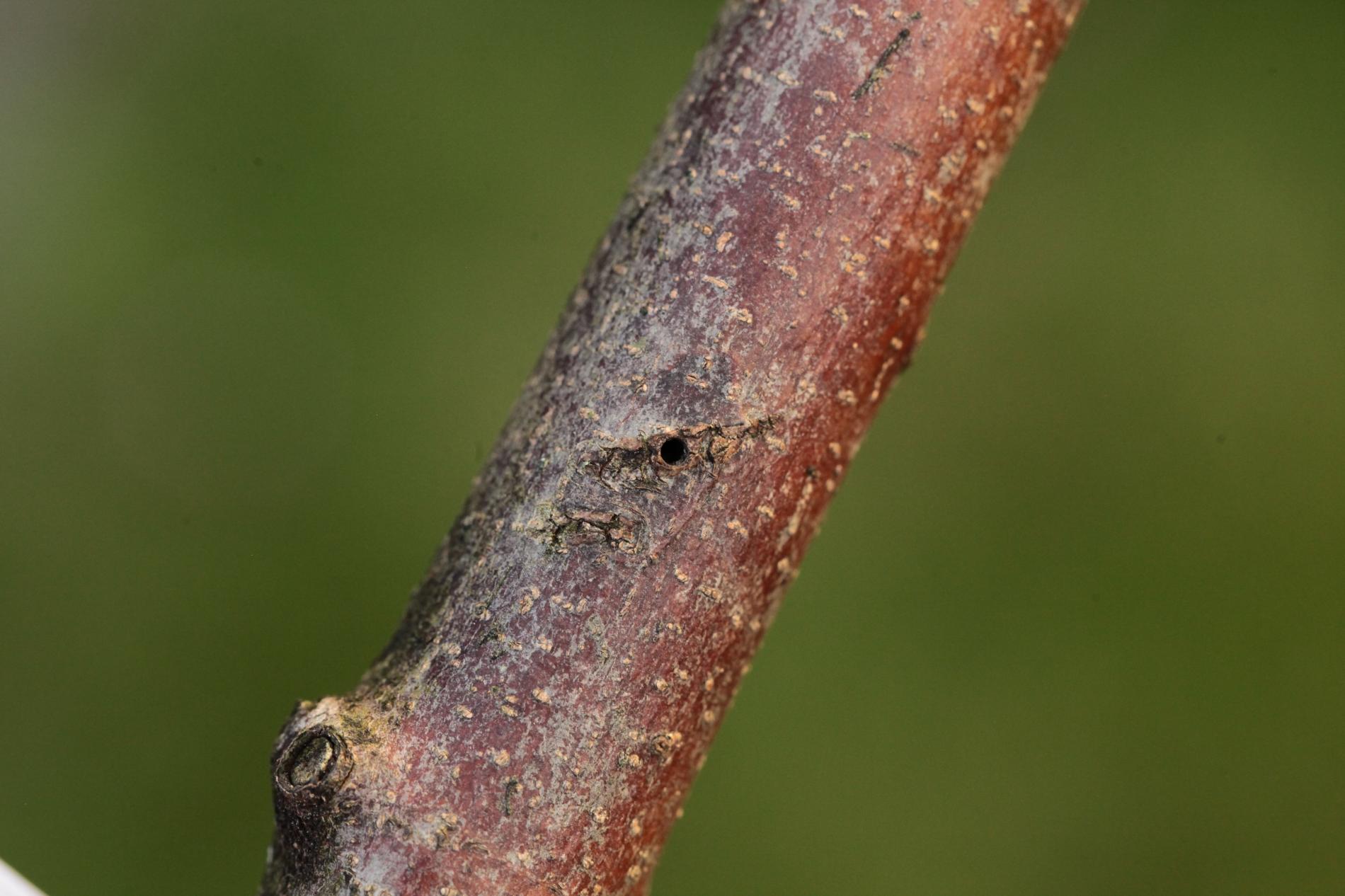
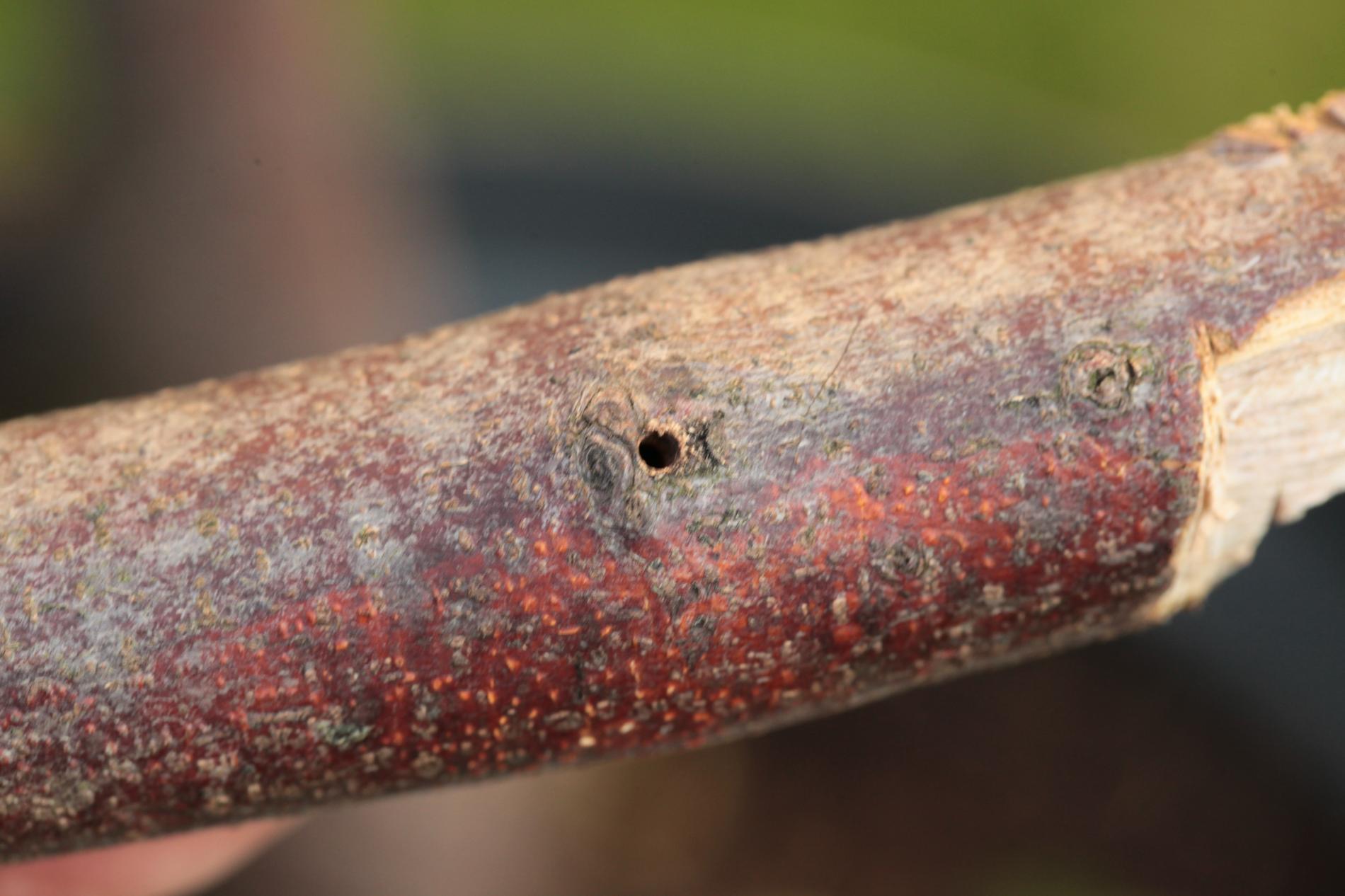
Exit holes: Round
Pest subcategory: Wood-boring insect
Similar pests

Trypodendron domesticum

Xyleborus monographus
