


Agrilus suvorovi populneus
Agrilus suvorovi populneus
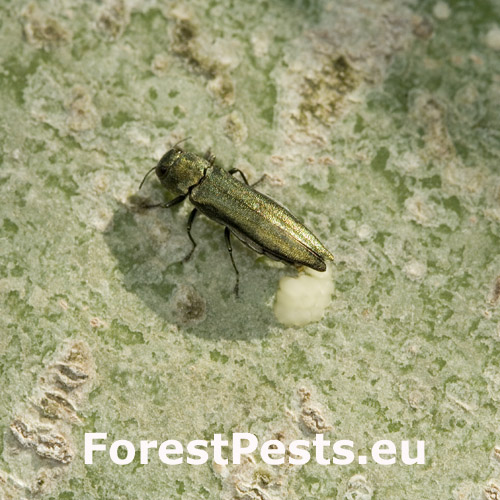
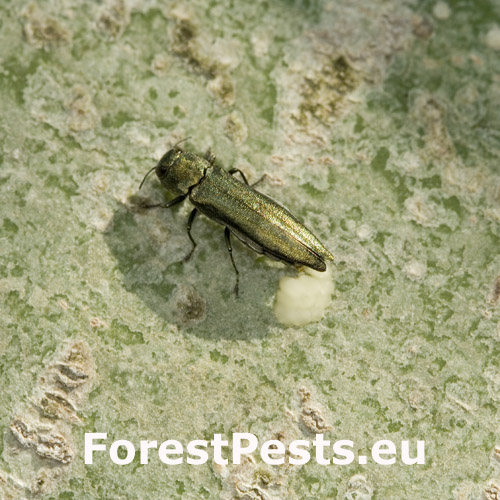
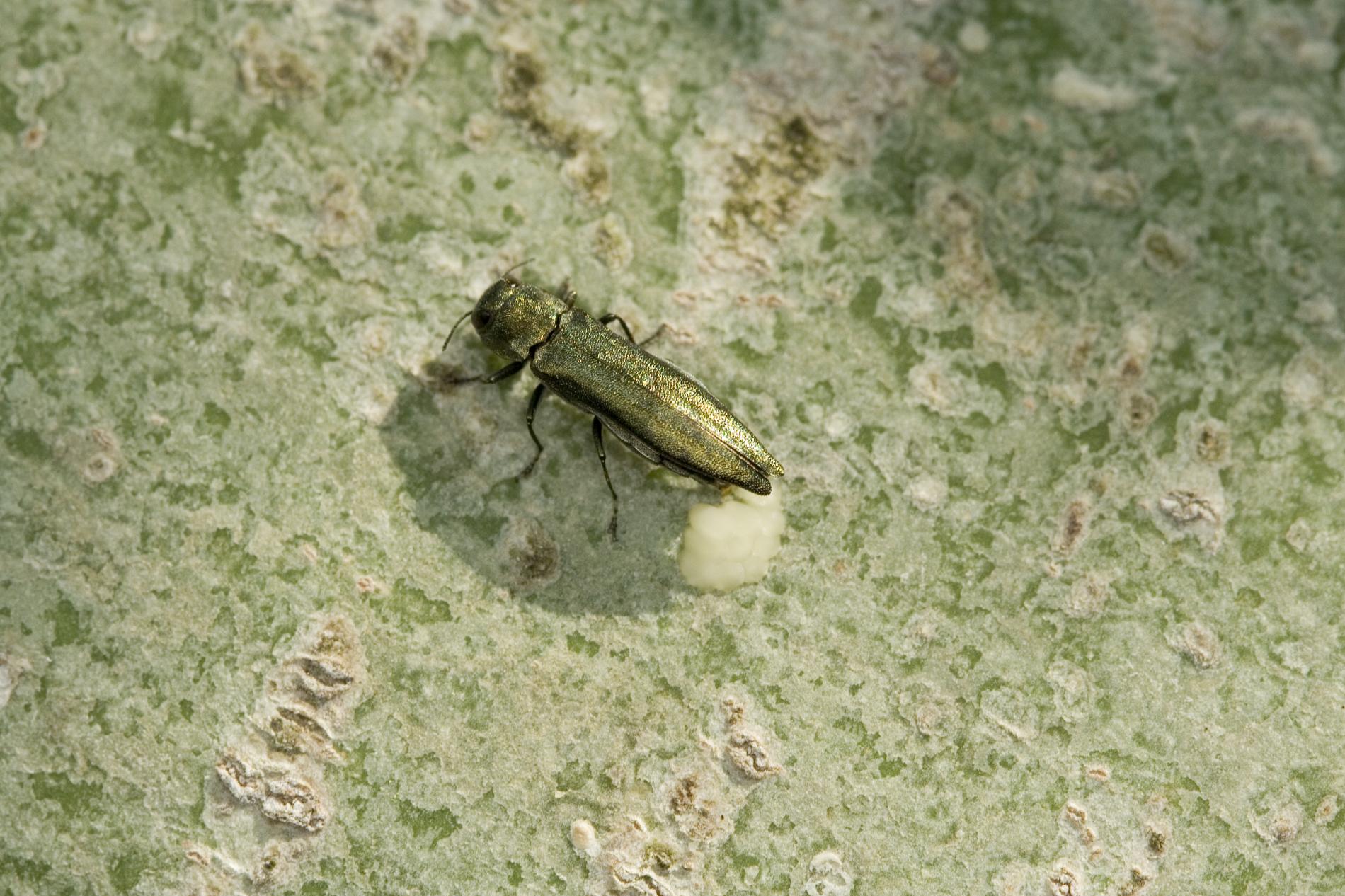
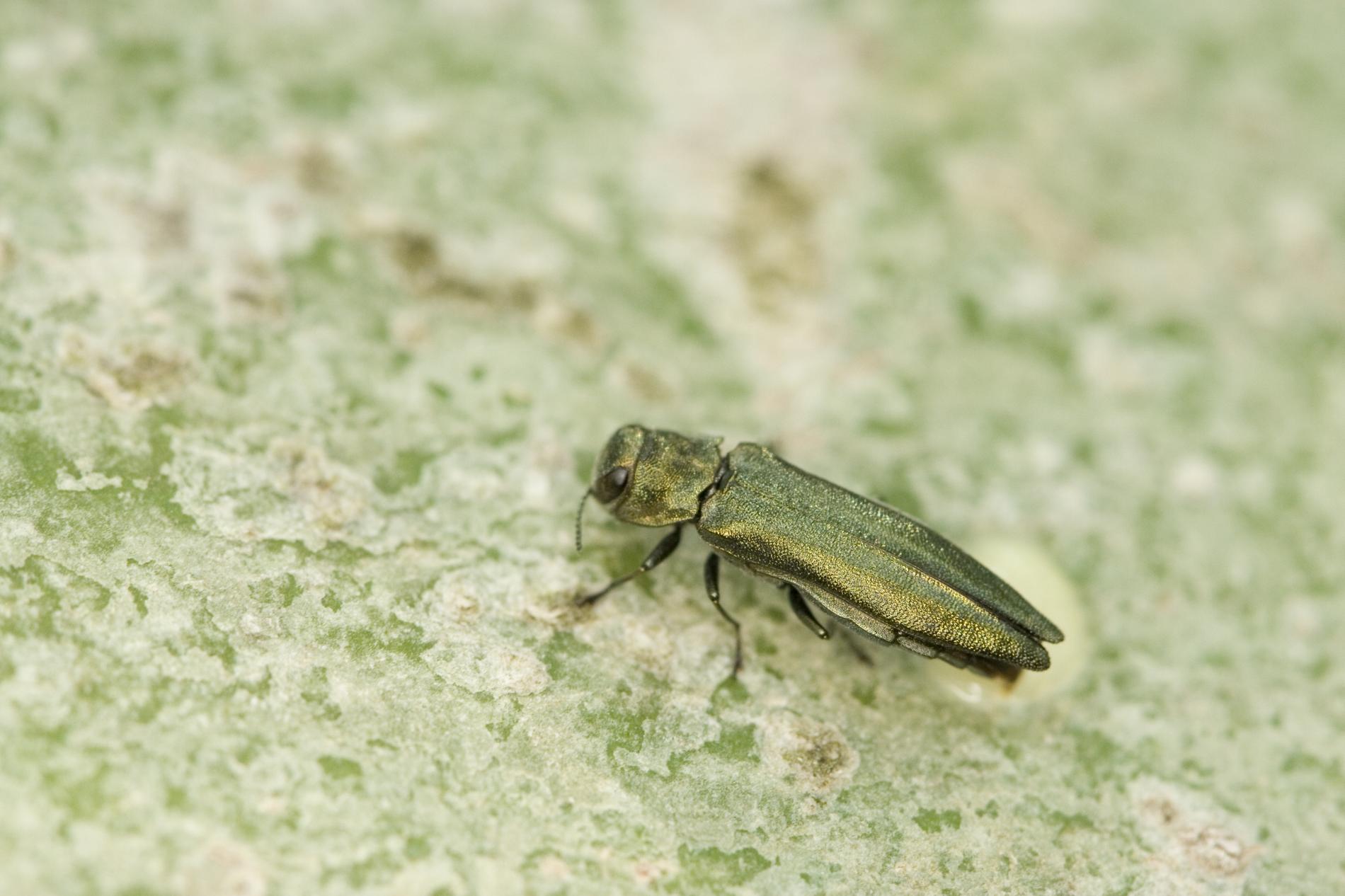
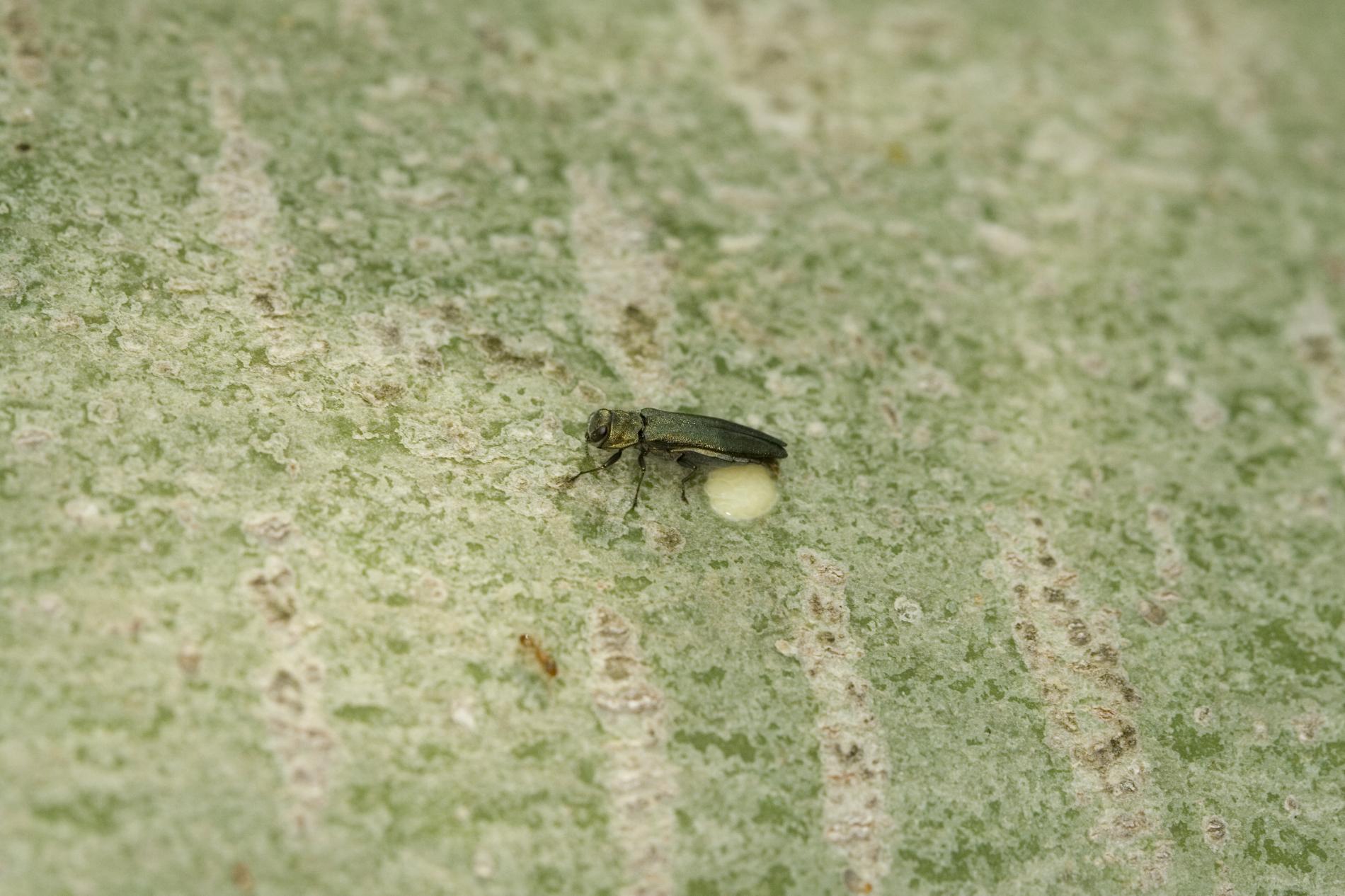
Body length is 7–11 mm. Larval development takes one or two years. Adults emerge in summer. Females oviposit in groups on the stem. The young larvae bore into the bark, causing a vertical, 3–5 cm long split. The larvae feed in the sapwood causing a wound at the site. Heavily-infested trees frequently die. It is abundant mainly in the hybrid poplar plantations of the lowlands.
Agrilus suvorovi typically targets parts of the tree with thinner bark, like branches, because its pupal chamber is situated in the wood. This means exit holes remain visible even after the bark is stripped away. In comparison, A. ater creates its pupal chamber within the thick bark, where the exit holes are not as easily exposed when the bark is removed.
The young larvae bore into the bark, causing a vertical, 3–5 cm long split. Galleries under the bark.
Tree Species: Poplar
Part of a plant- attacked: Tree trunk
Pest significance: Harmful
Pest Category: Insects
Invasive Species: No
Present in EU: Yes
Pest group: Insect
Affected part of wood: Sapwood
Depth of damages: Bark, Under bark only, Up to 0,5 cm depth
The extent of damage: Whole trunk
Prevalence in Europe: Common
Damaged products: Firewood, Fresh timber logs (water still in the sapwood)
Roundwood size: Branches and twigs, Diameter up to 10 cm
Wood discoloration: No
Exit holes: D-shape
Pest subcategory: Bark and underbark insect
Similar pests

Saperda populnea

Agrilus viridis
