


Agrilus sulcicollis
European oak borer
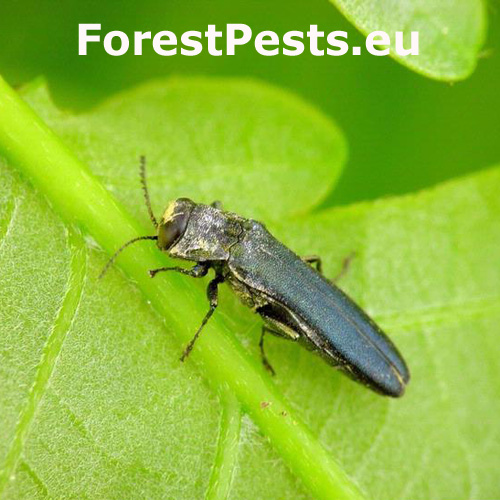
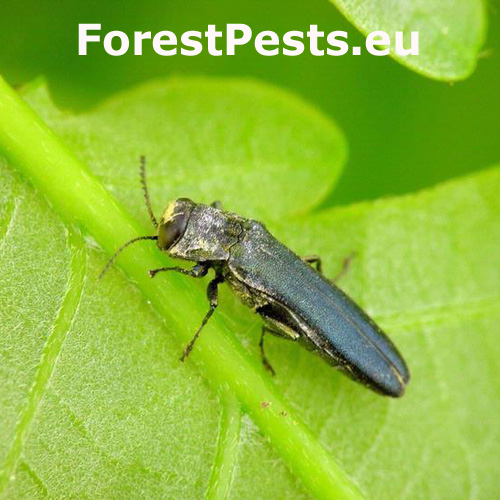
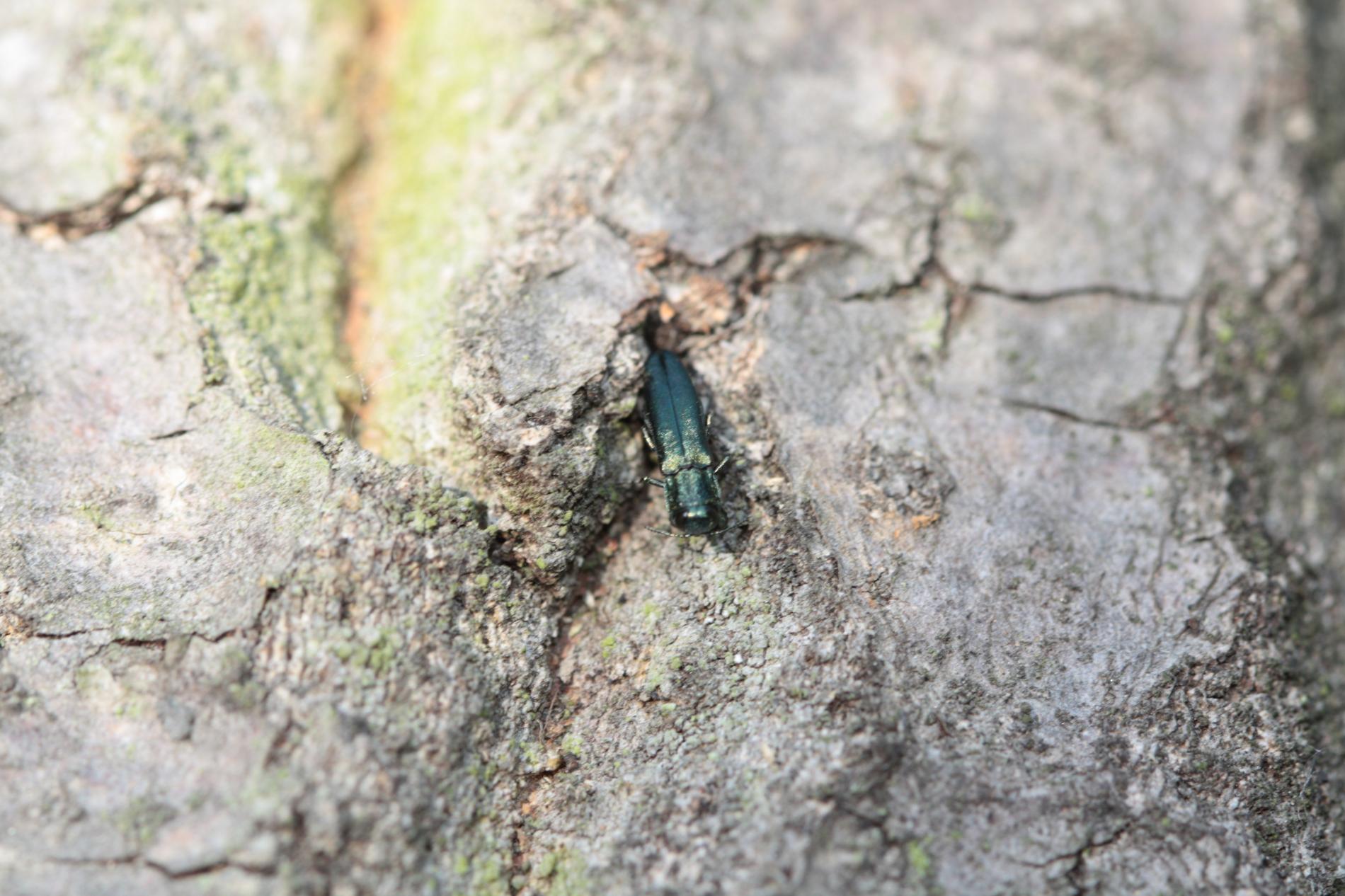
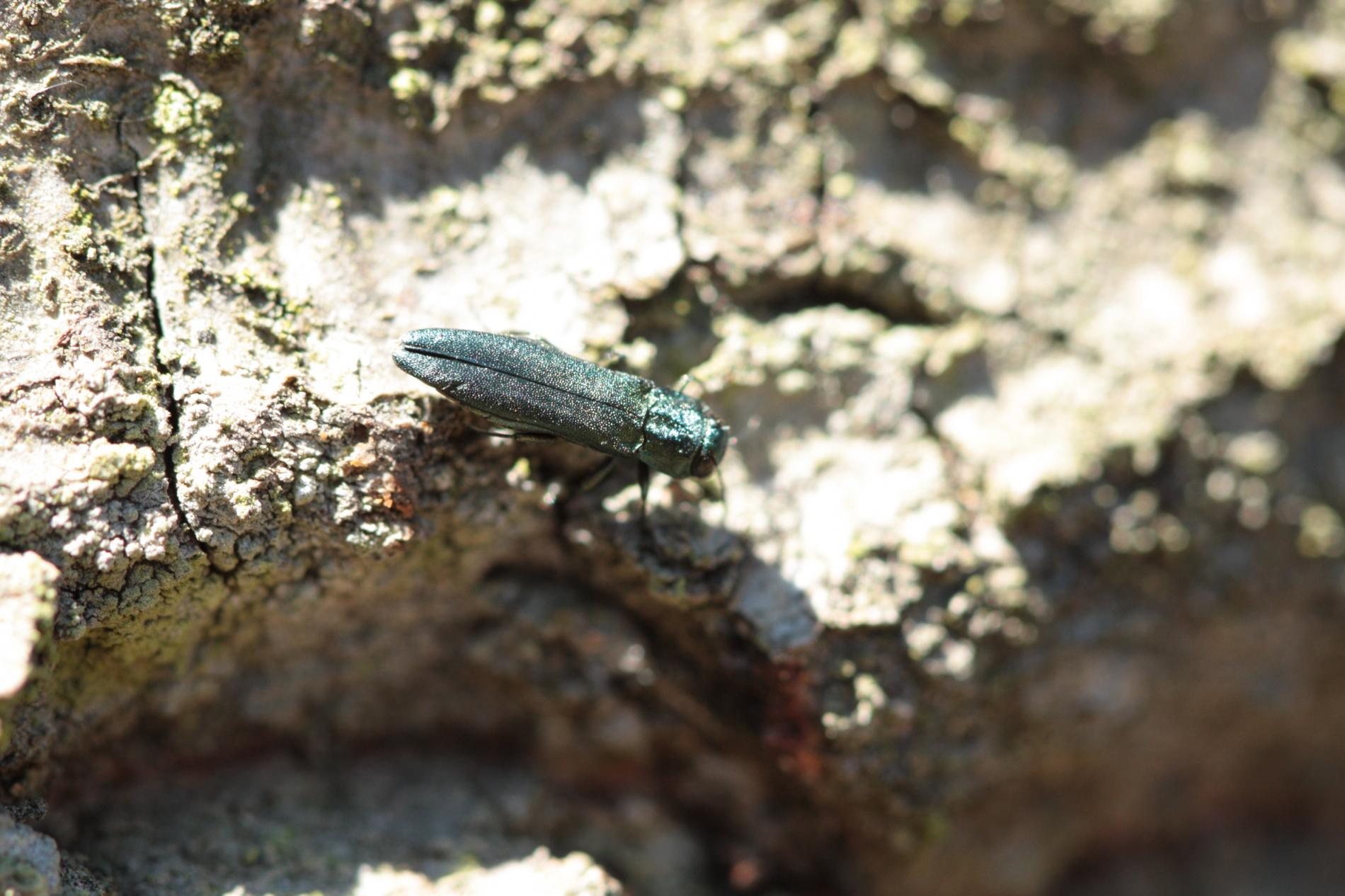
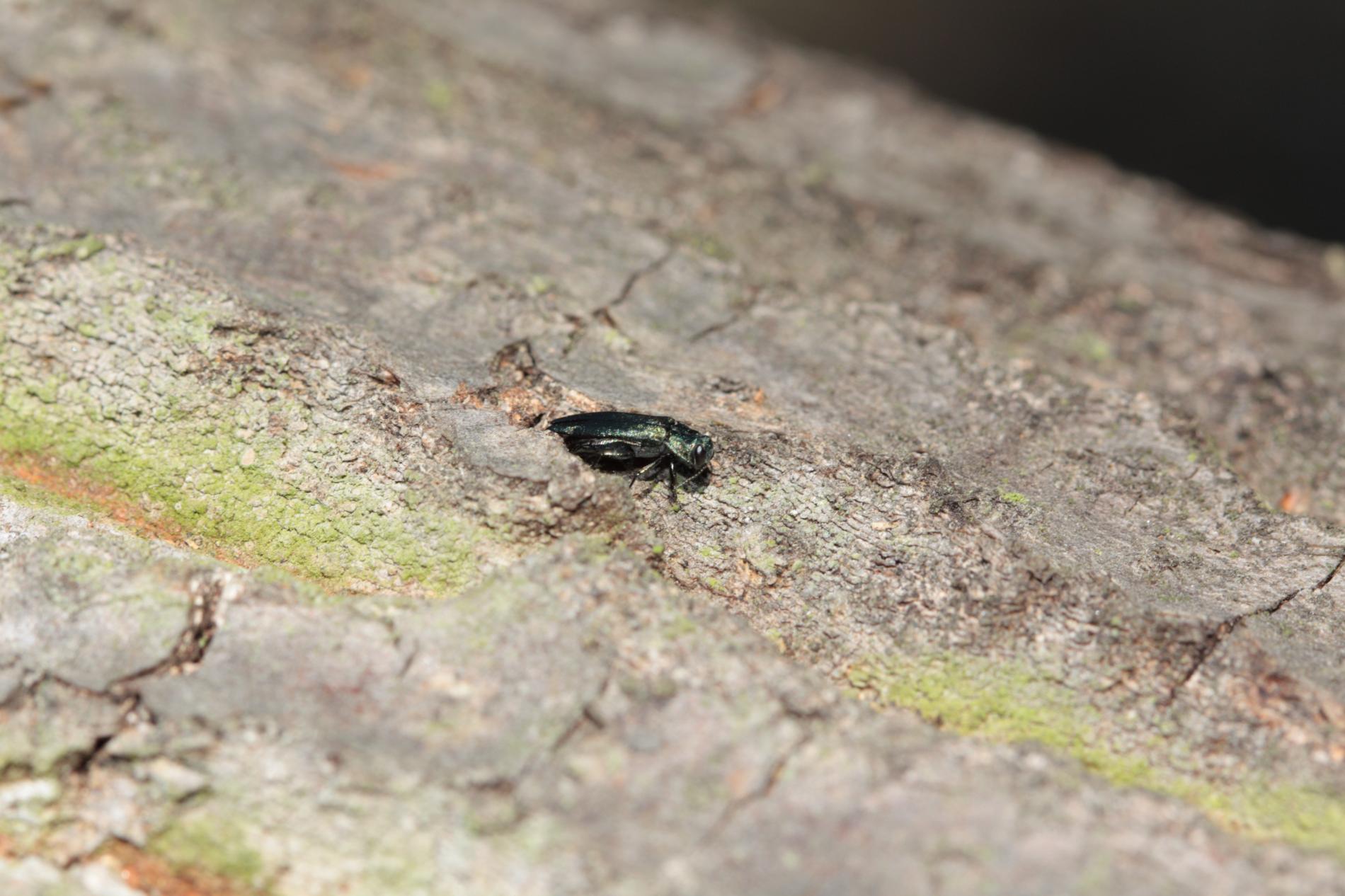
A metallic shiny blue beetle, about 6.0-8.5 mm long. The beetles commonly live on oak leaves in May-July. They also commonly fly onto log dumps. The larvae develop in thicker branches of languishing oaks in warmer localities. They eat out serpentine galleries under the bark. The full development takes 2 years, but the length of the larval development is strongly influenced by the environmental conditions (sun exposure, bark thickness, etc.). Recently was accidentally introduced to North-America. Its mass attack can cause branch dieback. This species - together with other Agrilus species - is considered as potential vector of oak tracheomycosis caused by Ceratocystis fungi. It can be found along with the related species A. biguttatus. The tree crowns of attacked oaks open up, epicormic shoots can occur. The trees die in groups.
Galleries unrder the bark. Exit holes in D-shale. The larvae develop in thicker branches of languishing oaks in warmer localities. They excavate serpentine galleries under the bark. The tree crowns of attacked oaks open up, epicormic shoots can occur.
Tree Species: Oak
Part of a plant- attacked: Leaf / Needle, Branch
Pest significance: Harmful
Pest Category: Insects
Invasive Species: No
Present in EU: Yes
Pest group: Insect
Affected part of wood: Sapwood
Depth of damages: Bark, Under bark only, Up to 0,5 cm depth
The extent of damage: Lokally
Prevalence in Europe: Common
Damaged products: Firewood
Roundwood size: Branches and twigs
Wood discoloration: Yes
Exit holes: D-shape
Pest subcategory: Bark and underbark insect, Wood-boring insect
Similar pests

Chrysobothris affinis

Plagionotus arcuatus
